

4 historical examples that show the risks of interventionism of the USA in the Middle East
History shows that every time Washington has intervened in the region to solve a problem
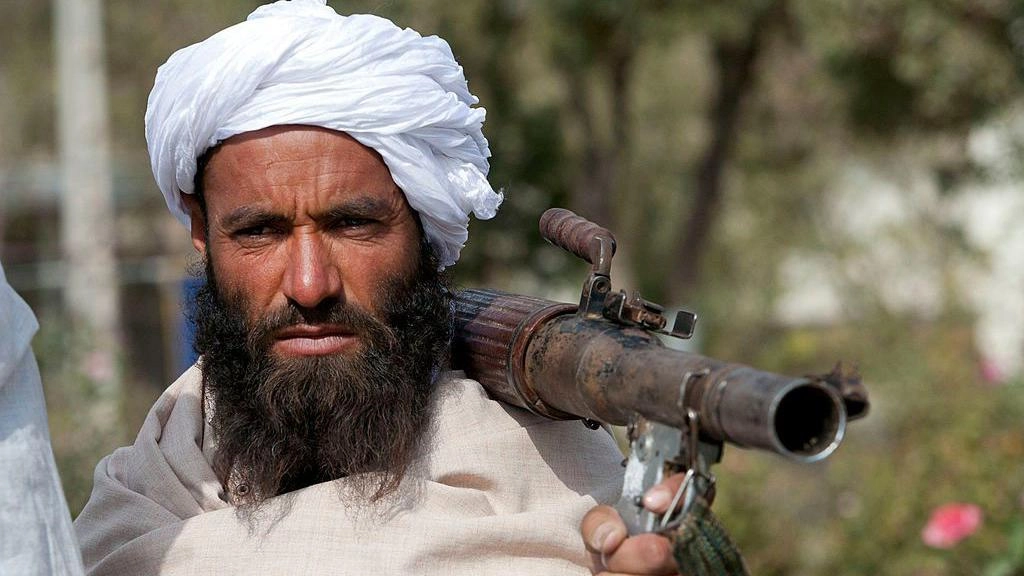

President Donald Trump surprised last May when he harshly criticized the interventionist policies of his predecessors in the United States presidency.
“In the end, the so-called nation builders destroyed many more nations than they built,” he said, making a clear reference to the controversial invasion of Iraq in 2003.
“And the interventionists intervened in complex societies they didn’t even understand,” he added.
In these words, spoken during a visit to Riyadh, the capital of Saudi Arabia, some analysts saw a suggestion that, at least during his administration, US interventionism in the Middle East would be a thing of the past.
But just over a month later they would realize they were wrong.
On Saturday, June 21, the United States carried out an attack on three nuclear facilities in Iran, dragging Washington into the latest conflict in the region, which pitted Iran and Israel against each other for nearly two weeks.
With their assault, the United States—and Israel—sought to end Iran’s nuclear dreams.
“Our goal was to destroy Iran’s nuclear enrichment capability and to curb the nuclear threat posed by the world’s leading state sponsor of terrorism,” Trump said shortly after the attack.
But history shows that when the West has intervened in the region to “fix” a problem, it has not always Everything has gone according to plan.
According to Lebanese-American author Fawaz Gerges, professor of Middle Eastern politics and international relations at the London School of Economics and Political Science, US interventionism has been a constant in international relations in the Middle East since the late 1940s.
“The recent US airstrikes against Iran are another clear example of this policy,” the author of “What Really Went Wrong: The West and the Failure of Democracy in the Middle East” tells BBC MundoThe West and the Failure of Democracy in the Middle East).
In this article, we review four historical examples of US intervention in the Middle East and analyze their consequences.
1- Coup d'état in Iran (1953)
In 1953, Iran's democratically elected Prime Minister, Mohammad Mossadeq, was overthrown in a coup d'état led by the Iranian military and supported by the United States and the United Kingdom.
Mossadeq had come to power just two years earlier promising to nationalize Iran's vast oil reserves.
But this, coupled with the apparent communist threat, worried London and Washington, whose postwar economies depended heavily on Iranian oil.
Initially, it was presented as a popular uprising in support of Shah Mohammad Reza Pahlavi, but the insurgency was under the control of intelligence services British and Americans.
In 2000, then-Secretary of State Madeleine Albright spoke openly about the US role in the coup.
Years later, in 2009, then-President Barack Obama gave a speech in Cairo in which he also admitted Washington’s role.
In 2013, 60 years after the coup, the CIA released documents in which it acknowledged its role in the coup for the first time.
“The military coup… was carried out under the direction of the CIA as an act of US foreign policy,” says an excerpt from the documents released by the National Security Archive.
Fawaz Gerges says the current conflict between the US and Iran has its roots in that covert US intervention in Iran.
“The Iranians have never forgiven the US for overthrowing a legitimate, democratically elected prime minister and installing a brutal dictator, the Shah of Iran, as the absolute ruler of the country,” he explains.
“The anti-Americanism in Iran that we see today is because the political elite blames the United States for changing the trajectory of Iranian politics.”
Gerges highlights that the US also tried to influence Gamal Abdel Nasser’s policies in Egypt and change the course of his nationalist project, but without much success.
2 – US support for the Taliban in Afghanistan
In 1979, a year after a coup d’état in Afghanistan, the Soviet army invaded the country to support its communist government, fighting against an Islamist resistance movement known as the mujahideen.
This group, made up of jihadist Islamic extremists who opposed the communist government, had the support of the United States, Pakistan,China and Saudi Arabia, among other countries.
During the Cold War, Washington was one of the countries that supplied the most weapons and money with the aim of hindering the objectives of the USSR.
According to declassified documents, journalistic investigations and testimonies revealed years later, the US sought to trap the Soviet Union in Afghanistan in a "quagmire" that would consume lives and resources like the one the US army had suffered in the Vietnam War.
The mission was dubbed "Operation Cyclone" and the press of the time described it as the "largest covert operation in the history of the CIA."
The then-President Ronald Reagan even received a delegation of jihadist leaders in the Oval Office.
In September 1988, after 9 years of intervention, the Soviet premier, Mikhail Gorbachev, ordered the withdrawal of Soviet forces. of Afghanistan.
But the country was plunged into a civil war between various factions and a government that, without the support of the USSR, soon fell.
The war intensified until 1994, when the Taliban appeared in the southern city of Kandahar, where they quickly gained popularity by presenting themselves as a sort of student warriors whose ranks were filled with young people from the Pashtun ethnic group.
Many of their leaders had fought in the mujahideen movement against the Soviet occupation and had received weapons from the United States and other countries.
In 1996, the Taliban conquered Kabul and imposed an Islamic fundamentalist regime that would soon be condemned worldwide for its human rights violations.
They introduced or supported punishments in line with their strict interpretation of Sharia law.
Convicted murderers and adulterers were to be publicly executed, thieves suffered amputations, Men were required to grow beards, and women were required to wear a burqa that covered their entire body from head to toe, with a mesh covering at eye level to allow women to see.
They banned television, music, and movies, and banned girls over 10 from attending school, among other things.
Furthermore, after the Soviet-Afghan War, a group of veterans created Al-Qaeda to expand the Islamist struggle beyond Afghanistan.
The Taliban provided this organization and its leader, Osama bin Laden, with a safe haven for their operations and for devising plans such as the attacks of September 11, 2001.
“Balancing Efforts,” From the Cold War to the Present
Waleed Hazbun, professor of Middle Eastern Studies in the Department of Political Science at the University of Alabama,He argues that during the Cold War, most US interventions in the region could be described as “balancing efforts.”
“They sought to counter any political force opposed to the interests of the United States and its allies,” he tells BBC Mundo.
The Lebanese political scientist says the US-led intervention in the Gulf War (1990-1991) serves as an example.
“It was an attempt to counter the Iraqi invasion of Kuwait. Kuwaiti sovereignty was restored, and after the end of the Cold War, there were talks between US policymakers and leaders in the region to find ways to address common security needs in the region.”
However, Hazbun believes that a different approach then began under the administration of former President Bill Clinton.
“There was an effort to organize a security architecture that would serve US interests and its vision of regional order,” he notes.
“This included, on the one hand, focusing on the process of peace and the normalization of Arab-Israeli relations, so that all Arab countries could align themselves with the US and Israel, but also by containing Iran and Iraq (a policy known as 'double containment') through military means and sanctions.”
At times, US interventionism has gone hand in hand with support for Israel that has been described as “unconditional and unwavering” by US leaders.
Since World War II, Israel has been the largest overall recipient of US foreign aid, receiving billions of dollars in military aid each year.
According to data from the Departments of Defense and State, from 1951 to 2022, US military aid to Israel, adjusted for inflation, has been US$225.2 billion.
3 – Invasion of Afghanistan (2001)
In October 2001, the United States led a new invasion of Afghanistan to expel the Taliban.
The invading power promised to support democracy and eliminate the terrorist threat from al-Qaeda after the September 11 attacks.
Washington quickly captured Kabul, the capital, and forced the Taliban to relinquish power.
Three years later, a new Afghan government took office.
But the Taliban's bloody attacks continued.
In 2009, then-President Barack Obama announced a troop surge that helped push back the Taliban, but not for long.
In 2014, which turned out to be the bloodiest year of the war since 2001, NATO forces ended their mission and handed over security responsibility to the Afghan army.
This action allowed the Taliban to conquer more territory.
The following year, the group continued to gain strength and launched a series of suicide attacks. It claimed responsibility for attacks on the parliament building in Kabul and another near the capital’s international airport.
The Biden administration eventually decided to withdraw its troops from Afghanistan in April 2021, 20 years after the US-led invasion.
It was a controversial decision that led to the rapid fall of Kabul, the Afghan capital, to the Taliban.
The fall of Kabul has drawn comparisons to events in South Vietnam.
“This is Joe Biden’s Saigon,” Republican Congresswoman Elise Stefanik said on the social media platform X.
“A disastrous failure on the international stage that will never be forgotten.”
The Taliban obtained around 1 million weapons and military equipment – ??mostly funded by the United States – when they regained control of Afghanistan in 2021, according to a former official Afghan who spoke anonymously to the BBC.
A 2023 UN report stated that the Taliban allowed local commanders to retain 20% of seized US weapons, and that a black market flourished as a result.
Among the latest measures taken by the Taliban is a network of 90,000 cameras used to monitor the daily lives of millions of people.
Taliban authorities say the surveillance is necessary to help combat crime, but critics fear it will be used to suppress dissent and enforce the strict code of morality imposed by the hardline Taliban.
4 – Invasion of Iraq (2003)
The story of the invasion of Iraq (2003) dates back to August 1990, when the Iraqi army, commanded by then-President Saddam Hussein crossed the border into Kuwait, killing hundreds of people who resisted the invasion and forcing the Kuwaiti government into exile in Saudi Arabia. Experts say this was “one of Saddam Hussein’s biggest mistakes.” For many, this date marked the beginning of a long and turbulent period in the history of the Middle East. After multiple warnings and a UN Security Council resolution, a coalition—the largest since World War II—led by the US and supported primarily by Saudi Arabia and the United Kingdom, embarked on a mission to expel Iraqi forces from Kuwait on January 17, 1991. The UN Security Council subsequently passed Resolution 687, demanding that Iraq destroy all its weapons of mass destruction.A term used to describe nuclear, biological, and chemical weapons, as well as long-range ballistic missiles.
In 1998, Iraq suspended cooperation with UN weapons inspectors, and following the attacks on the World Trade Center in New York City and the Pentagon in the United States, former President George W. Bush began plans to invade Iraq.
Bush accused Hussein of continuing to stockpile and manufacture weapons of mass destruction and claimed that Iraq was part of an international “axis of evil,” along with Iran and North Korea.
Then-U.S. Secretary of State Colin Powell told the UN in 2003 that Iraq hosted “mobile laboratories” for producing biological weapons.
But in 2004, he acknowledged that the evidence “doesn’t appear to be that strong.”
The United Kingdom, Australia, and Poland took part in the invasion, but many countries, including Germany, Canada, France and Mexico opposed it.
The then French Foreign Minister, Dominique de Villepin, said that a military intervention would be “the worst possible solution”, while Turkey, a NATO member and neighbor of Iraq, refused to allow the United States and its allies to use its air bases.
Waleed Hazbun, professor of Middle Eastern Studies in the Department of Political Science at the University of Alabama, tells BBC Mundo that with the invasion of Iraq, the US was seeking regime change and thus imposing its own vision of security in the region.
According to journalist Jeremy Bowen, international editor of the BBC and a specialist in the Middle East, the invasion was a catastrophe for Iraq and its people, and plunged the country into decades of chaos.
“Far from destroying the ideology of Osama Bin Laden and the jihadist extremists, the years of chaos and brutality that unleashed in 2003 intensified jihadist violence,” he stated in 2023, in an analysis published to mark the 20th anniversary of the invasion.
Another consequence of the invasion is that al-Qaeda, temporarily fragmented by an alliance between Americans and Sunni tribes, regenerated and gave way to the even bloodier self-proclaimed Islamic State.
No one knows exactly how many Iraqis died as a result of the 2003 invasion.
According to figures from the Iraq Body Count (IBC) Project, an initiative to record civilian deaths in the aftermath of the invasion, 209,982 Iraqi civilians were killed between 2003 and 2022.
To change the course of the region, Waleed Hazbun says the region needs the US to support regional efforts to promote security among the nations that make up the Middle East.
“Support is needed for the region itself to try to resolve its conflicts,” he adds.
“US global interests may be better served by a region that works toward shared understandings of regional security rather than imposing a regional order through the overwhelming military force of the US and its allies.”
Click here to read more stories from BBC News.
Subscribe here to our new newsletter to receive a selection of our best content of the week every Friday.
You can also follow us on YouTube, Instagram, TikTok, X, Facebook and on our new WhatsApp channel.
And remember that you can receive notifications in our app. Download the latest version and activate them.