

6 out of 10 Americans oppose using troops or the National Guard to fight crime
Americans prefer moderate methods in fighting crime, according to a recent Gallup poll

The 2025 update of Gallup's annual Crime Poll assessed the general philosophy of American adults on crime control and how crime is fought, as well as five widely discussed approaches to addressing crime.
In The survey, conducted from October 1-16, included measures such as the death penalty, treating juveniles who commit violent crimes as adults, holding parents accountable when their children use family-owned firearms in a crime, and deploying the National Guard or military troops in cities to help control crime. In an analysis of the survey results, published by Gallup on Thursday, it was found that, considering the full range of crime control measures, Americans generally lean toward restraint in the use of law enforcement to combat crime, but that the country is also deeply divided, politically, on these measures. More Americans prefer to prevent crime before it happens. The clearest indication of Americans' approach to fighting crime comes from a question about whether the government should allocate more funds and effort to addressing some of the social problems that can lead to crime or to strengthening law enforcement. Currently, the 67% favor focusing on “addressing social and economic problems such as drug addiction, homelessness, and mental health,” while 29% believe more resources should be allocated to “strengthening law enforcement.” This balance of opinion aligns with the two previous surveys on this issue, from 2023 and 2020, which show that more than 6 in 10 Americans prefer crime prevention.
Majority opposes the use of the armed forces or the National Guard in cities
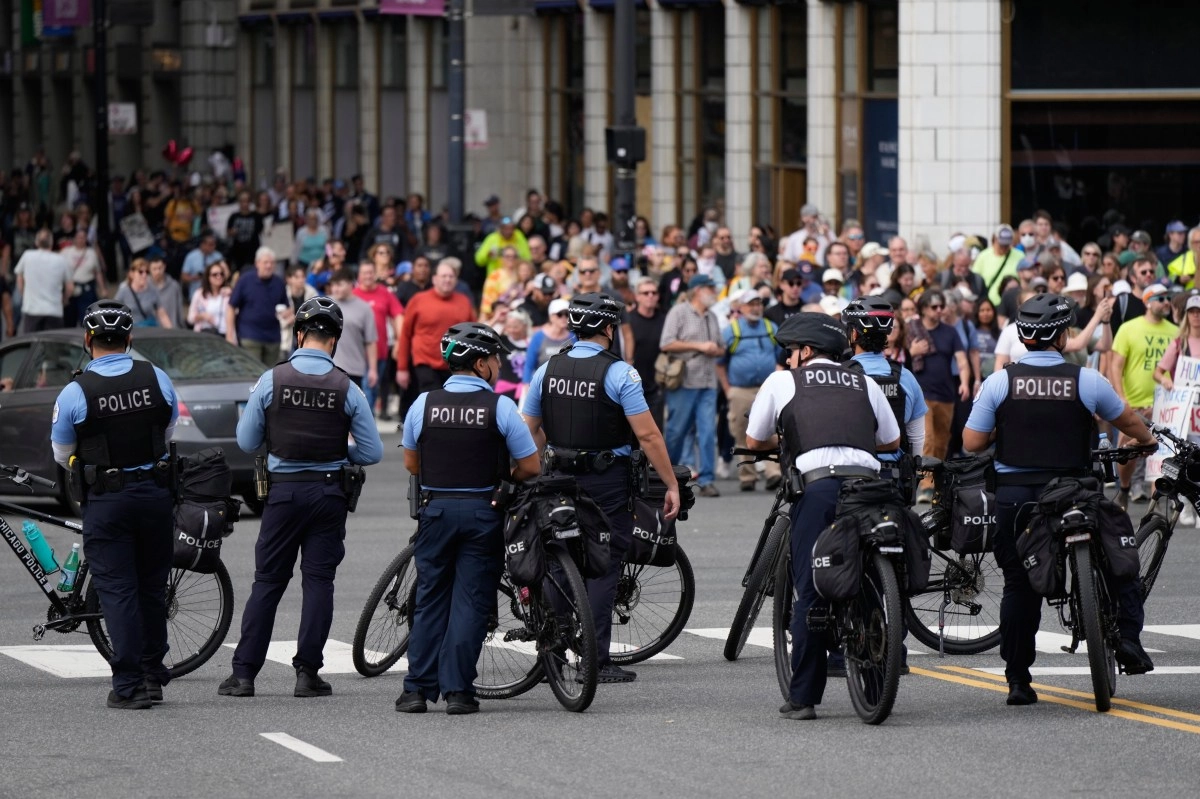
Americans' resistance to strict law enforcement is also evident in their opposition to the deployment of National Guard or military troops to control crime in the nation's cities.
Partisan differences are greater on these uses of troops than on any other anti-crime policy analyzed in the survey: more than 8 in 10 Republicans, compared to only 5% to 10% of Democrats, support each.
Greater support for juvenile courts to try their crimes versus sentencing them as adults
Only 41% of Americans believe that minors between Fourteen- to seventeen-year-olds who commit violent crimes should be treated the same as adults, a decrease from 46% in 2023, 59% in 2003, and 65% in 2000. On the other hand, the percentage who believe minors should receive more lenient treatment in juvenile court has increased to 50%, almost doubling the figure in 2000. Broad support for holding parents and relatives accountable for juvenile gun misuse: Regardless of their opinion on how juvenile offenders should be treated, the vast majority of Americans say they support a law that would hold parents legally responsible if their children commit crimes using the parents' firearms. Currently, 73% support implementing such a law, a percentage that has barely changed from the 69% recorded in Gallup's last poll in 2000. 2000. Only 22% oppose the measure, while 4% are undecided.
A slim majority still supports the death penalty
The percentage of Americans who support the death penalty for people convicted of murder has declined over the past three decades, from a peak of 80% in 1994 to the current 52%.
While statistically similar to the 53% recorded in each of the past two years, this year's level of support is the lowest in Gallup's trend on the death penalty since 1972, when 50% were in favor.
Republicans back strict policing measures
While a majority of all partisan groups, between 71% and 77%, support parental responsibility in cases of juvenile gun misuse, Republicans are notably ahead of Democrats and independents on the other five crime-related policies assessed in the latest poll. Consistent with these partisan differences, support for strict policing policies is higher among more Republican-leaning demographic groups—men, white adults, and older Americans—than among their more Democratic counterparts, including women, people of color, and younger Americans. These preferences reflect a broader public inclination toward moderate, preventative approaches to crime reduction, rather than harsh sentencing and coercive measures, at a time when Americans are less concerned about the problem of crime in the United States than in recent years.Broad support for holding parents and relatives accountable for juvenile gun misuse: Regardless of their opinion on how juvenile offenders should be treated, the vast majority of Americans say they support a law that would hold parents legally responsible if their children commit crimes using the parents' firearms. Currently, 73% support implementing such a law, a percentage that has barely changed from the 69% recorded in Gallup's last poll in 2000. 2000. Only 22% oppose the measure, while 4% are undecided.
A slim majority still supports the death penalty
The percentage of Americans who support the death penalty for people convicted of murder has declined over the past three decades, from a peak of 80% in 1994 to the current 52%.
While statistically similar to the 53% recorded in each of the past two years, this year's level of support is the lowest in Gallup's trend on the death penalty since 1972, when 50% were in favor.
Republicans back strict policing measures
While a majority of all partisan groups, between 71% and 77%, support parental responsibility in cases of juvenile gun misuse, Republicans are notably ahead of Democrats and independents on the other five crime-related policies assessed in the latest poll. Consistent with these partisan differences, support for strict policing policies is higher among more Republican-leaning demographic groups—men, white adults, and older Americans—than among their more Democratic counterparts, including women, people of color, and younger Americans. These preferences reflect a broader public inclination toward moderate, preventative approaches to crime reduction, rather than harsh sentencing and coercive measures, at a time when Americans are less concerned about the problem of crime in the United States than in recent years.Broad support for holding parents and relatives accountable for juvenile gun misuse: Regardless of their opinion on how juvenile offenders should be treated, the vast majority of Americans say they support a law that would hold parents legally responsible if their children commit crimes using the parents' firearms. Currently, 73% support implementing such a law, a percentage that has barely changed from the 69% recorded in Gallup's last poll in 2000. 2000. Only 22% oppose the measure, while 4% are undecided.
A slim majority still supports the death penalty
The percentage of Americans who support the death penalty for people convicted of murder has declined over the past three decades, from a peak of 80% in 1994 to the current 52%.
While statistically similar to the 53% recorded in each of the past two years, this year's level of support is the lowest in Gallup's trend on the death penalty since 1972, when 50% were in favor.
Republicans back strict policing measures
While a majority of all partisan groups, between 71% and 77%, support parental responsibility in cases of juvenile gun misuse, Republicans are notably ahead of Democrats and independents on the other five crime-related policies assessed in the latest poll. Consistent with these partisan differences, support for strict policing policies is higher among more Republican-leaning demographic groups—men, white adults, and older Americans—than among their more Democratic counterparts, including women, people of color, and younger Americans. These preferences reflect a broader public inclination toward moderate, preventative approaches to crime reduction, rather than harsh sentencing and coercive measures, at a time when Americans are less concerned about the problem of crime in the United States than in recent years.
Republicans back strict policing measures
While a majority of all partisan groups, between 71% and 77%, support parental responsibility in cases of juvenile gun misuse, Republicans are notably ahead of Democrats and independents on the other five crime-related policies assessed in the latest poll. Consistent with these partisan differences, support for strict policing policies is higher among more Republican-leaning demographic groups—men, white adults, and older Americans—than among their more Democratic counterparts, including women, people of color, and younger Americans. These preferences reflect a broader public inclination toward moderate, preventative approaches to crime reduction, rather than harsh sentencing and coercive measures, at a time when Americans are less concerned about the problem of crime in the United States than in recent years.
Republicans back strict policing measures
While a majority of all partisan groups, between 71% and 77%, support parental responsibility in cases of juvenile gun misuse, Republicans are notably ahead of Democrats and independents on the other five crime-related policies assessed in the latest poll. Consistent with these partisan differences, support for strict policing policies is higher among more Republican-leaning demographic groups—men, white adults, and older Americans—than among their more Democratic counterparts, including women, people of color, and younger Americans. These preferences reflect a broader public inclination toward moderate, preventative approaches to crime reduction, rather than harsh sentencing and coercive measures, at a time when Americans are less concerned about the problem of crime in the United States than in recent years.