

From alarmist to revolutionary the controversy per Robert F Kennedy Jr s plan for returning the US to a healthier state
The most powerful public health official in the United States is denigrated by some scientists
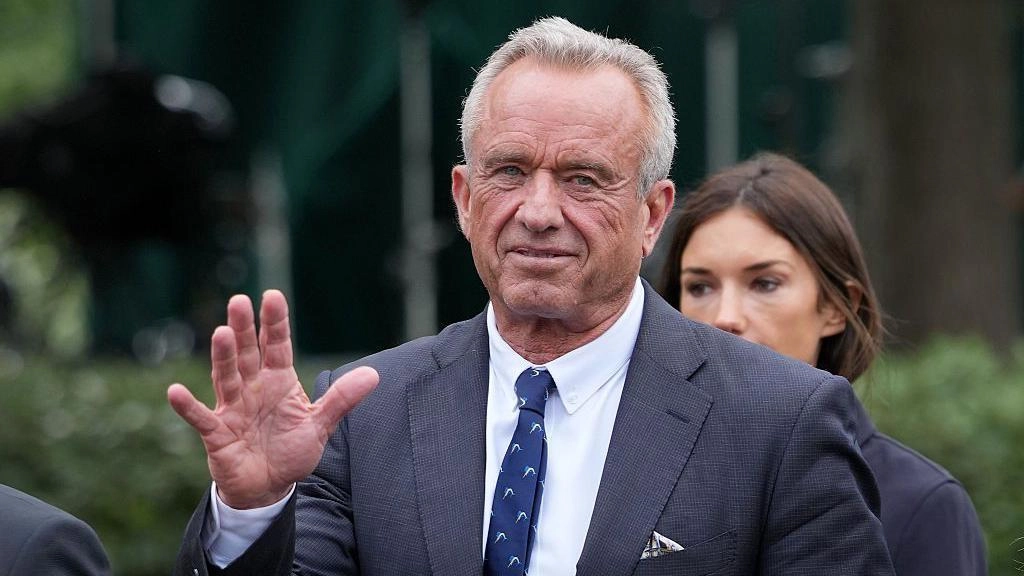

There's a saying that Robert F. Kennedy Jr. is fond of. He used it on the day of his confirmation as U.S. Secretary of Health and Human Services. “A healthy person has a thousand dreams, a sick person only one,” he said from the Oval Office. “Sixty percent of our population has only one dream: to get better.”
America’s most powerful public health official has made it his mission to combat what he describes as an epidemic of chronic disease in the country, an umbrella term that encompasses everything from obesity and diabetes to heart disease.
His diagnosis that the United States is experiencing an epidemic of poor health is a view shared by many of the nation’s health experts.
But Kennedy also has a history of promoting baseless conspiracy theories about health, from the suggestion that Covid-19 affected certain ethnic groups and spared others to the idea that chemicals in tap water might be making some children transgender.
After taking office, he cut thousands of jobs at the Department of Health and Human Services and eliminated entire programs at the Centers for Disease Control and Prevention (CDC).
“On the one hand, it’s extremely exciting that a federal official address chronic disease,” says Marion Nestle, a retired professor of public health at New York University. “On the other hand, dismantling the federal public health apparatus cannot possibly contribute to that agenda.” Kennedy is reviled by parts of the medical and scientific community. Dr. Amesh Adalja, an infectious disease physician and senior scholar at Johns Hopkins University, described him to me as an “evil nihilist.” But even some of his critics agree that he is bringing momentum and ambition to areas of health that have been neglected. Is it possible that the man who attracts so much criticism and, in some quarters, hate can really start to make America healthier?
American children ‘swimming in a toxic soup’
There’s one industry Kennedy had his eye on long before he joined the Trump administration: multinational food companies, he has said, have poisoned American children with artificial additives that have already been banned in other countries.
“We have a generation of kids right now that are swimming in a toxic soup,” he said on Fox News last year.
His first target was food dyes, promising to phase out the use of petroleum-derived dyes by the end of 2026.
Chemicals, with names like “Green No. 3” and “Red No. 40,” have been linked to hyperactivity and behavioral problems in children, as well as cancer in some animal studies.
“What’s happening in this administration is really interesting,” says Vani Hari, food blogger and former Democrat, who is now an influential voice in the “Make America Healthy Again” (MAHA) movement.
“MAHA is all about how to get people to stop eating processed foods, and one way to do that is to regulate the chemicals companies use,” she says.
There are signs that this push may be paying off.
Food giant PepsiCo, for example, announced in a recent marketing update that Lays potato chips and Tostitos “will no longer contain artificial colors by the end of this year.”
Kennedy did reach a voluntary agreement with the food industry, but it only came after states like California and West Virginia had already begun implementing their own laws.
“With food colors, companies will have to act because states are banning them anyway, and they don’t want to have to formulate separate products for each state,” she says. Nestle, an author and veteran industry critic.
More recently, Kennedy voiced support for a sweeping food bill in Texas that could address additives in everything from candy to cereal to soda.
Packages may soon be required to carry a high-contrast label stating: “WARNING: This product contains an ingredient not recommended for human consumption by the appropriate authorities in Australia, Canada, the European Union, or the United Kingdom.”
The Consumer Brands Association, which represents some of the largest food manufacturers, opposes the measure, claiming that the ingredients used in the U.S. food supply are safe and have been rigorously studied.
It’s hard to imagine a state like Texas passing such a regulation without the political backing of Kennedy and President Trump.
Is RFK “falling for misinformation”?
“He can’t change everything quickly, but I think the food dye problem will soon be history,” says Hari, who testified before the Senate on the issue last year.
Others, however, worry that the flood of ads about additives is downplaying a much larger problem.
“While some of these individual actions are important, they are insignificant in the larger context of chronic disease,” argues Nicola Hawley, a professor of epidemiology at the Yale School of Public Health.
“It prioritizes personal choice and access to natural foods, but that completely ignores the larger systematic and structural barriers (to healthy eating), such as poverty and aggressive junk food advertising aimed at children.”
The US government, for example, continues to heavily subsidize crops like corn and soy, key ingredients in processed foods.
Kennedy is updating the US national dietary guidelines, an important document that defines everything from school meals to assistance programs for seniors.
A reduction in added sugars and a transition to locally sourced, whole foods are expected.
In addition, he urged states to ban millions of Americans from using food stamps, a social benefit, to buy junk food or sugary drinks.
He has also backed local officials who want to stop adding fluoride to drinking water, describing it as a “dangerous neurotoxin.”
Fluoride is used in some countries, including parts of the US, to prevent cavities dental, and while its potential health effects are still debated, the UK's National Health Services (NHS) says a review of the risks has found "no convincing evidence" to support any concerns.
Other research into fluoride has found the mineral only has detrimental health effects at extremely high levels.
Professor Hawley also argues that there is a tension between Kennedy's "important message" about diet and chronic disease and what she sees as a lack of policy backed by sound scientific evidence.
“With him, you have this challenge of being swayed by misinformation about the link between additives and chronic disease, or environmental risk factors,” he argues. “And that really undermines the science.”
“He’s not anti-vaccine, he’s anti-corruption.”
This tension is even more evident when it comes to another of Kennedy’s big concerns.
Vaccines are still listed on the CDC website as one of the great public health achievements of the last century, along with family planning and tobacco control.
They prevent countless cases of disease and disability each year and save millions of lives, according to the American Medical Association.
Yet Kennedy is the best-known vaccine skeptic in the country. The advocacy group she led for eight years, Children’s Health Defense, repeatedly questioned the safety and effectiveness of vaccination. In 2019, she described disgraced British doctor Andrew Wakefield as the “most unfairly maligned person in modern history” and declared to a crowd in Washington that “any just society” would be erecting statues in his honor. Wakefield was struck off the UK’s medical register in 2010 after his research falsely linked the MMR (measles, mumps, and rubella) vaccine to autism, leading to a surge in measles cases in England and other countries. Over the past year, Kennedy has repeatedly insisted that she is not “anti-vaxxer” and “will not take vaccines away from anyone.” In the face of a deadly measles outbreak among unvaccinated children in West Texas, Kennedy posted that the MMR vaccine was “the most effective way to prevent the spread of the disease.”
In other comments, however, he described vaccination as a “personal choice” and emphasized alternative treatments such as vitamin A supplements.
A major deal with drugmaker Moderna to develop a bird flu vaccine for humans was canceled, and new rules were in place that could mean some vaccines would require additional testing before they are updated each winter.
In May, Kennedy posted a video on social media saying the government would no longer back COVID-19 vaccines for healthy children and pregnant women.
Some doctors, however, say narrowing eligibility would simply put the U.S. in line with other countries, including the U.K., where free COVID-19 booster shots are limited to those 75 and older or those with weakened immune systems.
“In reality, they’re just falling in line with everyone else, which is not at all outrageous,” says Professor Adam Finn, a pediatrician and one of Britain’s leading vaccine experts.
In June, Kennedy abruptly fired all 17 members of the influential expert committee that advises the CDC on vaccine eligibility.
He accused the panel of being “riddled with persistent conflicts of interest” and of approving new vaccines without proper scrutiny.
A new, much smaller committee, hand-picked by the administration, now has the power to alter, or even discard, crucial recommendations for immunizing Americans against certain diseases, as well as to overhaul the childhood vaccination schedule.
“This underscores how far we’re going backwards,” says Dr. Amesh Adalja, an infectious disease physician and senior research fellow at Johns Hopkins University.
“I think the panel will become increasingly irrelevant if RFK Jr. can shape it the way he wants.”
The new panel made its first decision in late June: It voted to stop recommending a small number of flu vaccines that still contain thimerosal, a preservative Kennedy wrote a book about in 2015.
His critics say a new era of vaccine policy has arrived in the United States. But his supporters say no topic, including vaccine safety, should be considered off-limits.
“Everything should be open to debate, and Bobby Kennedy is not anti-vaccine; he’s anti-corruption,” argues Tony Lyons, co-founder of the political action committee that supported his independent presidential campaign.
“It’s about being pro-science, pro-capitalism, and believing that you have an obligation to the public to thoroughly investigate any product you give to 40 million children.”
The Autism Puzzle
Weeks after Kennedy took office, news broke that the CDC would launch a research project on the relationship between vaccines and autism.
Since Wakefield’s now-discredited 1998 Lancet article linking autism to the MMR vaccine given to children, numerous international studies have analyzed this topic in detail without finding any substantiated link.
Nevertheless, Kennedy hired David Geier, a well-known vaccine skeptic, to reanalyze the data.
Today, Autism is widely considered a lifelong spectrum disorder.
It can include people with high support needs who are nonverbal, and people with above-average intelligence who might have difficulty with social interaction or communication.
Most researchers believe the rise in cases over the decades is due to a tighter definition of children with autism, as well as greater awareness, understanding, and detection.
But in April, Kennedy dismissed that idea, describing autism as “preventable.” He blamed a mysterious environmental factor for the increase in eight-year-olds being diagnosed.
“This is coming from an environmental toxin… (in) our air, our water, our medications, our food,” he said.
He pledged to undertake a massive research effort by September to find the cause and “eliminate those exposures.”
Dr. Fombonne strongly denies this. “It’s absurd and demonstrates a complete lack of understanding,” he said. “We’ve known for many years that autism has a strong genetic component.”
In the same speech, Kennedy stated that many autistic children will “never pay taxes, never hold a job. They’ll never play baseball. They’ll never write a poem. They’ll never go on a date. Many of them will never use the bathroom without help.”
Many in the autism community are outraged. “What we see here is fear-based rhetoric and a misleading narrative that causes harm and perpetuates stigma,” says Kristyn Roth of the Autism Society of America.
But some parents of autistic children are more sympathetic.
Emily May, a writer and mother of a child with autism, wrote in The New York Times that she found herself “nodding along as Mr. Kennedy spoke about the grim reality of profound autism.”
“His comments reflect the reality and pain of a subset of parents of children with autism who feel excluded from much of the conversation,” she wrote.
The administration has since tempered its promise to find the causes of autism by September but is still promising detailed results of its research by March 2026.
An Imperfect Messenger?
Robert Kennedy has only been in office a few months. But it's already raising important questions, particularly about chronic diseases, that no health secretary has ever asked in the same way.
For the first time, this issue has both political attention and bipartisan support in the United States.
He’s clearly not afraid to take on what he perceives as vested interests in the food and pharmaceutical industries, and he continues to have the strong support of President Trump.
Tony Lyons, who has published Kennedy’s books, considers him “uniquely qualified” for the most influential position in American public health.
“He’s a corruption fighter. He’s seen what all these types of companies do, not just pharmaceuticals but also food, and he wants them to do a better job,” he says.
Robert Kennedy’s record as an environmental lawyer, taking on big business and the establishment, has clearly shaped the views he holds today.
But Jerold Mande, a former federal food policy adviser during three administrations, worries that Kennedy’s own views and biases mean some of his proposed solutions are predetermined and unsupported by evidence.
Mande, now a professor of nutrition at Harvard, describes Kennedy as an imperfect messenger and says he has “huge concerns” about the administration’s approach to public health issues, from tobacco control to vaccination, where “there’s no doubt that what they’re doing is going to cause enormous harm.”
“Overall, I’m optimistic… but the right answers still need to be found, and those answers can only be found through science,” says Professor Mande.
“We have an opportunity now, and he’s facilitating it by making it a priority. But it’s how that opportunity is used that will determine whether it’s a success or not. And that’s where the verdict is still out.”