

What was the war for?: the inevitable question raised by the US-Iran deal
While the human cost of war is evident, the Iranian regime has not only survived the war, it has grown stronger
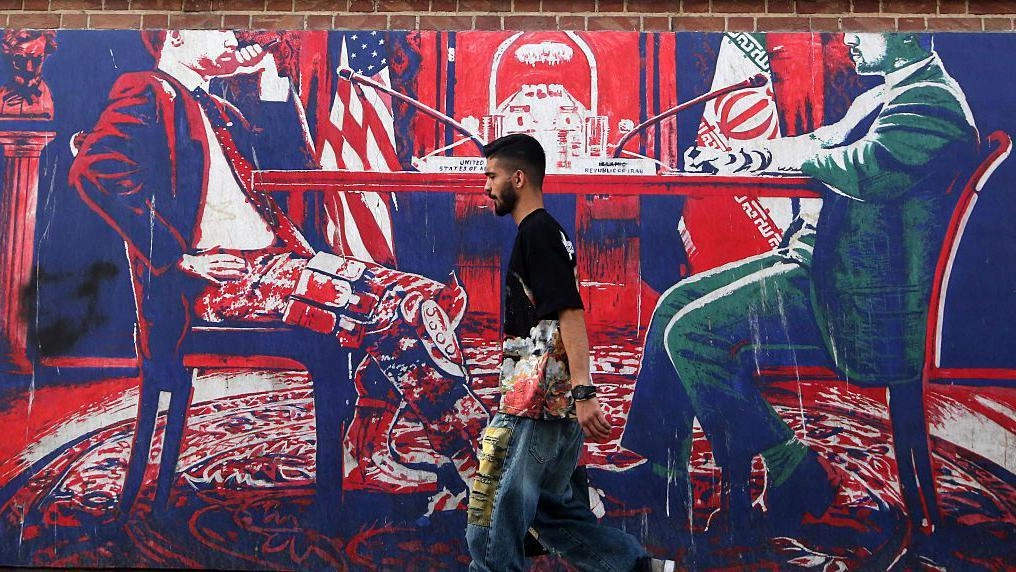

The memorandum of understanding signed by the presidents of the US and Iran, Donald Trump and Masoud Pezeshkian respectively, lays out the political, military and economic consequences of the ill-calculated decision to attack Iran on February 28.
The human cost is already evident. Thousands have died, many of them civilians, in Iran and Lebanon.
The United States, and by extension Israel, have suffered a strategic defeat.
The regime in Tehran faced its worst nightmare: a joint military operation to weaken or destroy it by the United States, the world's strongest power, and Israel, the Middle East superpower.
The regime has not only survived, but has emerged stronger.
Tehran's strategy of blocking the Strait of Hormuz - and with it a fifth of the world's supply of oil and gas, as well as other vital components of the global economy - has forced Trump to accept a series of concessions that have angered and alarmed the most anti-Iran sectors in the United States and the Israeli government.
The memorandum of understanding - or MOU - calls for an end to the war in Lebanon.
Israel says that cannot happen. He wants freedom of action in Lebanon, and this issue has the potential to cause an even greater rift between Israel and the United States, and to favor the most radical sectors of Iran that oppose any agreement with the Americans.
In exchange for reopening the strait, the United States lifted its counterblockade on Iranian ports and sanctions, which will allow Iran to earn billions of dollars from oil exports.
In addition, it will begin the process of returning another billion to Iran by releasing assets that were frozen abroad.
That will happen before they enter into the difficult task of negotiating a nuclear deal.
It is the price of returning to the way things were on February 27, the day before the United States and Israel started the war.
The signing of the memorandum of understanding means that negotiators will return to work and that ships can transit the Strait of Hormuz again.
Hormuz, a better and cheaper weapon
"The only 'achievement' of the ceasefire is the probable reopening of the Strait of Hormuz - which was already open before the war began - and apparently we will pay Iran to do it," wrote Antony Blinken, who was Secretary of State during Joe Biden's government, in a message on X.
The question of what exactly the war was for is inevitable and will not go away. It amounts to Trump's worst foreign policy mistake yet.
It could also mean the end of Israeli Prime Minister Benjamin Netanyahu's long political career.
He faces elections in October and a reckoning by Israeli voters for his role in security failures - the worst in Israel's history - that caused its renowned military and intelligence services to fail to detect Hamas' plan to attack its territory from Gaza on October 7, 2023.
Netanyahu's hardline military policies and disdain for diplomacy were designed, at least in part, to restore his reputation as Israel's "Mr. Security."
Tehran was always aware of the potential power of closing the Strait of Hormuz. So were the US military, its diplomats and its intelligence services.
But Iran's former supreme leader, Ali Khamenei, an elderly and cautious man, chose not to risk using the strait as a weapon.
After Israel killed him, along with his closest advisors, in the first bombing raids of the war, his successors believed - correctly - that they were in an existential struggle and did not hesitate to close the strait.
They discovered the power of controlling a global economic bottleneck. It is a much more usable and much cheaper weapon than the network of allies and affinity groups in which he invested decades and billions in the Middle East.
With the exception of Bashar al Assad's regime in Syria, which collapsed at the end of 2024, Iran's so-called resistance axis survives precariously. But it has been so weakened by Israel that it is debatable whether it can still “resist.”
Iran has also invested large sums in a nuclear program that it continues to deny was intended to make a weapon, but which undoubtedly gave Tehran an option and a threat. However, it sparked a war that, despite the regime's survival, has caused enormous damage to Iran.
Closing the strait, by contrast, was easy and had a swift and devastating impact, spreading the damage to the Arab oil states and much of the rest of the world.
A costly miscalculation
The power of the US and Israeli air forces achieved a series of tactical victories. But they were not enough to avoid a strategic defeat.
This was because the US-Israel strategy of regime change was based on a series of simplistic and erroneous assumptions.
They assumed that killing the supreme leader would cause the regime to collapse. But, for almost half a century, the institutions of the Islamic Republic have been designed to resist attempts to destroy them.
It was not like Venezuela, a corrupt Latin American dictatorship, which collapsed when its leader was kidnapped and put on trial in the United States.
The Iranian regime is undoubtedly corrupt and highly repressive – its forces killed thousands of protesters in the streets in January – but it is also based on ideology, religious conviction and a conception of national security, martyrdom and survival that emerged from the devastating war with Saddam Hussein's Iraq in the 1980s.
When they entered the war, President Trump said the regime in Tehran would fall. He told the Iranian people to prepare for a once-in-a-generation opportunity to take back their country. Shortly after, he asked for his unconditional surrender.
Netanyahu, who had repeatedly tried unsuccessfully to convince Trump's predecessors in the White House to go to war against Iran, used biblical language to summarize the magnitude of what he believed was about to happen.
“This coalition of forces allows us to do what I have longed for for 40 years: hit the regime of terror with full force.”
Neither of them has achieved it.
The memorandum of understanding is not a final agreement. It is a pact to talk about the biggest issue that separates them: Iran's nuclear program. But it is loaded from the beginning with key incentives for Tehran.
If talks move forward, the United States has said it will lift sanctions.
It all depends on the success of 60 days of negotiations on a nuclear deal, which can and probably will be expanded as the issues are complex.
Neither party trusts the other. Many things can go wrong. The toughest sectors in Washington, Tehran and Israel do not want the agreement to work.
Iran could overstep its bounds, adopting maximalist stances in the upcoming negotiations and jeopardizing economic gains that could rescue its battered economy.
But this deal is far better than a war that has caused thousands of deaths and threatened a global economic recession.
If a nuclear deal is reached that satisfies both the United States and Iran, and if both sides keep their promises, the Middle East could be transformed. That's a big conditional “if,” at the end of a long and difficult negotiation.