

Hurricane Erin threatens with dangerous waves and currents on the east coast of the USA.
The hurricane is located about 1,400 kilometers south-southeast of North Carolina and will cause dangerous waves in the coming days.
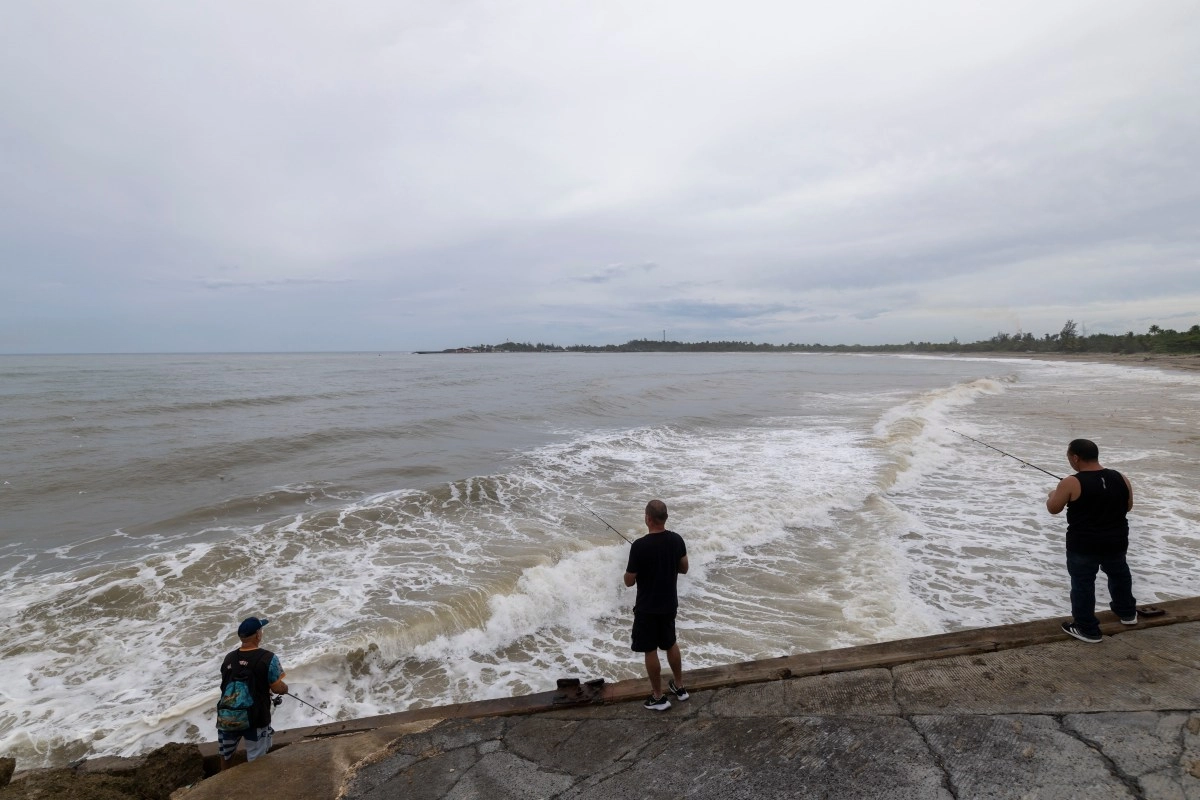

The powerful Category 4 Hurricane Erin threatens the east coast of the United States in the coming days and Canada and will pass near the Bahamas on Monday after causing strong winds and rain in the Caribbean, especially in Puerto Rico, over the weekend, although without causing serious impacts.
The National Hurricane Center (NHC) of the United States warned this Monday that the hurricane, which is located about 1,400 kilometers south-southeast of North Carolina, will cause dangerous surf and life-threatening rip currents in the coming days along much of the East Coast of the United States, as well as in the Bahamas, Bermuda and Atlantic Canada.
These adverse ocean conditions will likely cause life-threatening rip currents, stressed the most recent Bulletin.
The agency also warned of heavy rains in the Turks and Caicos Islands, the southeastern and central Bahamas, with accumulations of 50 to 100 millimeters (2 to 4 inches) and maximums of up to 150 millimeters (6 inches), which could generate flash flooding, urban flooding and mudslides.
Minor coastal flooding is also expected in areas with storm surge, accompanied by large waves.
Erin remains a category 4 on the Saffir-Simpson scale, out of a total of 5, with maximum sustained winds of 215 kilometers per hour (130 miles) and higher gusts.
Meteorologists The NHC says hurricane-force winds extend outward up to 80 miles (130 kilometers) from the center, and tropical storm winds extend outward up to 230 miles (370 kilometers). The storm was located about 115 miles (190 kilometers) north-northeast of Grand Turk Island and 890 miles (1,430 kilometers) south-southeast of Cape Hatteras, North Carolina. The Miami-based NHC says the system is moving northwest at 13 mph (20 kilometers per hour), with a gradual turn toward the north expected between Monday and Tuesday. According to the forecast track, Erin's eye will pass east of the southeastern Bahamas on Monday and move between Bermuda and the U.S. East Coast by midweek, remaining a major hurricane. Tropical Storm Erin emerged last Monday and became a hurricane on Friday after the formation of storms Andrea, Barry, Chantal and Dexter in the Atlantic. Chantal was the first to make landfall in the United States this year, where it left at least two people dead in North Carolina in July. The U.S. National Oceanographic and Atmospheric Administration (NOAA) announced Friday that it expects increased storm activity Tropical storms in the Atlantic during the second half of the hurricane season, with two to five "major" hurricanes expected between August and November.
NOAA maintained its forecast of an "above normal" hurricane season, estimating between 13 and 18 tropical storms, of which between five and nine could become hurricanes.