

The BBC defends its "impartial journalism" as Trump threatens a $1 billion defamation lawsuit
The British public broadcaster rejects accusations of bias as it faces a potential multi-million dollar lawsuit from Trump
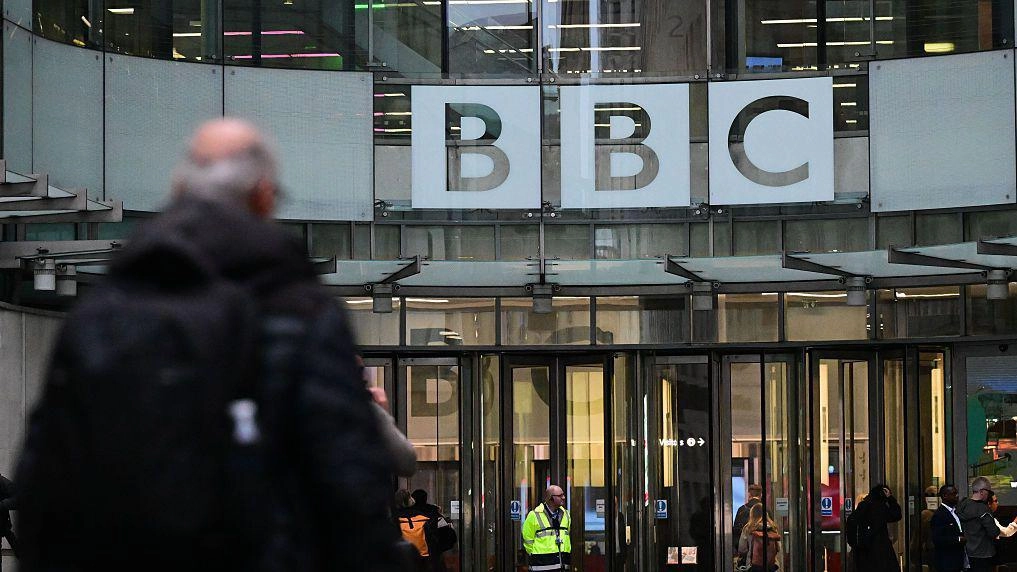

“It's simply not true.” This was the response of BBC Council Chairman Samir Shah to accusations of bias against the British public broadcaster following the scandal over the editing of a documentary about Donald Trump, which led to the resignation on Sunday of the corporation's Director-General, Tim Davie, and the Chief Executive of the News Division, Deborah Turness. Davie and Turness resigned days after The Telegraph published a report about an internal document prepared by former BBC advisor Michael Prescott, which indicated, among other things, that a documentary from the Panorama program, one of the network's most prestigious, had been edited with the deceptive intention of altering the words Trump addressed to his supporters who stormed the Capitol in Washington on January 6, 2021. Trump's lawyers sent a letter to the BBC threatening legal action if a "full and fair" retraction of the Panorama documentary, which they labeled "false and defamatory," is not broadcast.
They are demanding an apology and compensation by Thursday or they will file a lawsuit for at least US$1 billion against the BBC for what they describe as the “overwhelming financial and reputational damage” suffered by Trump.
The US president thanked The Telegraph for “exposing these corrupt journalists.”
Davie and Turness admitted that the BBC had made a “mistake” in editing Trump's words, but denied the accusations of bias that have been leveled against the corporation.
“I resigned this weekend because I take responsibility, but I want to make one thing very clear: the BBC is not institutionally biased; that's why it's the most trusted news provider in the world,” said Turness.
Shah echoed this sentiment in an interview with BBC journalist Katie Razzal, in which he defended the work and integrity of its professionals.
He said the BBC is a huge organization and highlighted the “excellent impartial journalism” it provides. “It is disrespectful to BBC journalists across the country (UK) and around the world to characterize them all as the result of one mistake,” he said,referring to the editing of Trump's remarks. Shah announced in a letter his commitment to defending the BBC's impartiality and independence. “I will personally ensure that the BBC continues to take the necessary steps in the future to ensure that it retains the trust of the public we serve.”
What the BBC is accused of and what the BBC says
Prescott's memo, published by The Telegraph, stated that Trump's words on January 6 were edited in a way that made the outgoing president appear to directly incite violence among his supporters who stormed the Capitol, which he denies.
The BBC has admitted that it made a mistake in editing Trump's words in the Panorama documentary that aired in October 2024, without receiving a “significant reaction from the audience” at the time, according to Shah.
Shah said that “the way in which the speech was edited gave the impression of a direct call to violent action.” The BBC has apologized for what it called an “error in judgment,” but has denied any intention to manipulate. The aim was to present the key messages of Trump's speech that day, when his supporters violently stormed the US Capitol, in a “condensed format.” The BBC Council chairman said of the complaints about the editing of Trump's words: “We should have acted sooner.” Prescott also denounced an alleged anti-Israel bias in the BBC Arabic service, which he accused of selectively covering critical stories of Israel and of giving misleading information about the percentage of Palestinian children and women allegedly killed by the Israeli army and the likelihood of starvation in Gaza as a result of the military blockade imposed on the territory. The memo also alleged that the BBC had avoided sending device alerts about news related to immigrants and asylum seekers in the UK and frequently published stories “celebrating the experience.” trans without the proper balance or objectivity.”
Shah countered that Prescott's accusations of “institutionalized bias” “are far from the truth” and said that wherever the BBC's Editorial Principles and Standards Committee had identified problems or shortcomings, action had been taken.
In a letter to the UK Parliament's Culture, Media and Sport Committee, Shah said the BBC's Editorial Principles and Standards Committee “identified concerns about underlying issues, for example in the Arabic service and long-form journalism. These two areas have been discussed at length and steps have been taken to address these kinds of problems," such as restructuring the BBC Arabic team and a new social media investigation unit to verify the identity and background of those appearing in its coverage. Shah also announced the immediate appointment of a Director of News Documentaries and Long-Form Journalism who will oversee what is published. What's being said in the UK:Although its journalism is broadcast in numerous languages ????around the world through its World Service, of which BBC Mundo is a part, the BBC is Britain's public broadcaster, and the resignation of its Director-General and the potential lawsuit from Trump have entered the British political debate. A spokesperson for Prime Minister Keir Starmer said that he does not believe the BBC is institutionally biased.” He also rejected Trump's claim that his journalists are “corrupt.”
Downing Street believes a mistake was made and the director-general and chief news officer have taken responsibility.
British Foreign Secretary Rachel Reeves noted that “the BBC is rightly held to high standards and this time they fell short.”
Reeves said: “Lessons need to be learned, but I have enormous respect for the BBC and I know they will bounce back from this.”
Liberal Democrat leader Ed Davey urged the Starmer government to condemn Trump's comments about the BBC.
“It should not be up to foreign powers to dictate where the British people get their news from,” Davey said in a letter to the government and the main political parties.
“The BBC belongs to the UK, not to Trump. “We must defend it together,” Davey said.
Nigel Huddleston, the Conservative Party's Culture Secretary, said instead that the BBC is biased and needs “a complete culture change.” According to him, the resignations of his top executives show “a whole series of repeated abuses of the corporation's fairness rules” and “Trump was in some ways the victim of the BBC's editorial bias.”
Nigel Farage, leader of the far-right Reform UK party, asserted that “the BBC has been institutionally biased for decades.” He said he had spoken to Trump about the Panorama scandal and Trump had told him: “Is this how you treat your best ally?”
BBC Political Reporter Georgia Roberts reported that,Although criticism of the BBC is not lacking among British parliamentarians, many are very uncomfortable with the possibility that the corporation may be suffering politically motivated attacks. Labor MP Tonia Antoniazzi is collecting signatures to send a letter to Culture Secretary Lisa Nandy. Antoniazzi said: “I want to protect the BBC.”
“With the director-general and the head of news gone and threats of legal action from President Trump, this is a critical moment for the organization,” he stated.
In the letter he is promoting, Antoniazzi asks the government to clarify whether the BBC board prevented Davie from quickly issuing a public apology for the editing of the Trump documentary and why the now former director-general felt it necessary to include in his resignation letter that the BBC should not be used as a partisan weapon.