

Bill Gates admits meeting with Epstein was a mistake and calls for justice for victims
Before Congress, the founder of Microsoft defended his actions and supported disclosing all the files of the case
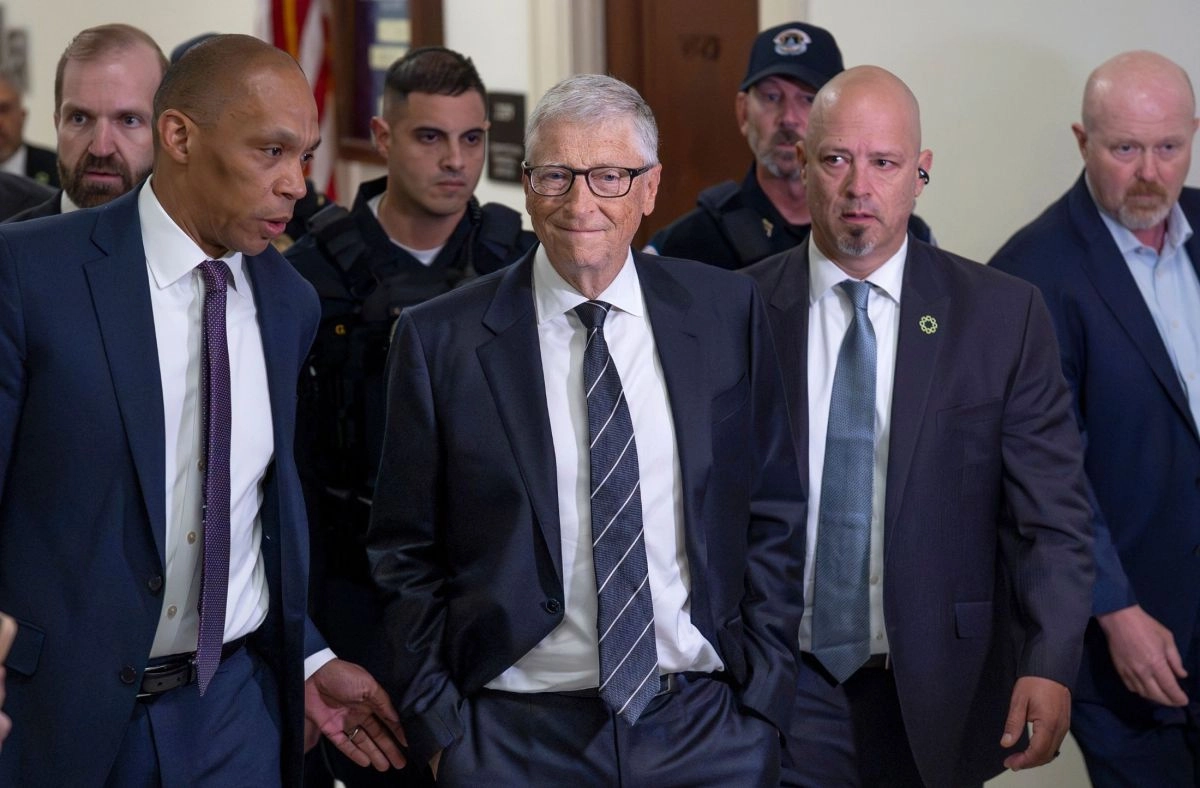

The founder of Microsoft, Bill Gates, appeared this Wednesday before the Oversight Committee of the United States House of Representatives to answer questions about his relationship with the deceased financier and sex offender Jeffrey Epstein, in a hearing that is part of the legislative investigations into the case.
In a prepared statement, Gates supported the full disclosure of documents related to Epstein and expressed his hope that the victims would get justice.
“I support the release of all files related to Epstein and sincerely hope that survivors of his crimes can get the justice they deserve,” he said.
The businessman also sought to make clear that he was never aware of criminal activities by Epstein during the time they maintained contact.
“I never witnessed or had any indication that Epstein was involved in ongoing criminal activity,” he said.
Gates explains how he met Epstein
According to him, he met Epstein in 2011 through people linked to his philanthropic work. Gates explained that the financier assured him that he could help raise billions of dollars for global health and education initiatives.
The mogul acknowledged that he knew that Epstein had faced legal problems in the past, but said that he did not understand the magnitude of the crimes that would later come to light.
During several meetings between 2011 and 2014, conversations revolved around possible financing structures for charitable projects. However, Gates maintained that he never allowed Epstein to participate in his organizations or receive any compensation.
As time went by, he said, he realized that the financing promises would not materialize and decided to cut off all communication.
“I told him we would not continue and I stopped communicating or meeting with him,” he explained.
“I should never have met him.”
One of the most compelling moments of his appearance was when he acknowledged that associating with Epstein was an error in judgment.
“I should never have met Epstein in the first place,” he declared.
Gates also revealed that Epstein attempted to use information about personal aspects of his life to pressure him into resuming contact. According to the businessman, these attempts failed, but they allowed him to understand how the financier sought to take advantage of his relationships with influential figures to improve his public image.
Finally, the philanthropist regretted that their meetings could have given Epstein credibility.
“If the time I spent with Epstein gave him any credibility, I deeply regret it,” he concluded.
Congressman does not see sincerity in Gates
Democratic Representative for Illinois, Raja Krishnamoorthi, expressed doubts about Bill Gates' attitude during his appearance. After the first hour of questioning, the legislator noted that the businessman was not being as open as he had expected and considered that some of his answers had been confrontational.
"I'm concerned that he's not being as candid and open as he could be. He's a little combative and I think, once again, we need to try to find out what happened," Krishnamoorthi said, referring to the development of testimony related to Gates' ties to Jeffrey Epstein.
The congressman also considered unusual the level of closeness that Epstein had with people around Microsoft. According to him, it is striking that the financier convicted of sexual crimes had managed to establish a relationship with Gates and several senior executives of the technology company. Krishnamoorthi anticipated that this aspect could become a central line of investigation in future hearings, pointing out that there are still questions about the real scope of these connections.
Legislators question obtaining funds
Representative Robert García stated that the objective of obtaining resources for public health projects did not justify maintaining contact with a person convicted of “horrible” crimes.
Along the same lines, Congresswoman Melanie Stansbury revealed that she directly asked if the ends justified the means. The response, he said, was that that formulation might be too strong, although he acknowledged that raising billions of dollars for public health initiatives was considered a goal worth pursuing.