

Hospitals in the Ebola epicenter in the Democratic Republic of the Congo are “full”
In the province of Ituri there are no beds for suspected cases, according to reports from Doctors Without Borders
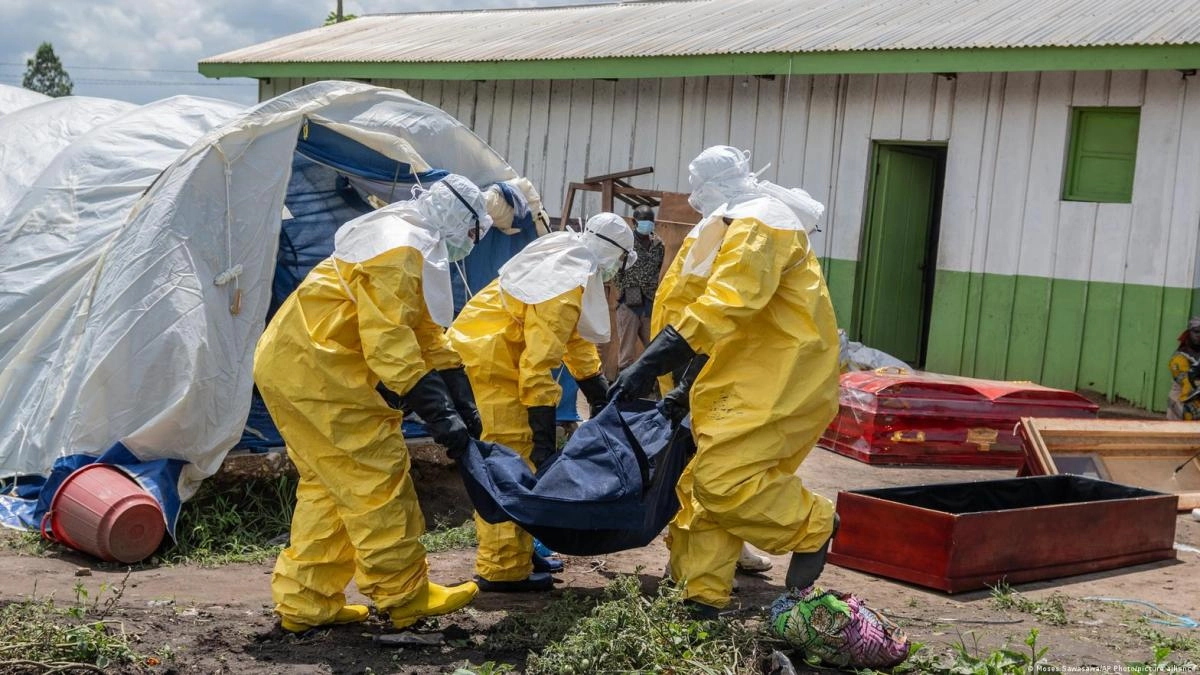

The health centers in the province of Ituri, in the east of the Democratic Republic of the Congo (DRC) and the epicenter of the Ebola epidemic declared last Friday, are “packed” with suspected cases of this disease, reported the organization Doctors Without Borders (MSF).
“We are full of suspected cases, we don't have space” is the message that health centers send to the health organization when they ask for space to send possible patients, MSF emergency manager Trish Newport explained in a video statement.
According to Newport, last weekend there were suspected cases that arrived at the Salama clinic in Bunia, capital of Ituri, where MSF has a surgical center that does not have an isolation area.
The team referred them to the Bunia hospital, but it “returned them saying: 'our isolation area is full of suspected cases, we don't have space for them,'” said Newport, who believes that this example serves to “get an idea of how chaotic everything is right now.”
The Bundibugyo strain
This outbreak, which has already caused 139 deaths and 600 suspected cases in the DRC and Uganda, corresponds to the Bundibugyo strain of Ebola, whose fatality rate ranges between 30% and 50%, according to the World Health Organization (WHO).
Newport indicated that this is “only the third time in history” that an outbreak of this strain has occurred, for which testing capacity is also “very limited.”
So far, the number of laboratory-confirmed cases is limited to 51 due to the remote nature of the region in which the outbreak occurs, where the existing laboratory platform allows detecting the usual Zaire variant, but not the Bundibugyo variant, according to the WHO.
Protective equipment arrives
"We will have more than 3,000 complete personal protective equipment that are arriving in Bunia. And this will be a great relief for many of our teams," stressed the head of MSF, which has sent material from its offices in Kampala (Uganda).
The virus began to circulate in the province of Ituri (east) and cases have already been discovered in the neighboring province of North Kivu.
Outside the DRC, Uganda has confirmed two cases in Kampala and South Sudan has detected another case in Western Equatoria state, near the DRC border.
United Kingdom approves millionaire aid
For its part, Britain has allocated up to $26.8 million in new aid funds to help contain the Ebola outbreak in eastern Democratic Republic of the Congo, the British Foreign Office said Thursday.
The funding will help the WHO, United Nations agencies and non-governmental organizations to step up surveillance, protect frontline health workers and improve infection prevention and control, the British Foreign Office said.
The Ebola virus is transmitted through direct contact with body fluids of infected people or animals and causes severe hemorrhagic fever, vomiting, diarrhea, and internal bleeding.
According to the WHO, it has an average mortality rate of between 25% and 90%.