

How the world's mangroves are recovering after decades of destruction
Mangrove swamp forests are experiencing a surprising recovery, which is good news for coastal communities and the climate
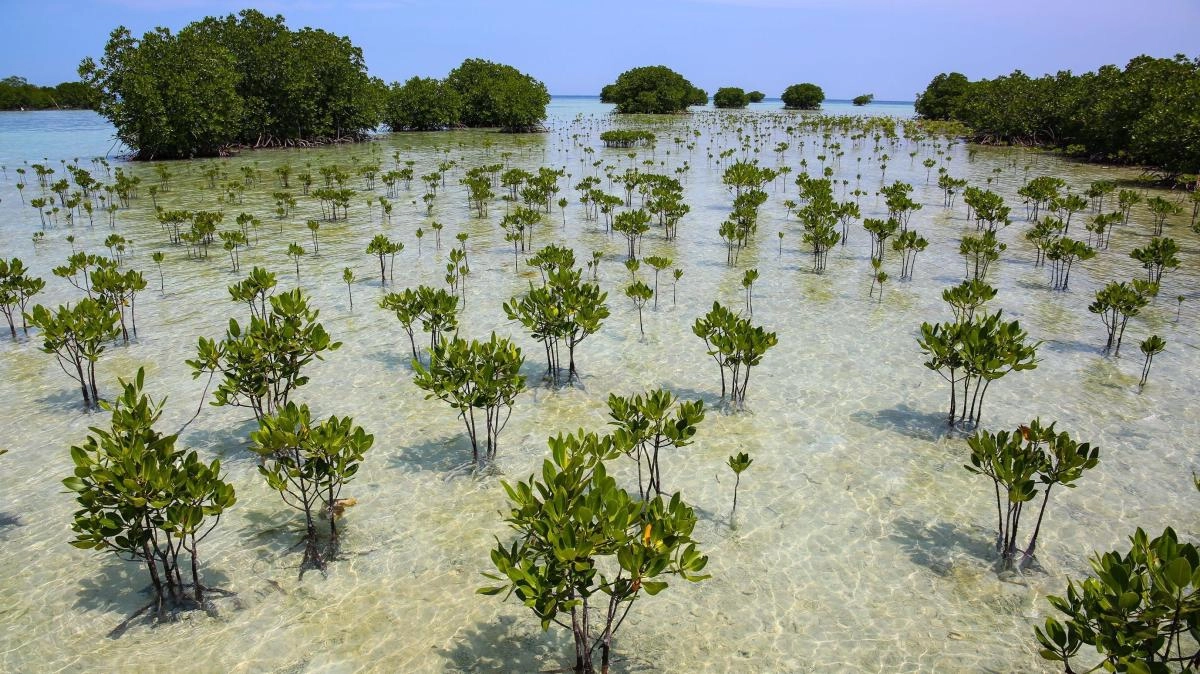

The world's mangrove forests, which protect millions of people from storms and absorb large amounts of greenhouse gases, are experiencing an unexpected recovery, scientists have found.
For decades, these swamp trees had declined rapidly due to logging for fish farms and housing.
However, a new study reveals that since 2010, the world has regained more mangroves than it lost, thanks to greater legal protection and greater public awareness of their importance, fueled by disasters such as the 2004 Indian Ocean tsunami.
Researchers say the key factor lies in the extraordinary ability of these forests to regenerate naturally once humans stop clearing them.
Mangroves are one of the world's unsung environmental heroes.
Not only do they store up to five times more external carbon dioxide than terrestrial forests, but their intertwined roots can also slow waves and protect coastal communities from storm surges and tsunamis.
These same roots constitute an ideal nursery for many species of fish and other marine species, protecting them from predators and providing them with abundant food.
However, these benefits have been seriously threatened over the last century due to the rise of aquaculture, agriculture and the expansion of coastal cities and towns, which have led to logging and the rapid disappearance of mangroves.
Between the 1980s and 2010, more than 12,000 km² of mangroves were cut down or destroyed in Asia, Africa and the Americas, an area equivalent to the size of Jamaica.
However, the new study shows a significant change in this trend, especially over the last decade.
Total net losses – the forest lost and not replaced – since the 1980s have been reduced to around 849 km2.
Restoration efforts over decades have contributed to the recovery of degraded forests, but the most significant change has been the natural expansion of mangroves in many parts of the world following the decline in deforestation.
This has allowed forest levels to stabilize in Indonesia and grow in Myanmar (formerly known as Burma), two of the countries with the highest mangrove density.
In Indonesia, the aftermath of the 2004 Indian Ocean tsunami appears to have influenced a change in perception about the importance of mangroves, and tree clearing for fish farming has slowed.
“Some islands were covered in mangroves, and after the tsunami, those islands were still very well protected, which increased public awareness of the importance of protecting mangroves,” said lead author Zhen Zhang of Tulane University in the United States.
A similar change in public attitude occurred in Myanmar following Cyclone Nargis in 2008 and the national logging ban in 2016.
According to the authors, technology is also part of the solution.
For this study, a different satellite imaging system was used to map the forests in greater detail, revealing a much larger number of new trees compared to previous studies.
These images come from the Landsat satellite, “which is highly sensitive to changes in forest cover and provides globally consistent observations that previous assessments may have missed,” said Professor Elizabeth Robinson, director of the Grantham Research Institute, who was not involved in the study.
“This represents considerable progress on previous global assessments,” he told the BBC.
However, some of this expansive growth is likely to have a double effect: it could come at the expense of environmental damage in other areas.
In many countries, including Brazil, new mangroves have settled along rivers and coasts with abundant nutrients in the sediments.
But forest destruction and mining upstream could have washed nutrients, such as nitrogen, from soils into waterways, benefiting mangroves downstream.
“This is good news for mangroves: there are more of them than we thought and they are demonstrating their resilience,” said Pete Bunting of Aberystwyth University, another of the authors.
“But it will only be good news if it doesn't turn into a total disaster upstream.”
The research also shows that while the combination of restoration and reduction of mangrove clearing has been successful, it has not been uniformly successful around the world.
West and Central Africa have become hotbeds of destruction.
“The Niger Delta is the poster child for the impact of mangrove pollution,” Bunting said.
“Oil pollution is having devastating consequences; if you look at Google Earth, you can see straight lines going through the mangroves where the pipelines pass.”
Tropical cyclones continue to pose a serious threat: some of the most drastic annual losses recorded in the study were caused by storms from Australia to the Caribbean.
Despite this, the authors agree that this is good news.
“We are on the right track as there is a clear downward trend in the loss rate,” Zhen Zhang told BBC News.
The study also revealed that many existing forests are becoming healthier.
Since the 1980s, the proportion of closed-canopy mangroves, the richest and most carbon-dense, has increased by almost 20%.
“So, I think we are going in the right direction,” Zhen concluded.