Hurricane Melissa crossed Cuba this Wednesday with intense rains and a strong storm emerges after having hit Jamaica with great intensity, a country that has been declared a "disaster zone" and where at least 4 people.
The powerful weather phenomenon made landfall near the province of Santiago de Cuba, in the southeast of the island, in the early morning hours as a Category 3 hurricane on the Saffir-Simpson scale with sustained winds of up to 193 km/h, reported the US National Hurricane Center (NHC).
Although it later weakened to a Category 2 hurricane, the Cuban Institute of Meteorology (Insmet) indicated that intense rains, strong winds, and associated storm surges would continue in the eastern third of the country.
In neighboring Haiti, the storm caused flooding that has claimed the lives of more than 20 people, according to the Associated Press, citing the Haitian civil protection agency, as well as the collapse of houses with people trapped inside.
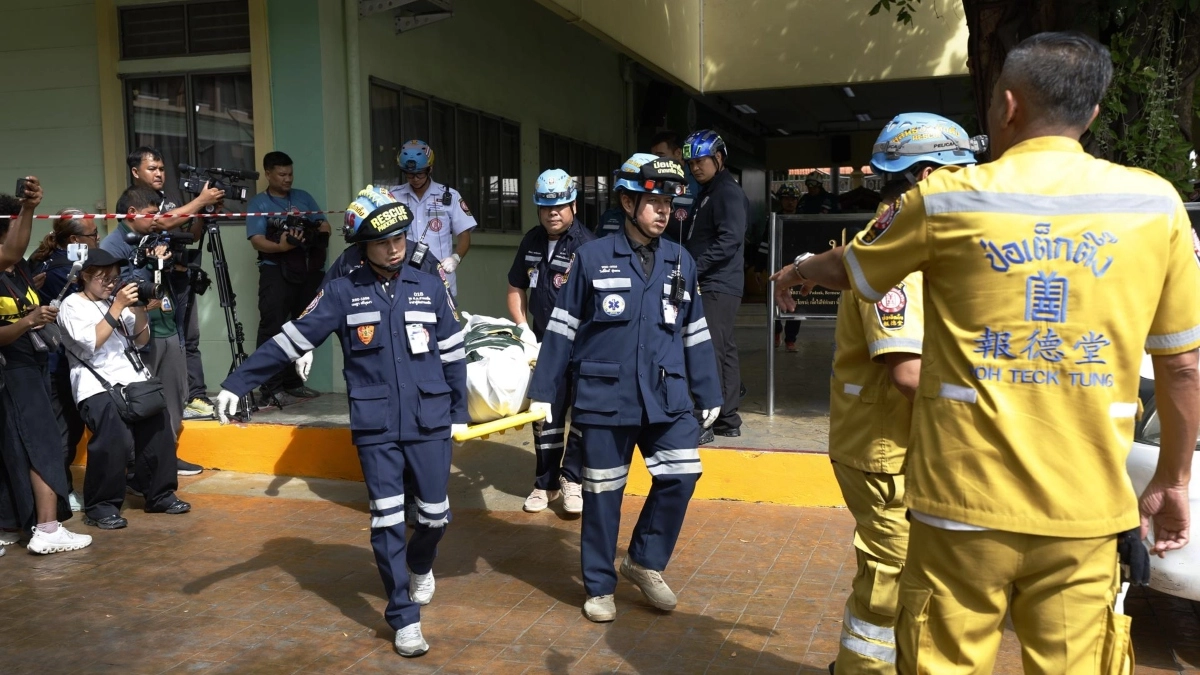
Melissa passed through Jamaica on Tuesday as a Category 5 hurricane with winds reaching speeds of up to 295 km/h, it became the strongest storm ever recorded on this Caribbean island of 2.8 million inhabitants, where the damage it left in its wake is still being assessed. On Tuesday afternoon, Desmond McKenzie, Jamaica's Minister of Local Government and Community Development, reported that four people had died in the St. Elizabeth area. In a statement, he said: "I regret to announce that the police have confirmed the deaths of four people—three men and one woman—in St. Elizabeth. They were found after being swept away by floodwaters caused by the hurricane." The worst in years. After hitting Jamaica, Melissa reached Cuba through the city of Chivirico, in the southeast of the country. Melissa produced abundant rainfall, with a record of 335 mm.2 millimeters (or liters per square meter) at the Holguin Provincial Meteorological Center.
BBC meteorologist Simon King stated that Melissa is one of the most powerful storms to hit the island since 2017.
Cuban state media indicated that the country's Revolutionary Armed Forces (FAR) were focusing their greatest efforts on the city of Santiago de Cuba, the island's second most populous.
The Cuban government had declared a state of alert in the provinces of Granma, Santiago de Cuba, Guantanamo, Holguin, and Las Tunas.
Pope Leo
Devastation in Jamaica
Preliminary damage reports from Jamaica describe damage to numerous hospitals, flooded roads, and thousands of downed trees and power lines, but due to communication difficulties and power outages, the true extent of the disaster is not expected to be known for several days.
“The reports we have received so far include damage to hospitals, homes, and commercial properties, as well as damage to our road infrastructure,” Prime Minister Holness told CNN, according to Reuters.
The prime minister later told the BBC that Parishes such as Saint Elizabeth, Hanover, Saint James, and parts of Manchester have been severely affected. The town of Black River “has been completely destroyed.”
For now, the priority is to restore power and telecommunications, Holness said. This could take days or, in the worst-affected areas, weeks. Richard Vernon, mayor of Montego Bay, the island's second-largest city, echoed these sentiments. "The first thing we're doing is making sure everyone is alive," he told BBC Breakfast. The latest data shows that Melissa is not only the most powerful storm in the world so far this year, but also the strongest hurricane to hit Jamaica since records began 174 years ago. The previous record was held by Hurricane Gilbert, which struck the island in 1988 and caused 49 deaths.
Dead silence
The first rays of the sun this Wednesday did not arrive accompanied by the traditional bustle with which the city of Kingston usually dawns, but with dead silence.
The reason? “Many people are without electricity,” explained Nick Davis, to BBC reporter in Jamaica's capital. The storm has left nearly three-quarters of the island without power. But while authorities waited for sunlight to allow them to assess the damage, some officials warned that wildlife also posed a threat.Flooding may have displaced crocodiles from their natural habitats, Jamaican health officials reported. “The rising water levels in rivers, ravines, and swamps could cause crocodiles to move into residential areas,” the Southeast Regional Health Authority said in a statement. “Therefore, residents living near these areas are advised to be vigilant and avoid flooding.” The UK government has joined this call and urged British tourists on holiday on the Caribbean island to Stay in their hotels.
In the Bahamas, Melissa's next destination to the northeast, the government ordered the evacuation of residents in the southern part of the archipelago, while Jamaica, Haiti, and the Turks and Caicos Islands continued to suffer the aftereffects of the storm.
Melissa has been characterized by a particularly slow advance of 6 km/h over Caribbean waters, which represents a greater risk because its heavy rains last longer in the region.