

Iran announces a halt to recent attacks after exchanging fire with Israel for the first time since the ceasefire in Apri
Tehran announced a halt to attacks after President Trump warned both countries to stop "shooting at each other"
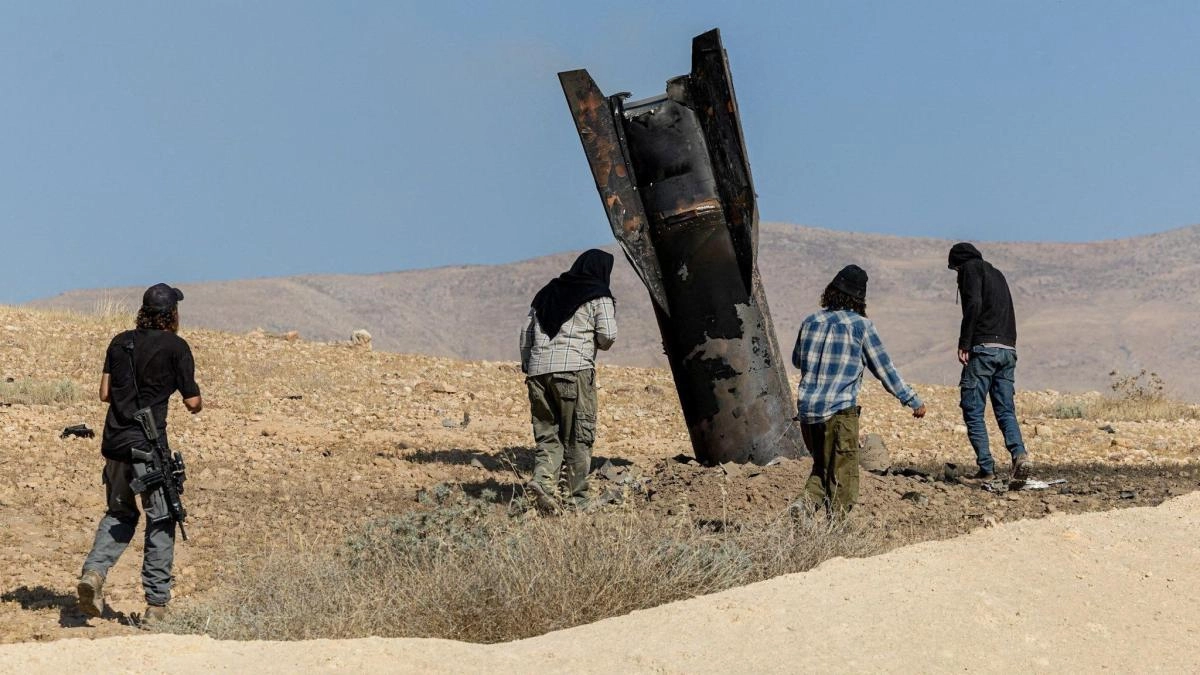

Iran's highest military command announced an end to operations against Israel, after a series of attacks and counterattacks by both countries that began on Sunday, the first since the April ceasefire.
The Khatam al Anbiya headquarters issued a statement announcing “the cessation of operations of the armed forces.”
However, he warned that if Israel's attacks continue, "including in southern Lebanon," Iran would respond "with more severity and force than before."
For its part, Israel said it would suspend attacks on Iran “at Trump's request,” the country's Channel 12 reported, citing a senior Israeli official.
Previously, President Donald Trump had expressed on the social network Truth Social that Iran and Israel should stop “shooting” each other.
Iran and Israel have carried out repeated airstrikes against their respective territories for the first time since the ceasefire declared in April, while President Donald Trump said that both countries must stop “shooting” each other.
There have been reports of explosions in Tehran, the Iranian capital, although it is unclear whether these are due to the latest Israeli attacks.
For its part, Iran's Islamic Revolutionary Guard Corps (IRGC) announced that it had launched an attack on a petrochemical plant in Haifa, northern Israel, according to the Iranian Tasnim news agency. That attack, Tasnim cites the IRGC, was in response to Israel's own attack on an Iranian petrochemical facility in Mahshahr, in the southwest of the country.
Other Iranian attacks have been against the Israeli air bases of Nevatim and Tel Nof, according to Iranian state media. The IRGC said the operation was carried out in response to Israeli missiles launched “against several radar installations in three locations.”
Earlier there were several waves of missiles against northern Israel, which in turn responded with attacks on military targets in western and central Iran.
It is the first time that both countries have attacked each other since the ceasefire in April.
The IRGC assured in a statement that this attack was a “warning” and represents “the beginning of a full week of continuous attacks.”
The first Iranian bombing occurred after Israel attacked Beirut, the capital of Lebanon, on Sunday morning.
The Israeli military is carrying out ground operations in southern Lebanon in what it says is an attempt to stop Hezbollah from firing rockets into northern Israel.
Hezbollah said it fired a barrage of rockets at a group of Israeli army vehicles and soldiers in southern Lebanon on Monday morning.
In a message on Telegram, Hezbollah said it attacked a “gathering” of military personnel outside Beit Yahoun in response to Israel's “violation of the ceasefire and its attacks on villages in southern Lebanon.”
Referring to the attacks on Beirut, the IRGC added that if Israel's "acts of aggression" are repeated, responses will be "broader" and could encompass "all" US and Israeli targets in the region.
Iran's Revolutionary Guard said it used ballistic missiles to attack the Ramat David air base, located southeast of Haifa.
He also accused the governments of the United States and Israel of “breaching their commitments” under the ceasefire that Iran signed with the two countries and which came into effect in early April.
US President Donald Trump called on Iran to return to the negotiating table after the attacks and asked Netanyahu's government not to respond to the Iranian attack.
However, hours later the Israel Defense Forces (IDF) indicated that they had attacked targets in Iranian territory.
“A few moments ago, the Israeli Air Force attacked military targets belonging to the Iranian terrorist regime in western and central Iran,” the IDF reported on Telegram.
Although they did not provide further details about the attacks, Iranian state television reported explosions in the cities of Tehran, Tabriz and Isfahan.
Hours later, during the early hours of Monday, the IDF indicated that Israeli territory was receiving a new wave of missiles from Iran.
“Tonight Tehran must burn!”
The Israeli Air Force said it had intercepted “all missiles launched from Iran so far.”
He added that “additional launches” had been identified and that the Israeli army “is continually detecting and intercepting threats.”
“Tonight Tehran must burn!” said Israeli National Security Minister Itamar Ben-Gvir, in a short post written in Hebrew in X after the attacks on northern Israel.
For her part, IDF spokesperson Effie Defrin said in a brief statement that the Iranian regime had made “a serious mistake.”
“The IDF will continue to operate throughout Lebanon and will intensify its attacks against the terrorist organization Hezbollah,” he noted.
Israel also announced the closure of the border crossings to Gaza after the attacks by Iran, including the Rafah and Kerem Shalom crossings, through which humanitarian aid destined for the Palestinian territory transits.
During the early hours of Monday, the IDF reported having detected the launch of a missile from Yemen towards Israeli territory, for which air defense systems were "operating to intercept the threat."
The Times of Israel newspaper reported that alarm sirens had been activated in Jerusalem, Tel Aviv and surrounding areas in the center of the country.
Attacks against Beirut
Israeli airstrikes on two apartment buildings in a Beirut stronghold of Hezbollah, an Iranian-backed group, killed two people and wounded at least 20, including women and children, Lebanon's Health Ministry said.
Israeli Prime Minister Benjamin Netanyahu said Israel had attacked “terrorist headquarters in the Dahieh district of Beirut in response to Hezbollah firing into Israeli territory.”
Hezbollah, for its part, confirmed that it launched rockets against Israeli military positions.
After the attack on Beirut, the IDF stated that it was preparing for “possible launches” against Israel in the coming hours, which is why it had activated sirens in “several areas of the country.”
When Netanyahu gave the green light for his armed forces to attack Beirut's southern suburbs again last week, Tehran threatened to launch new attacks on northern Israel.
And Trump even asked Netanyahu in the strongest possible terms to hold back, fearing that any such action would derail the already fragile April ceasefire.
Netanyahu accepted, but on the condition that Hezbollah not launch more rockets into northern Israel.
“I am the one in charge”
A new and precarious ceasefire was subsequently agreed between the governments of Israel and Lebanon in talks mediated by the United States. But once again, the agreement did not appear to have much effect on the ground.
Now the pact appears to have collapsed and the course of the conflict will depend largely on Israel's response.
There could be a new round of retaliation between the two countries that would reignite the war.
In that context, Trump's reaction will be key.
Hours after the Iranian attack, Trump told the Financial Times that Netanyahu will have no choice but to accept any agreement the United States reaches with Iran.
“You will have no choice,” Trump said. "I am the one in charge. I make all the decisions. He [Netanyahu] is not the one in charge."
In a recent message on his Truth Social social network, Trump warned Israel and Iran to stop “shooting” each other.
Trump had previously told Axios that he would ask Netanyahu not to retaliate against Iran for the latest attack, in order to ensure that the three parties could salvage a deal.
The US government ordered the closure of its embassy in Jerusalem due to “the current security situation in Israel.”
Meanwhile, pro-Iranian government demonstrations were reported in Tehran after the attacks on Israel.