

Court Orders Restrict IRS from Sharing Taxpayer Information with ICE
A federal court has temporarily blocked the IRS from providing sensitive taxpayer data to ICE.
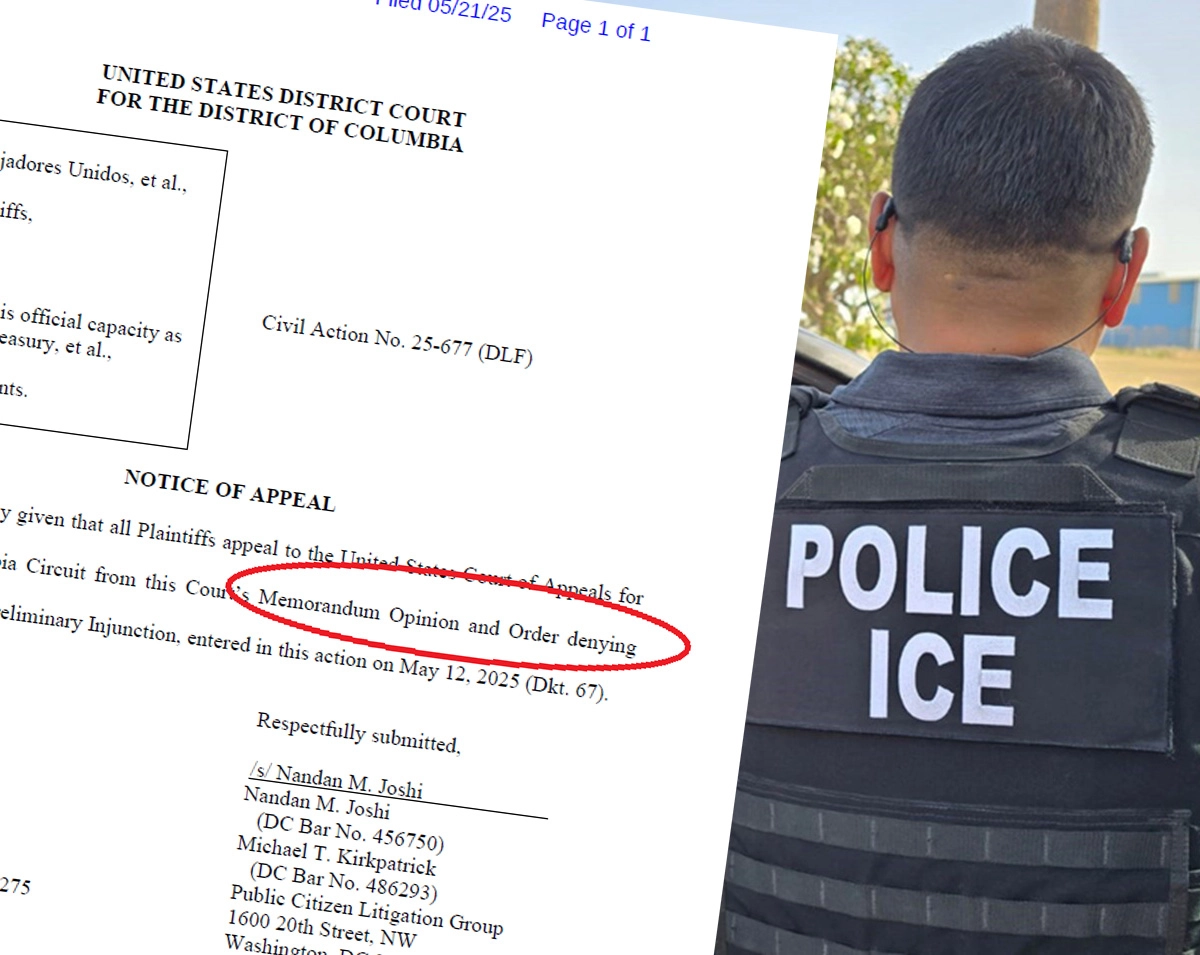

A federal court has stepped in to restrict the sharing of sensitive taxpayer data between the Internal Revenue Service (IRS) and Immigration and Customs Enforcement (ICE), with a series of orders issued Friday and Tuesday.
The orders issued by the U.S. District Court for the District of Columbia in Washington, D.C., offer relief. temporary injunction that will prevent the IRS from continuing to share massive amounts of taxpayer data with ICE without providing the court and the plaintiffs with 24-hour notice, Democracy Forward Foundation reported in a press release.
ICE’s goal is to obtain detailed information on undocumented immigrants with Individual Taxpayer Identification Numbers (ITINs).
This data sharing between the IRS and the immigration agency is just one consequence of the IRS adopting a new data policy that puts the sensitive personal information of hundreds of millions of Americans at risk.
The court has also ordered the IRS to produce a record of its actions so that the court can consider whether it acted arbitrarily and unlawfully.
Organizations working to defend privacy in the case “Center for Taxpayer Rights et al. vs Internal Revenue Service et al” include the Center for Taxpayer Rights, Main Street Alliance, Communications Workers of America, and the National Federation of Federal Employees.
“This illegal data sharing is one of the worst attacks on Americans’ personal privacy in decades and ignores laws Congress passed in the wake of the Watergate scandal to protect taxpayer information,” said Skye Perryman, president and CEO of Democracy Forward.
“We appreciate the court issuing this temporary injunction to halt threats to fundamental privacy rights while it considers a more formal order.“Democracy Forward is honored to represent this broad coalition in holding government accountable and protecting the privacy of the American people,” Perryman concluded.