

Mammoth reveals the oldest microbial DNA ever found
An international team of researchers has managed to reconstruct partial genomes of pathogens in the remains of a 1.1 million-year-old mammoth.
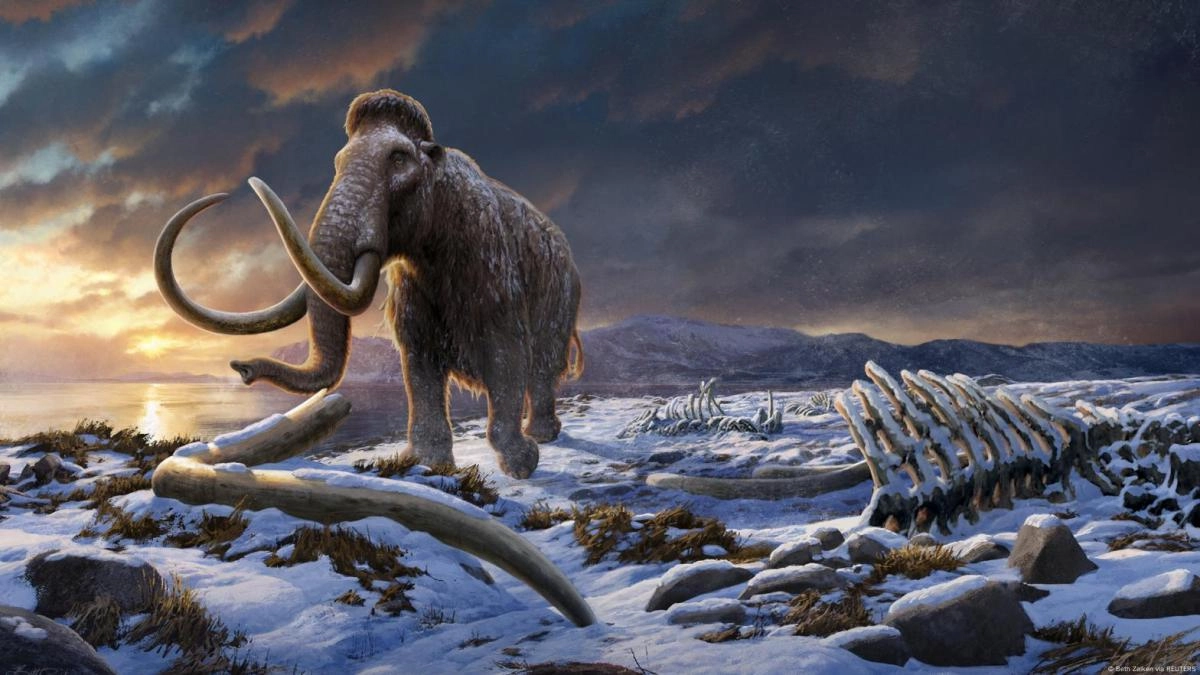

An international group of scientists has managed to reconstruct partial genomes of a pathogen from the remains of a 1.1 million-year-old steppe mammoth.
The discovery, published Tuesday in the journal Cell, is considered by the authors to be the oldest evidence of microbial DNA recovered in an animal.
“Imagine holding a tooth of a million-year-old mammoth. What if I told you that it still has remnants of the ancient microbes that lived alongside that mammoth?” asks lead author Benjamin Guinet in a statement from Stockholm University.
“Our results push the study of microbial DNA back beyond a million years, opening up new possibilities to explore how host-associated microbes evolved in parallel with their hosts,” he adds.
Pathogenic microbes in mammoth remains
The authors analyzed the remains of 483 mammoth specimens, 440 of which had not been previously studied, using advanced genomics and bioinformatics techniques.
These tools made it possible to distinguish between microbes that lived alongside the mammoths and those that colonized their remains after death.
The results “open up the possibility of analyzing and understanding the relationship of extinct species with microbes and pathogens that could have influenced both their evolution and the extinction process,” says co-author David Diez del Molino, a researcher at the Center for Paleogenetics at the same Swedish university.
Evolutionary and pathogen implications
Despite the difficulty of finding genomes close to present-day microbes, the team managed to identify six microbial groups potentially related to an animal host, including relatives of Actinobacillus, Pasteurella, Streptococcus, and Erysipelothrix.
One of the bacteria, related to Pasteurella, is closely linked to a pathogen that has caused deadly outbreaks in African elephants, raising the possibility that mammoths were also vulnerable to similar infections.
A milestone in paleogenetics
The team managed to reconstruct partial genomes of the bacterium Erysipelothrix from the steppe mammoth, which constitutes a milestone in paleogenetics.
Although it is difficult to determine the exact impact of these microbes on the health of mammoths, the study offers an unprecedented insight into the microbiome of extinct megafauna.
New perspectives on ecosystems
The findings suggest that some microbial lineages coexisted with mammoths for thousands of years, spanning wide geographic areas and evolutionary scales from more than a million years ago until the extinction of woolly mammoths on Wrangel Island, about 4,000 years ago.
“Ancient remains can preserve biological information beyond the host genome, offering new insights into adaptation, diseases and extinction in the ecosystems of the Pleistocene,” emphasizes Tom van der Valk, also a researcher at the Center for Paleogenetics at Stockholm University and co-author of the study.
Comparison with studies on ancient humans
Until now, this type of research has focused mainly on ancient humans.
In this context, the oldest cases of recovered bacterial DNA correspond to Corynebacterium diphtheriae, the cause of diphtheria, dating back 11,000 years, according to Diez.