

The arguments of prosecutors that bent a depressed Ovidio Guzman and his lawyer
Expert explains why “El Chapo” Guzman’s son and his lawyer had few options given the evidence presented by federal prosecutors in Illinois.
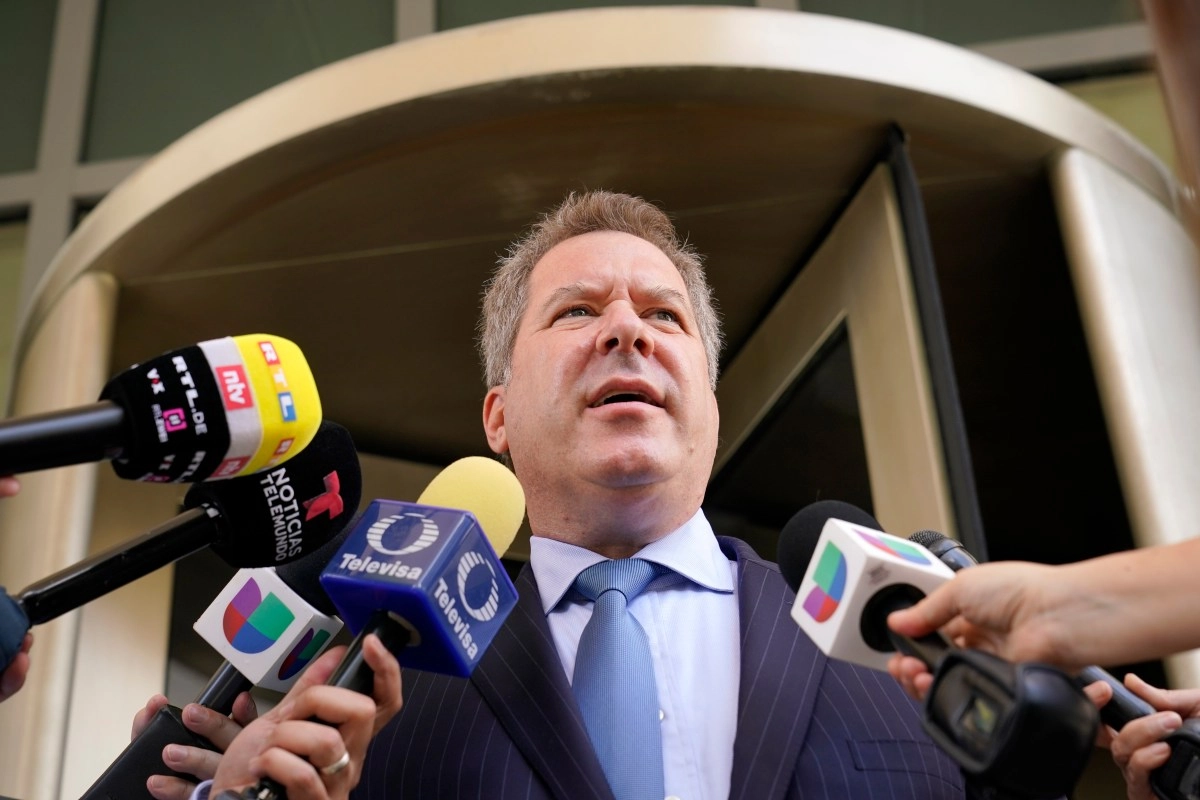

The firmness and confidence of lawyer Jeffrey Lichtman were not enough to prevent his client, a depressed Ovidio Guzmán Lopez, had to agree to a plea deal with federal prosecutors in the Northern District of Illinois on drug trafficking charges, particularly involving fentanyl.
Although in September 2023, following Ovidio's extradition from Mexico, Lichtman assured that his client would not cooperate with federal prosecutors, he changed his position a few months later and acknowledged that there was ongoing dialogue with Justice Department authorities.
In reality, they didn't have too many alternatives. The prosecutors' evidence against Ovidio is overwhelming, as revealed by the plea agreement, and Lichtman risked his client even facing the death penalty, something prosecutors could request at any time during a potential trial. This is compounded by the fact that El Chapo Guzmán's son was facing charges in the Southern District Court of New York.
In the first few months, Lichtman pretended to have the cards in his favor, but the reality was brutal. Although Ovidio pleaded guilty to four crimes, he is charged with 12, two of which were transferred from New York and carry a life sentence.
Neither Ovidio nor Lichtman had a way out. The only option was a plea deal with federal prosecutors.
It is worth mentioning that El Chapo's son is facing the charges in a severe state of depression. Before Judge Sharon Johnson Coleman, Ovidio acknowledged that last October a psychiatrist diagnosed him with severe depression, for which he is under medication.
Immigrant advocates emphasize they will not lower their guard against ICE
Federal agents detained several people in the Los Angeles area. However, a few days ago a federal judge announced a temporary restriction on detentions without reasonable suspicion and based on race, ethnicity, or language.
“As required by the Fourth Amendment to the United States Constitution, agents shall be prohibited from making arrests in this district unless the officer has reasonable suspicion that the person to be apprehended is within the United States in violation of immigration law,” wrote District Judge Maame Ewusi Mensah Frimpong.
She emphasized that federal agents cannot rely on factors such as race or ethnicity, people who speak Spanish or English with an accent, presence at specific locations such as bus stops, car washes, tow yards, etc., or the type of work one does to form reasonable suspicion to detain people, except as permitted by law.
Ron Gomez, an organizer and activist with Unión del Barrio, noted on Friday, following the judge's announcement, a dramatic reduction in federal agents arresting people in the areas of Montebello, El Monte, South Gate, Pasadena, and Cypress Park.
The activist is not confident that Trump will follow the judge's order to end the racial profiling that he says is very obvious and estimated that last Monday there was a 70% reduction in activity compared to the last 35 days.
Last weekend, the activist shared that hundreds of people of various ethnicities have attended the trainings. community patrols and seeks to grow the movement to protect the Latino community.
Due to the continuous raids that have been broadcast by the media, a large portion of the migrant workforce is still afraid to leave their homes given the current situation.