

'The chaos has disappeared': the new reality in Texas after Trump's offensive against migrants
Parts of El Paso once teeming with migrants are now nearly silent as border crossings hit their lowest level in 50 years

In Chicago, Los Angeles, and Portland, the debate over immigration has moved to the streets, sparking almost daily demonstrations as agents ramp up arrests.
But in El Paso, a Texas city on the US-Mexico border, the streets They are unusual quiet.
A year after the BBC's last visit to the border to understand the impact of the migration crisis, places that once feared with migrants are virtually silent.
Just a few years ago, up to 2,500 migrants camped outside the historic Sacred Heart Catholic Church.
Many slept on the streets on donated blankets, waiting for local charities to distribute food and water.
Now, only a handful of parishioners can be seen going in and out of the church.
The same is true of a nearby park and shelters throughout the city, where migrants used to gather to share their experiences of the harrowing journey through jungles and deserts, or of being detained, robbed, or nearly kidnapped during their long treks through Latin America to the border.
The influx of migrants led the El Paso government to declare a state of emergency in late 2019.
2022, as local shelters were overwhelmed.
Then, when Donald Trump took office office in January—elected in part on his promise to fix the problems at the border—the usual flow of migrants to El Paso dropped dramatically.
This trend has been repeated along the 3,145 km border, from the Pacific coast in California to the Gulf coast of Texas.
The number of apprehensions of people crossing the border is at its lowest level in 50 years.
In September alone—the last month for which complete data is available—11,647 people were apprehended along the entire US-Mexico border, compared to 101,000 in September 2024 and 269,700 in the same month of 2023.
The Casa de la Anunciacion volunteer network once managed up to 22 shelters across the region, primarily serving thousands of migrants who had been granted parole in the United States while awaiting their court appearances,often years later.
Now only two remain. The larger flow of migrants—between 15 and 20 at each shelter each night—is made up, in part, of people returning to their countries of origin after years in the United States. "We have people who entered the country and obtained employment authorization or Temporary Protected Status that Trump revoked, and they can't renew their employment. So they can't pay their rent," Ruben Garcia, director of Casa de la Anunciacion, told the BBC. Others, he added, simply need a place to stay while they “work out the logistics” of leaving the country. A Relief For some living on the border, the new reality represents a relief. Demesio Guerrero, a naturalized US citizen originally from Mexico and a resident of East Texas, described the border as “total chaos” during Joe Biden's administration. “There were camps everywhere along the border, with women, children, and the elderly,” he said. “It was a completely out-of-control situation.” That chaos had disappeared, he asserted, because Trump had a vision to solve the problem and implemented it. “He did what he had to do, where he had to do it.”
For six consecutive months, according to administration officials, not a single undocumented migrant arrested was released in the United States.
Many have been deported, while others remain in detention.
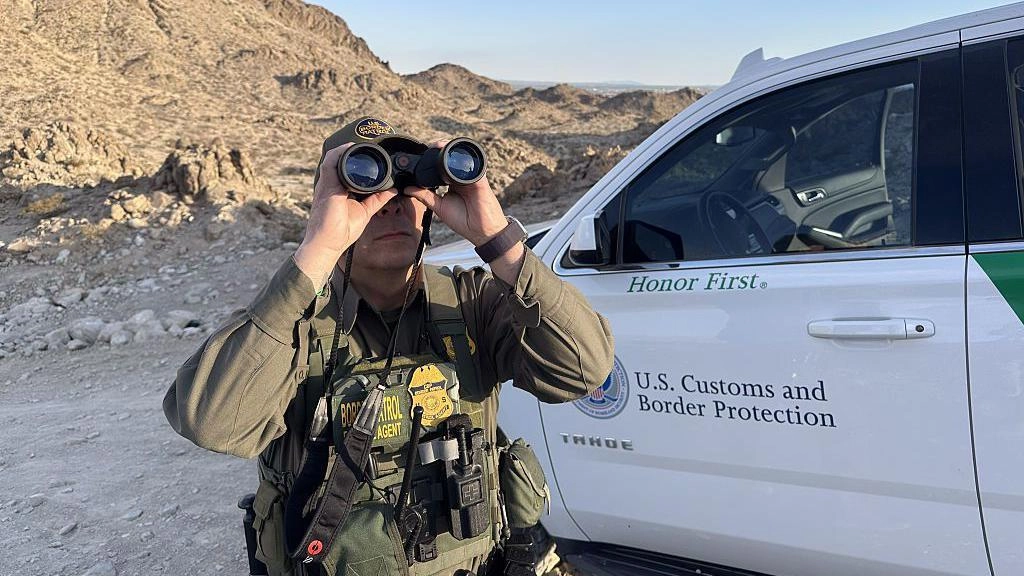
Border czar Tom Homan and Homeland Security Secretary Kristi Noem often declare that, for the first time in US history, the government has full operational control of the border.
For the White House, these figures represent a victory: the fulfillment of a campaign promise that the president himself touted as what allowed him to return to the White House for a second term, at a time when many Americans feared that Joe Biden had lost control.
“So far, this strategy has proven to be a resounding success,” White House representative Abigail Jackson told the BBC.
“We are reversing the Biden administration's illegal immigration policies which allowed countless undocumented immigrants to enter the country. We have secured the border."The reasons for the low numbers—which began to decline during Biden's final year in office and whose drop accelerated rapidly under Trump—are complex. Officials and experts point to several factors, including Mexico's crackdown on northward migration, the elimination of most humanitarian parole programs, much stricter asylum restrictions, and increased surveillance with the help of the US military. Trump's deportation campaign within the United States has also served as a deterrent for potential migrants. "Not many people cross the border, and not many even try," he said one undocumented immigrant who asked to remain anonymous. "With Biden, people knew that sooner or later they could cross and stay. Now that's not the case.""Death everywhere." Some Trump supporters living in El Paso residents said they sometimes feared for their safety and accused the Biden administration of creating an environment that endangered both local residents and migrants. “We no longer felt comfortable going out alone,” said Lorie Randazzo, a lifelong El Paso resident and president of the Republican Women of Greater El Paso. “Almost as soon as Biden took office, the situation worsened.”
“It's not that we don't want immigrants to eat,” she added, “but only the best ones, the ones who want to work.”
Elizabeth Amy Posada, an El Paso native and former aide to a local Republican congressman, said that before there was “death everywhere,” referring to migrants dying in the desert or in the Rio Grande, and those who fell victim to the cartels.
“Everyone should be happy about this (border security), regardless of their political ideology.”
But for others, Trump's border security policies evokes mixed feelings.
Many local conservatives sympathize with the plight of the migrants.
Other residents, vehemently opposed to Trump, say they understand the need to strengthen border protection and recognize the important role federal agents play in their communities.
“Here we live in a gray area,” declared Marisa Limon Garza, executive director of the Las Americas Immigrant Advocacy Center, an El Paso nonprofit organization that provides free or low-cost legal services to immigrants and refugees.
“Facing the consequences”
According to Garza, The possibility of long-time residents being deported is particularly infuriating to border dwellers, many of whom have families on both sides or are descendants of immigrant families who came to the United States generations ago. While Trump and other officials have repeatedly claimed that immigration authorities are targeting “the worst criminals,” the data shows otherwise. The Transnational Data Access Center Clearinghouse (CRACC), which collects immigration data, found that more than 70% of the nearly 60,000 people detained through the end of September had no criminal record. Many have been in the country for years.
“Now we know that some people are waking up and realizing they were deceived,” Garza said, referring to residents who voted for Trump.
“They realize they harmed their families, their loved ones, and their neighbors… and now they have to face the consequences.”
Ross Barrera, a 29-year US Army veteran and Republican resident of Rio Grande City, told the BBC that most residents of his small border community support increased border security, as legal trade and travel between the closely linked US and Mexican cities continue uninterrupted.
However,Barrera added that images of harsh immigration raids in the United States “outrage many people” and have created friction.
“They outrage me, too,” he said. "We are human. It bothers us when they deport the woman who has lived here for 20 years or the father who has lived here for 40."