

The massacres that plunged all of Mexico into mourning in 2025
The year 2025 ends as one of the bloodiest for thousands of families who, in different corners of the country, still await justice
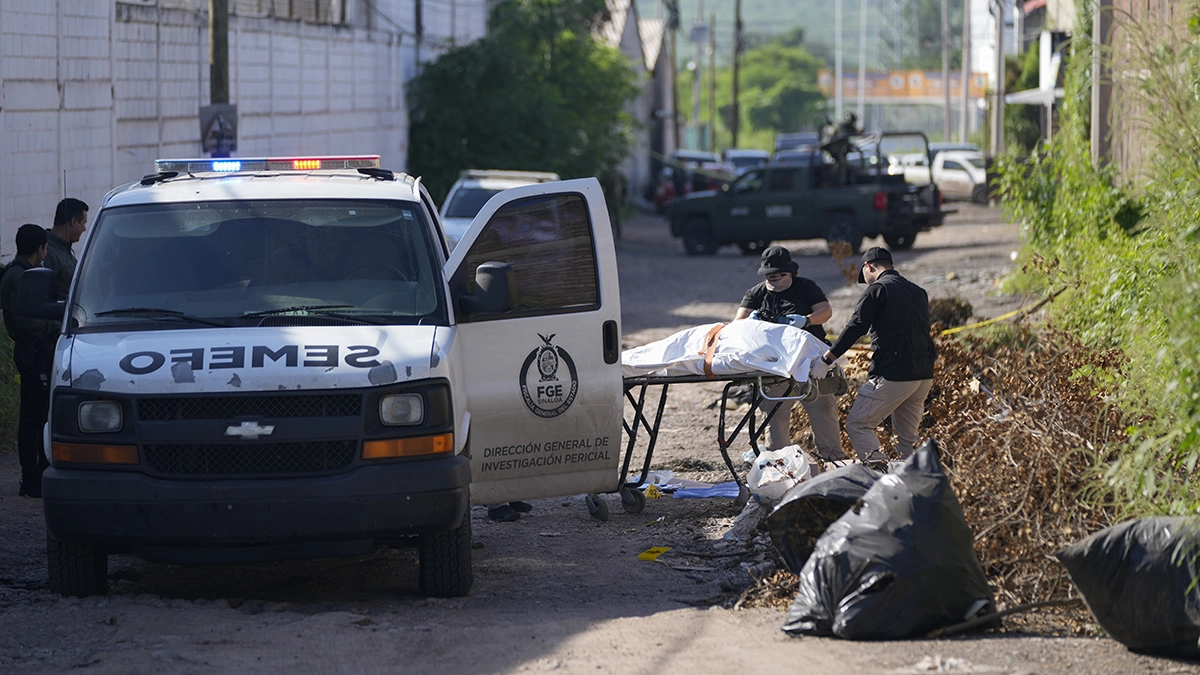

Mexico closed one of its most violent years with a series of armed attacks that shook entire communities from north to south. Massacres in Guanajuato, Guerrero, and Sinaloa not only left dozens dead, but also exposed, once again, the depth of the security crisis and the power of the criminal groups operating in the country. From Irapuato to Ayutla and from Mazatlan to Culiacan, the attacks that plunged Mexico into mourning reveal common patterns: territories controlled by criminal groups, weakened institutions, communities surviving amid official silence and daily violence, and a country still searching for answers. Below is a recap of the events that marked the year. Irapuato: The Massacre That Shook Guanajuato. On June 24, a popular festival in Irapuato ended in tragedy when an armed group attacked attendees celebrating the Nativity of Saint John the Baptist. Twelve people died and at least twenty more were wounded within minutes. According to local authorities, the attackers opened fire on people dancing and socializing in the street, causing panic and stampede as bullets riddled facades with bullet holes and left bodies lying on the pavement. Guanajuato, which has become the most violent state in the country, has been facing a dispute for years between the Santa Rosa de Lima Cartel and the Jalisco New Generation Cartel. The region had already seen mass killings weeks earlier: seven people—including minors—were executed at a religious festival in San Felipe, and 17 bodies were found in an abandoned house. Following the attack, the municipal government called the act a “cowardly act.” Mayor Claudia Sheinbaum lamented the massacre and confirmed that the case was now in the hands of federal authorities. Governor Libia Garcia Munoz Ledo promised support to the families and the start of formal investigations.
Guerrero: Towns in the Crosshairs of Armed Groups
In Guerrero, violence has become so commonplace that a massacre of 11 people in Tecoanapa barely made local headlines. The bodies were left in a row on a road in Rancho Viejo, next to a burned-out pickup truck.The state prosecutor's office only confirmed the discovery and opened an investigation without offering details about the victims or possible perpetrators.
The Costa Chica region is experiencing open warfare between Los Ardillos, Los Tlacos, and other factions seeking to control territories, drug routes, and local political structures. Massacres are frequent: from the assassination of community leaders to executions in broad daylight.
Guerrero was shaken once again when 13 members of the Union of Peoples and Organizations of the State of Guerrero (UPOEG) were ambushed in Ayutla de los Libres. The community members, armed only with low-caliber shotguns, were attacked by a group with assault rifles. Eight of them were buried the following day. No arrests were made.
The UPOEG denounced the lack of government intervention and demanded justice.
The state government reported that the federal government would assume the investigation, while Mayor Sheinbaum emphasized that the Security Cabinet would provide the official version.
Sinaloa: Multiple Executions in Mazatlan and Culiacan
On October 22, Sinaloa registered one of the most violent days of the year with at least 16 murders in Mazatlan and Culiacan. In Mazatlan's Golden Zone, a woman was found with signs of torture inside a hotel. Hours later, two young men—one of them a teenager—were murdered while riding a motorcycle.
That same night, in Culiacan, an attack inside a home left two alleged brothers dead. The incident included a series of homicides that raised the number of victims to ten—and even twelve, according to other local media—in a single day. The increase in violence occurred just after the municipality of Mazatlan announced an operation with 250 security agents to reinforce surveillance. A country marked by daily atrocities. A report by Causa en Comun revealed that, in the first half of the year alone, Mexico registered 2,517 atrocities documented by the media, which is equivalent to an average of 14 violent acts and 18 victims every day. There were 200 massacres, 158 clandestine graves, and hundreds of cases of torture, mutilation, extreme violence against women, and the murders of authorities. Sinaloa topped the list of the most violent states, followed by Guanajuato, Guerrero, Michoacan, and Puebla. The call for strengthened support for victims and for transparency in investigations organizations. Although investigations remain open and official figures are still preliminary, 2025 will undoubtedly be remembered as one of the bloodiest years for thousands of families across the country who are still waiting for justice.