

US and Taiwan strengthen alliance after signing new arms agreement
Largest US arms package for Taiwan to date irritates Beijing
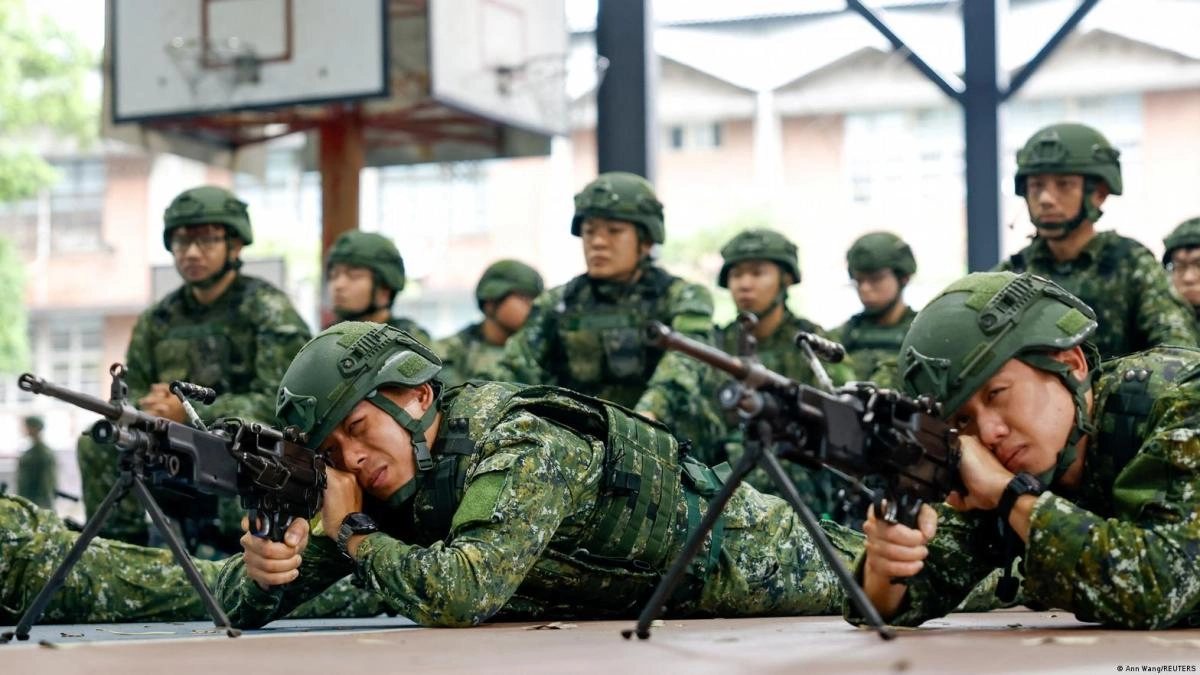

US announced an arms package for Taiwan worth $11.1 billion. If this agreement is finalized, it will be the largest ever made with the Chinese province, considered a renegade territory by Beijing, which has been self-governing since 1949. The agreement still needs to be approved by the US Congress. Beijing, as usual, strongly protested the arms sale. “We urge the United States to immediately cease arms shipments to Taiwan and stop tolerating and supporting Taiwanese independence forces,” a spokesperson for the Chinese government's Taiwan Affairs Office said on Thursday, December 18, 2025. Taipei, for its part, stated after the White House announcement that it was sincerely grateful to Washington. Although the United States does not maintain diplomatic relations with Taiwan, it remains the island's main backer and is legally obliged to sell it weapons for self-defense.
Defense against attacks from mainland China
The deal is the second arms sale to Taiwan under Trump's second term since early 2025. In mid-November, the US government approved the sale of spare parts for fighter jets worth $330 million. The current package includes eight weapons systems, including HIMARS missile systems, howitzers, anti-tank missiles, and drones.
“From an operational standpoint, this is a significant package,” says David Sacks, a senior fellow in Asian studies at the US think tank Council on Foreign Relations, assessing the planned arms sale. According to him, it is clearly aimed at equipping Taiwan with the capacity to repel a Chinese invasion. In recent years, China has intensified military pressure on Taiwan through frequent approaches to the island with aircraft, naval patrols, and coast guard activities. Taiwan has a considerably smaller military. “Taiwan is developing the necessary asymmetric capabilities,” says Sacks. In a war scenario, “asymmetric capability” refers to the use of unconventional methods by the weaker party to gain advantages.
US reaffirms its alliance with Taiwan
In Taiwan, however, doubts are growing about US security guarantees, as US President Donald Trump actively seeks a rapprochement with the People's Republic of China to find viable solutions to the trade war between the two countries.
The US government's new national security strategy, published before the arms deal announcement, focuses on trade competition with China. The document states that economic stability under US leadership is the best basis for deterring China in the Indo-Pacific region. "The largest arms sale package to Taiwan to date should help dispel some of the concerns," Sacks told DW in an interview, referring to Taipei's anxieties.
Trump has demonstrated in his second term that the United States will continue to support strong deterrence in the Indo-Pacific and the Taiwan Strait, Sacks said. “However, the United States will do less to symbolically support Taiwan in the political arena.” The security strategy pays little attention to the competition between democracy and autocracy.
5% of GDP for armaments until 2030
In response to the US arms package, the Taiwanese Presidency has reaffirmed its plan to increase defense spending to more than 3% of gross domestic product by 2026 and to 5% by 2030.
Back in November, President Lai Ching-te had already announced that he would invest an additional $40 billion in a special defense fund over the next eight years. This plan still needs the approval of the opposition, which holds 63 of the 113 seats in Parliament.