

What's next with the government shutdown?
Democrats and Republicans fail to reach agreement on reopening government; President Trump says there will be program shutdowns and layoffs
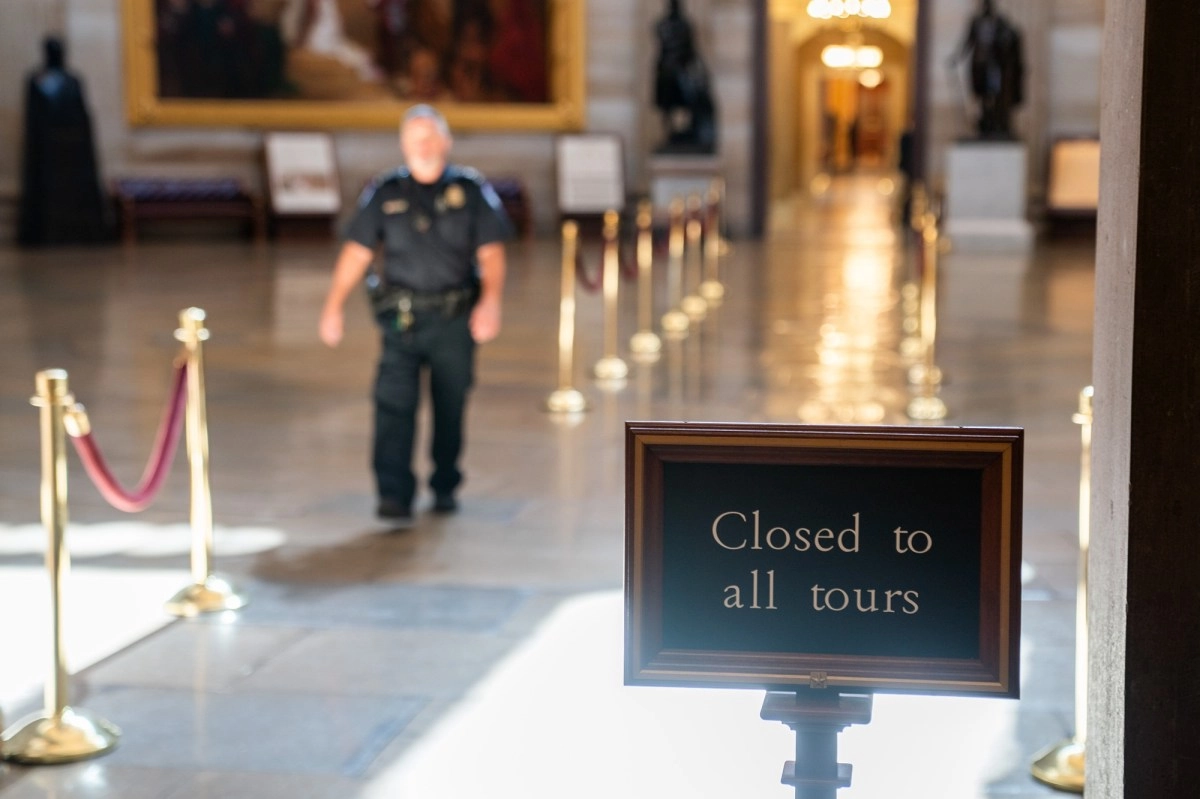

The Senate failed again to pass a resolution to reopen President Donald Trump's government. The nearly two-week-old administration, which with no agreement reached, could become the longest shutdown in history.
Senate Majority Leader John Thune, R-S.D., scheduled the vote for Tuesday, which gave Democrats only one chance to act on the Republican proposal, which failed for the eighth time.
On Monday, House Speaker Mike Johnson, R-La., said no deal was on the cards and the U.S. could face its longest government shutdown yet.
“We are headed toward one of the longest shutdowns in American history unless Democrats drop their partisan demands and pass a clean, no-strings-attached budget to reopen the government and pay our federal workers,” Johnson said Monday.
The longest government shutdown was 34 days, from Dec. 21, 2018, to Jan. 25, 2019; The record was previously 21 days, held in late 1995 and early 1996.
House Minority Leader Chuck Schumer (New York) accused Republicans of refusing to compromise.
“On the 14th day of the Trump-imposed government shutdown, I want to remind everyone why we are here. Democrats have made that abundantly clear day after day,” he said on the floor. “Like it or not, the Republican leader [Thune] needs to work with Democrats in a bipartisan way to reopen the government.”
Republicans maintain their claims that Democrats want to approve health insurance for undocumented immigrants, although no law establishes that as the objective.
This newspaper reported that the Democrats’ project seeks to extend subsidies for millions of low-income Americans, so they do not lose their health insurance.
The Senate is the only one that can approve a motion to reopen the government.Republicans are sticking with the bill passed by the House of Representatives.
Trump to announce layoffs, program closures
President Trump said Tuesday that on Friday he will announce a list of Democratic appointees and programs he called “socialist, semi-communist.”
“They’re eliminating Democrats, and on Friday we’re going to release a list of them, shutting down some of the most egregious socialist, semi-communist programs—probably not full-blown communist, we’ll save that for New York—but semi-communist,” he said at the White House. “We’re not shutting down Republican programs because we believe they work. So they’re shutting down Democrats, but they’re not telling the people.”
Trump showed no concern about the current government shutdown, although he believed it shouldn’t have happened and insisted it is affecting Democratic policies more.
“We’ve had a lot of shutdowns, and this is one shutdown that shouldn’t have happened,” he said. “The Democrats are being defeated in the shutdown because we are shutting down Democratic programs that we opposed. […] So we are being able to do things that we couldn’t do before. So we are shutting down Democratic programs that we wanted to shut down or that we never wanted to be implemented.”
How does the government work?
The government shutdown, which began the first minute of October 1, forced some 700,000 federal employees to stop working, but they will not receive their corresponding pay, as President Trump even announced.
Government operations continue with essential functions, including security, military, healthcare, among others.
The Department of Health and Human Services (HHS) contingency plan for fiscal year 2025 indicated, for example, that 55% of its 90,000 employees would remain in their positions, while 45% would be suspended. temporarily.
Other areas, such as the Food and Drug Administration (FDA), are maintaining essential functions with limited staffing “to manage and respond to emergencies, including monitoring and rapidly responding to outbreaks related to foodborne illness and influenza,” the agency said.
The Departments of Defense and Homeland Security (DHS) remain operational at virtually 100 percent. President Trump has ordered military pay.
“I am using my authority as Commander in Chief to direct our Secretary of War, Pete Hegseth, to use all available funds to pay our troops on October 15th. We have identified funding to do so,” Trump wrote in a post on Truth Social.
DHS also confirmed that payments are being processed for individuals, including the Coast Guard.
How the Government Shutdown Came About
Here are some key dates about the government shutdown:
August 4. Democratic leaders Hakeem Jeffries of the House and Chuck Schumer of the Senate send a letter to House Speaker Mike Johnson and Senate Majority Leader John Thune requesting a meeting to discuss the September 30 funding deadline. There is no response.
August 29. There is a standoff between Democrats and Republicans as President Trump attempts to use the Impoundment Control Act process and the White House freezes an additional $5 billion in foreign assistance.
September 8. Democrats in Congress accuse the Trump administration of irregularly canceling or freezing $410 billion, harming families.
September 12. Trump refuses to meet with congressional Democrats.
September 16. Following the president's comments, House Republicans abandon negotiations on a bipartisan Contributions Resolution and introduce a partisan bill without the health insurance subsidies, which would affect some 20 million people.
September 19. House Republicans pass their resolution.
September 22. At the request of Democratic leaders, Trump agrees to meet with Jeffries and Schumer on Thursday, September 25, but cancels the meeting and later agrees to a new meeting.
September 29. Trump meets with leaders Jeffries and Schumer, but no agreement is reached.
October 1. The government shutdown begins. Since then, Senate approval of government reopening bills has failed.
October 7. Federal workers may not receive retroactive pay for furloughed days, White House budget chief Russ Vought said.
October 9. Trump announced that there would be "cuts that will be permanent."
October 14. The Senate fails to pass any government reopening bill.