

Why aren't the Gulf states retaliating against Iran?
Gulf states are reluctant to get directly involved in the war, but are unlikely to accept being attacked, experts say
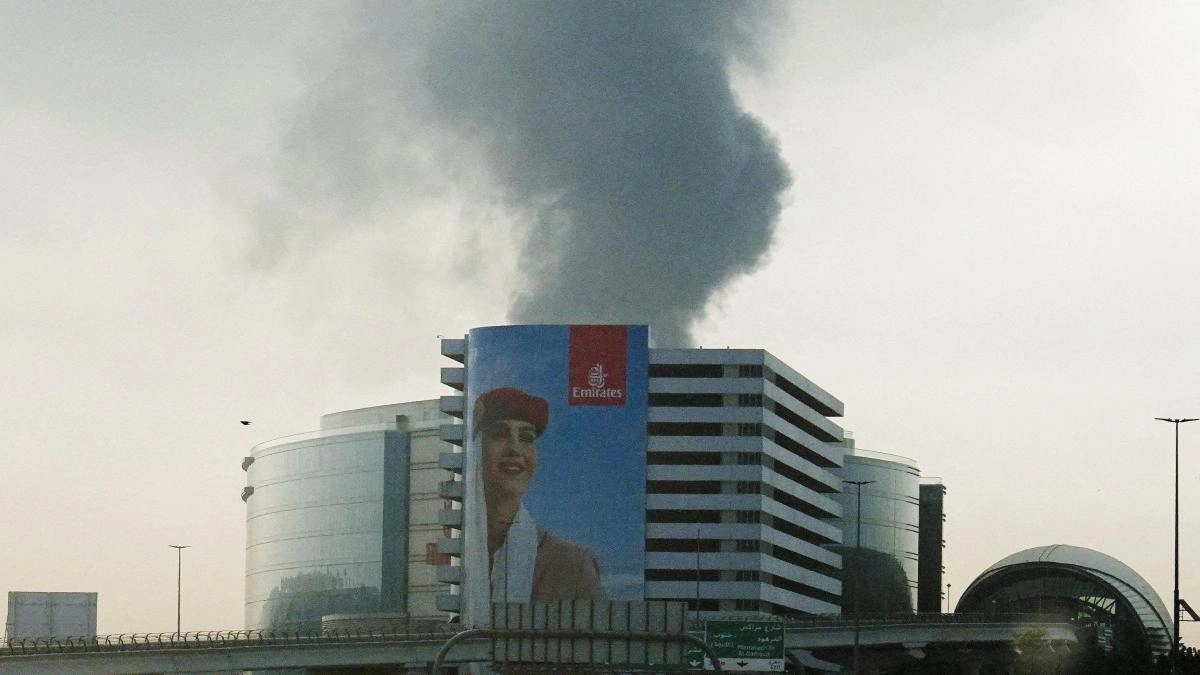

Iran continues to launch missile attacks across the Gulf as part of its conflict with the United States and Israel.
On Thursday, it attacked Qatar's Ras Laffan energy complex after Israel struck Iran's South Pars, part of one of the world's largest natural gas fields.
So far, Qatar and the other Gulf States have chosen not to retaliate against Iran after being the target of repeated attacks.
But why are they avoiding launching attacks, and what might push them to act?
High vulnerability, limited benefit
When the United States and Israel launched their joint military campaign against Iran on February 28, Tehran immediately responded not only with attacks against Israel, but also against US-allied Gulf States.
Since then, Bahrain, Kuwait, Saudi Arabia, Qatar, Oman, and, in particular, the United Arab Emirates (UAE) have all been targeted.
In addition to attacking US military bases in the region, Gulf officials say Iran has struck civilian infrastructure, including airports, hotels, residential areas, and, especially, energy facilities.
However, so far the Gulf States have chosen not to carry out their own attacks against Iran or become directly involved in the war.
“From their perspective, this is not their war, and retaliating risks turning them from vulnerable observers into bigger targets, since they still have much more to lose than to gain,” says Sina Toossi, a nonresident senior fellow at the U.S. think tank Center for International Policy.
This decision to hold back stems from “a combination of vulnerability, strategic calculation, and limited potential gain,” Toossi adds.
The economies of the Gulf States depend on energy infrastructure, shipping, and investor confidence, Toossi notes, “all elements that Iran has demonstrated its ability to disrupt.”
“There is a sense that Israel has dragged the United States into this war,” he adds.
“The ghosts of 2003 still haunt us”
For many Gulf leaders, the legacy of the US-led war in Iraq continues to cast a long shadow over regional thinking, says Pinfold.
In 2003, the United States invaded Iraq and quickly toppled the government of Saddam Hussein. But what followed was a power vacuum that led to insurgencies, sectarian violence, and years of instability in Iraq and throughout the region.
“The ghosts of 2003 are still with us,” says Pinfold.
“They feared that it would open the floodgates to chaos and instability, and also that it would allow Iran to expand its influence. And, to a large extent, they were confirmed.”
Pinfold notes that the Gulf States now fear that the United States is waging an “open-ended campaign, with no clear objectives or roadmap for the day after (the war),” and that the region will end up “bearing the brunt of the consequences.”
But even though there is unease in the Gulf about the United States and Israel starting this war, they remain heavily dependent on American military protection.
In addition to hosting US bases and troops, several Gulf States share intelligence and rely on US air defense systems.
According to officials from In the Gulf, these air defenses have intercepted most of the missile attacks originating from Iran.
“Although (the Gulf States) challenge the United States politically, on an operational and military level that relationship has been tested and, in fact, has passed the test quite well,” says Pinfold.
Since launching the attacks last month, the United States has outlined various objectives for its military campaign, from destroying Iran’s capacity to develop nuclear weapons to total regime change.
Even so, the Gulf leaders see diplomacy as the only way to end the attacks, Pinfold notes.
“The only way to ensure that none of them continue to be attacked is to reach some kind of agreement and come to a negotiated compromise.”
Fragmented Regional Dynamics
Iran has not attacked all the Gulf States with “equal intensity,” Pinfold points out, reflecting the different relationships it maintains with each of them.
The United Arab Emirates has been one of the countries most targeted during the war.
In 2020, both they and Bahrain normalized relations with Israel.
In contrast, Oman, which has long played a mediating role between Iran and the West, has been much less attacked by Tehran.
“Oman was the only Gulf state to congratulate the new Iranian Supreme Leader (Mokhtaba Khamenei),” Pinfold notes. “That didn’t sit well in other Gulf capitals.”
Mohammed Baharoon, director general of the Dubai Public Policy Research Center, said that “Iran is pushing the Gulf toward an ever-widening coalition against it.”
“By attacking the Gulf States, Iran is making them enemies and risks triggering a wider war that no one wants,” he added.
Following a meeting of Gulf foreign ministers in Saudi Arabia on Wednesday, the Arab countries underlined their right to self-defense under UN Article 51.
What could trigger retaliation?
Although the Gulf States are refraining from retaliating for now, “the political situation could change rapidly,” says Dr. HA Hellyer, senior research associate at the British think tank RUSI, particularly if attacks that disrupt energy exports continue or escalate.
One possibility that could change This would be a large-scale attack against energy facilities, he notes. On Thursday, after attacking the Ras Laffan energy complex in Qatar, Iran vowed to bring about the “total destruction” of US allies in the Gulf if attacks against its own facilities continued.
Another shift in the Gulf states' attitude could occur if Iran's regional allies were to attack them directly.
“If they are attacked by the Houthis… that would open a new front,” says Pinfold.
In this scenario, the Gulf states might consider the conflict no longer just between the United States and Israel, but also with them, he adds.
In any case, although the Gulf states have not yet responded, Pinfold says Iran's strategy is “incredibly risky.”
“The Iranians are burning all the bridges they had with the Gulf states, which shows just how much they perceive this conflict as existential,” he notes.
Hellyer says the Gulf states “will not accept” being attacked by Iran indefinitely, especially when it comes to civilian targets.
Ultimately, he believes Iran's high-risk strategy—pressuring the Gulf states to contain Washington—will probably end up turning against them.
“(They) might decide that, although they initially opposed the US and Israeli war against Iran, their own security is now at risk from Iranian retaliation against them, and that it makes more sense to support the US campaign to end the immediate threat from Iran.”