

Why is considered that a decree by Hitler was the germ of the crime of forced disappearance
A 1941 regulation authorized the detention and secret shipment to Germany of anyone considered a threat to the Reich, to be killed without a trace.
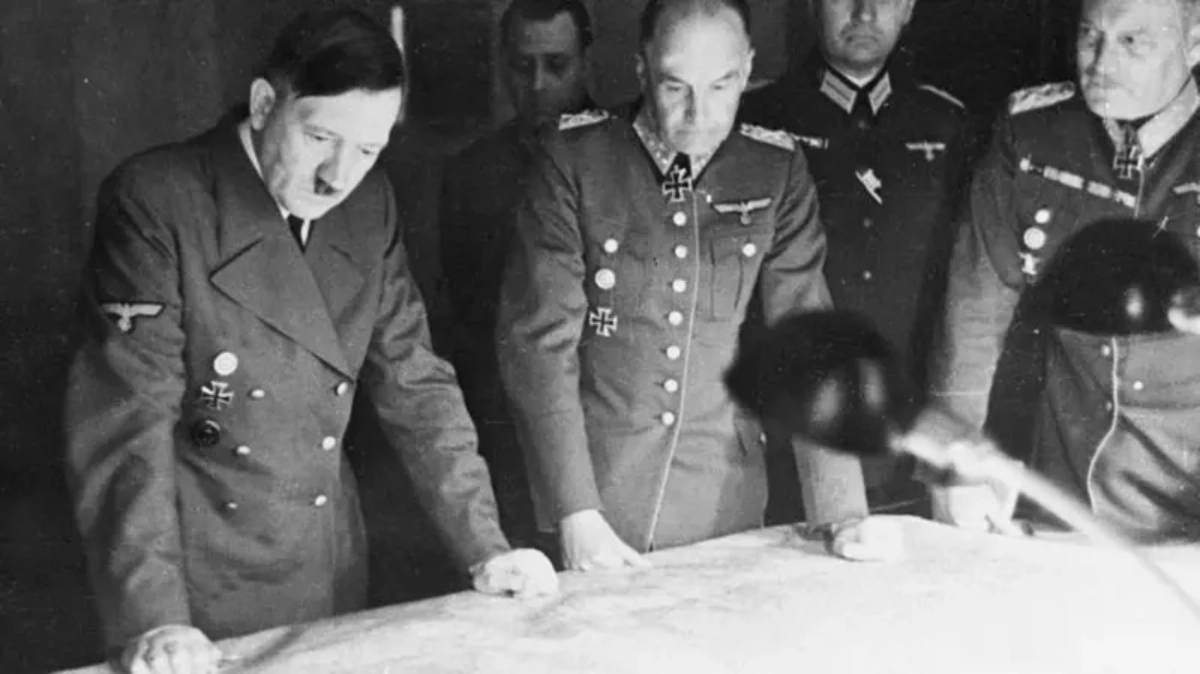

“It is safer to be feared than loved.”
The phrase that the Italian philosopher and diplomat Niccolo Machiavelli (1469-1527) captured in his work “The Prince” exposes the crude strategy that rulers, especially Autocrats and despots have used this method throughout history to retain power. However, during World War II, Nazi leader Adolf Hitler went a step further in his use of terror as a tool of social control. At the end of 1941, he issued the so-called “Night and Fog” decree (Nacht und Nebel, in German), an instrument by which he authorized the imprisonment and execution—in the most absolute secrecy—of any enemy of the Nazi regime in the territories then occupied by Germany. For human rights organizations such as Amnesty International, and legal experts from the United Nations, this order was the seed of the current concept of the forced disappearance of persons, one of the most serious human rights violations and classified as a crime against humanity by the Rome Statute that created the International Criminal Court (ICC). It is also a practice that has left thousands of victims in Latin America. last decades.
Under the cover of darkness
On December 7, 1941, while the Japanese - allies of the Nazis - bombed Pearl Harbor (USA), Field Marshal Wilhelm Keitel, Chief of Staff of the German Armed Forces, signed a document entitled "Directives for the prosecution of offenses committed against the Reich or the occupation forces in the occupied territories."
The text gave the green light to the Nazi forces to capture people in the occupied countries "who threatened German security" and subject them to a special procedure, as explained to BBC Mundo by the director of the Center for Postgraduate Studies of the Faculty of Legal and Political Sciences of the Central University of Venezuela (UCV), Jesus Ollarves Irazabal.
“The detainees were not executed immediately, but were secretly transported to Germany, where they disappeared without a trace,” added the former Venezuelan judge, who is the author of the book “Forced Disappearance of Persons: A Historical-Legal Study.”
“According to the Fuhrer, custodial sentences and even life imprisonment (…) are perceived as signs of weakness,” the decree explained, based on the book “Night and Fog and Other Writings on Human Rights” by the late Argentine jurist Rodolfo Mattarollo.
“An effective and prolonged terror effect will only be achieved through the death penalty or through appropriate measures to keep the relatives and the population in suspense about the fate of the guilty parties. The transfer to Germany makes it possible to achieve this objective,” the instrument concluded.
In the following weeks, Keitel signed other texts that outlined the roadmap that Nazi forces followed to instill the fear that Hitler demanded.
“In cases (against members of the resistance) in which the death penalty was not pronounced within eight days of arrest, the prisoners were secretly transferred to Germany, where they disappeared without a trace and no information could be given about their whereabouts or their fate,” the Venezuelan jurist indicated.
A key element was the moment in which the victims were apprehended and sent to German soil: “In the night and fog,” an expression that, according to Mattarollo, Hitler would have taken “from a passage from (the opera) 'The Rhinegold' by Richard Wagner.”
Hitler was a fan of the works of the 19th-century German composer.
No martyrs
The “Night and Fog” decree was issued after the start of the so-called “Barbarossa” operation, the Nazi invasion to the Soviet Union in the summer of 1941, which was used by partisans in already occupied European countries, particularly France, to launch attacks against German forces.
Hitler, for his part, wanted to end any resistance to his occupation, but avoided giving the insurgency symbols that would inspire others to rebel.
“Keitel declared at the Nuremberg tribunal that if the relatives had known what was happening (to their loved ones) they would have created martyrs,” Italian jurist Gabriella Citroni, president of the UN Working Group on Enforced Disappearances, explained to BBC Mundo.
“Not knowing what happened to the disappeared paralyzed their families and their loved ones,” the expert added.
The Nazis took measures to ensure that no trace remained of the victims of the decree.
“The sentences from summary trials and undefended cases were not recorded in the official Reich statistics or in ordinary criminal records. The usual practice of informing the press about executions and posting notices in public places was omitted,” Ollarves listed.
“Relatives were not notified of executions or the deaths of their loved ones from other causes. The graves of prisoners could not have inscriptions with the names of the deceased,” he added.
For his part, Mattarollo stated in his book that those transferred to Germany were taken to prisons or concentration camps where they were completely isolated from the outside world.
“They were not authorized to have any contact; they had no right to write or receive letters, packages, or visits,” he wrote.
They did not create it, but they legalized it
Amnesty International, in its report “No to the impunity of forced disappearances” of 2011, stated that Hitler “invented” this extremely serious human rights violation with his 1941 decree.
However, the experts consulted by BBC Mundo make some reservations to this statement.
“Forced disappearance is a practice that predates the “Night and Fog” decree. In the 20th century, this crime boomed in Russia starting in 1917, when it began to be applied in Vladimir Lenin’s Red Terror,” stated Ollarves.
“Zinaida Gippius, the poet from Petrograd, wrote that ‘literally there was not a single family from which someone had not been snatched, taken away, or made to disappear,’” noted the Venezuelan jurist.
The president of the UN Group expressed herself in similar terms.
“Throughout history, disappearances have been used in wars and conflicts. However, what was new with the Nazis was that they were the first to put them in writing, to systematize them and include them in their legal system,” said Citroni.
“The norms of the 'Night and Fog' decree meet the fundamental characteristics of what is today the crime of enforced disappearance of persons,” added the UN expert.
Article 7 of the Rome Statute defines the enforced disappearance of persons as “the apprehension, detention or abduction of persons by a State or a political organization, or with its authorization, support or acquiescence, followed by a refusal to admit such deprivation of liberty or to provide information about the fate or whereabouts of those persons, with the intention of placing them beyond the protection of the law for an extended period.”
In 1946, during the Nuremberg trials, Keitel unsuccessfully attempted to place all intellectual responsibility for the decree on Hitler. And after asserting that he opposed the instrument,The senior official expressed remorse for its implementation.
“Keitel emphasized that (forced disappearances) were one of the most terrible things the Nazis did. And this is surprising, because one would expect him to talk about the concentration camps, but he justified himself by saying that, through this decree, state terror was instituted,” Citroni explained.
“This confession explains why forced disappearance was used, instead of simply killing people, because although forced disappearance is much more complicated than other crimes, other things are achieved with it,” she noted.
“It is a crime that generates deep fear in society for a long time, because it not only affects the families of the victims, but also their close connections, who are trapped in what experts call 'frozen mourning,' which is a doubt about what happened that also implies inhumane treatment,” the UN expert added.
Why did it resonate in America? Latin America?
It is uncertain how many people were victims of the Nazi decree. The Holocaust Encyclopedia states that around 7,000 people were arrested and executed, mainly in France, thanks to these regulations. However, other sources put the figure much higher.
But the serious thing is that the practice was not buried in the rubble of the Nazi regime after its defeat in 1945, but spread throughout the world, and particularly in Latin America, where it has left thousands of victims since the mid-20th century.
Amnesty International estimates that the various military dictatorships caused more than 90,000 missing people between 1966 and 1986. To this must be added the 121,768 to 210,000 victims recorded in Colombia during its armed conflict, from 1958 to 2016; and the more than 120,000 that Mexico has recorded since the start of the war on drugs.
“The forced disappearance of people spread during the 1960s, 1970s, and 1980s, especially in countries with dictatorial or authoritarian governments, or those experiencing internal armed conflicts. One of the most emblematic cases was Plan Condor, designed and executed in the Southern Cone,” Ollarves recalled.
Citroni, for her part, attributed this to the training that Latin American military personnel received during the Cold War to fight subversion and terrorism.
“Where did many of the military personnel in Latin America study? All in the same place (the School of the Americas). And what were they taught there? That explains why, from Mexico down, the same technique was applied,” she said.
However, the president of the UN Working Group offered other reasons to explain why why so many cases of this crime were (and continue to be) recorded in the region.
“It is a crime with a very high impunity rate, due to the difficulties in investigating these types of cases, the secrecy surrounding it, and the number of people involved (…) I don’t think I know of a single case of forced disappearance where the perpetrator was just one,” she noted.
However, Citroni made it clear that this is not exclusively a Latin American problem.
“When we talk about forced disappearances, they are associated with Argentina or Chile, which is true, but that is a somewhat convenient stereotype, because in the Working Group we receive cases from all over the world,” she asserted.
“We know more about Latin America because of how vocal, combative, and combative the relatives have been. The relatives have taken to the streets to denounce, even at the cost of being disappeared themselves,” the expert added.
For the Italian jurist, the effectiveness of this crime is the reason why it continues to be recorded and why new modalities, such as the short-term ones recorded in Venezuela or Egypt.
“It is a very effective mechanism of social control, the effects of which can be passed on from generation to generation, so it does not go out of style,” he concluded.