

Why the universe is running out of new stars and what it means for its existence
Astronomers have detected signs that fewer and fewer stars are being born, and this could be part of a gradual decline of the Universe
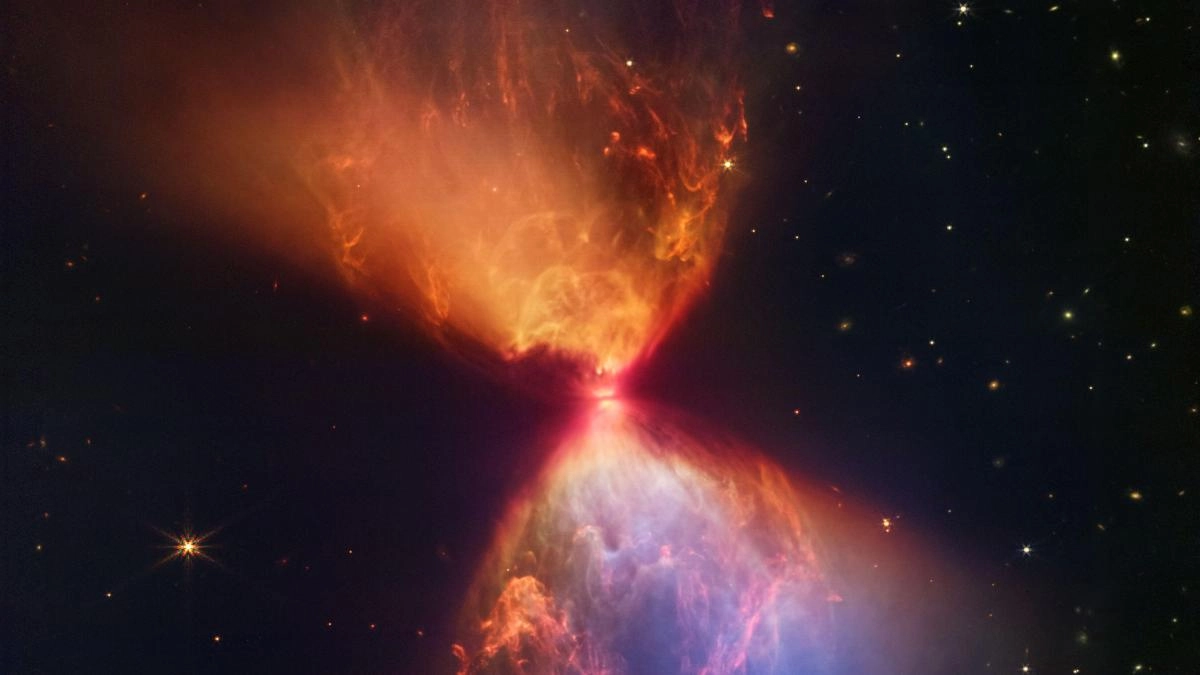

Nothing lasts forever, not even our universe.
Over the past two decades, astronomers have noticed clues that the cosmos may have passed its prime.
One of those signs is that fewer stars have been being born.
Now, that doesn't mean the universe is running out of stars.
There are estimates that there are at least seven hundred million of them—that's a number followed by 24 zeros. But astronomers believe that the production of new stars is slowing down. A star is born… and dies. The current scientific consensus is that the universe is 13.8 billion years old. The first stars formed shortly after the Big Bang. In fact, last year, the James Webb Space Telescope found a trio of stars in our galaxy, the Milky Way, that are believed to be close to 13 billion years old. Stars are essentially giant balls of hot gas that began their lives the same way. They form in huge clouds of cosmic dust known as nebulae. Gravity pulls the gases together, which eventually heat up and become a baby star, or as it's known, a protostar. As the star's core heats up to millions of degrees Celsius, the hydrogen atoms contained there begin to churn to form helium through a process called nuclear fusion. This reaction emits light and heat, and the star is now in a stable "main sequence" phase. Astronomers estimate that main sequence stars, including our own Sun, make up about 90% of all stars in the universe. Their masses range from one-tenth to 200 times the mass of our Sun. Eventually, these stars run out of fuel and can take different paths in their demise.
Stars with small masses like our Sun enter a fading process that can last billions of years.
For larger “sister” stars, at least eight times the size of the Sun, their end is more dramatic: they are destroyed in a huge explosion known as a supernova.
Old stars dominate
In 2013, an international team of astronomers dedicated to studying trends in star formation stated that of all the stars that would ever be born in the history of the Universe, 95% had already been born.
“We live in a universe dominated by old stars,” said the study's author, David Sobral, at the time, in an article published in the Subaru Telescope magazine.
In the timeline of the universe, it appears that its peak star formation occurred about 10 billion years ago, in a period known as the “Midday Period.” “Cosmic.”
“Galaxies are converting gas into stars, and they are doing so at a decreasing rate,” explains Professor Douglas Scott, a cosmologist at the University of British Columbia in Canada.
Scott is the co-author of a report, not yet published, that analyzes data from the European Space Agency’s Euclid and Herschel telescopes.
He and his team of space researchers were able to simultaneously study nearly 2.6 million galaxies, made possible by the 3D map of the universe created by the Euclid mission.
Astronomers were particularly interested in the heat emitted by stars.
Galaxies with higher star formation rates tend to have hotter cosmic dust as they contain larger, hotter stars. The team found that galaxy temperatures have been decreasing over the past billion years. “We’ve already passed the peak of star formation, and there will be less and less new star formation in the universe,” Scott adds. The Big Freeze. It’s true that the death of old stars can lead to the formation of new ones using the same material, but it’s not that simple. Let’s assume we have a pile of building materials and we use them to build a house. If we want to build a new one, we can recycle things from an old house, but not everything will be useful. “That means we can only make a smaller house. Every time we demolish something, there will be fewer and fewer usable materials until nothing can be built at all,” Scott points out. That’s what happens to celebrities.
“Each generation of stars has less fuel to burn, and eventually there won’t be enough fuel to make a star,” he adds.
And he concludes: “We already know that less massive stars are more common than massive stars in the universe.”
Scientists have long theorized that the universe will come to an end someday. They just can’t be sure how or when.
One of the most widely accepted theories today is heat death.
Also known as the “Big Freeze,” it predicts that as the universe continues to expand, energy will dissipate until it eventually becomes too cool to support life.
The stars are moving farther and farther away, running out of fuel, and no new ones are forming.
“The amount of energy available in the universe is finite,” Scott explains.
Many zeros
But before you gaze wistfully at the sky, the disappearance of stars would take an astronomical amount of time.
Scott estimates that new stars will continue to appear for the next 10 to 100 billion years, long after our Sun has likely disappeared.
As for the “Big Frost,” it could take even longer: earlier this year, astronomers at Radboud University in the Netherlands estimated that the end would come in about 1 quintillion years—that’s a one followed by 78 zeros.
There’s plenty of time, then, to appreciate the stars the next time there’s a clear night.