

“Pakistan Alleges Indian Involvement in Terror Plot Amid Escalating Border Tensions”
Pakistan’s military accuses India of orchestrating a terror plot within its borders, claiming the arrest of Abdul Majeed in Jhelum. The allegations intensify existing tensions between the two nations.
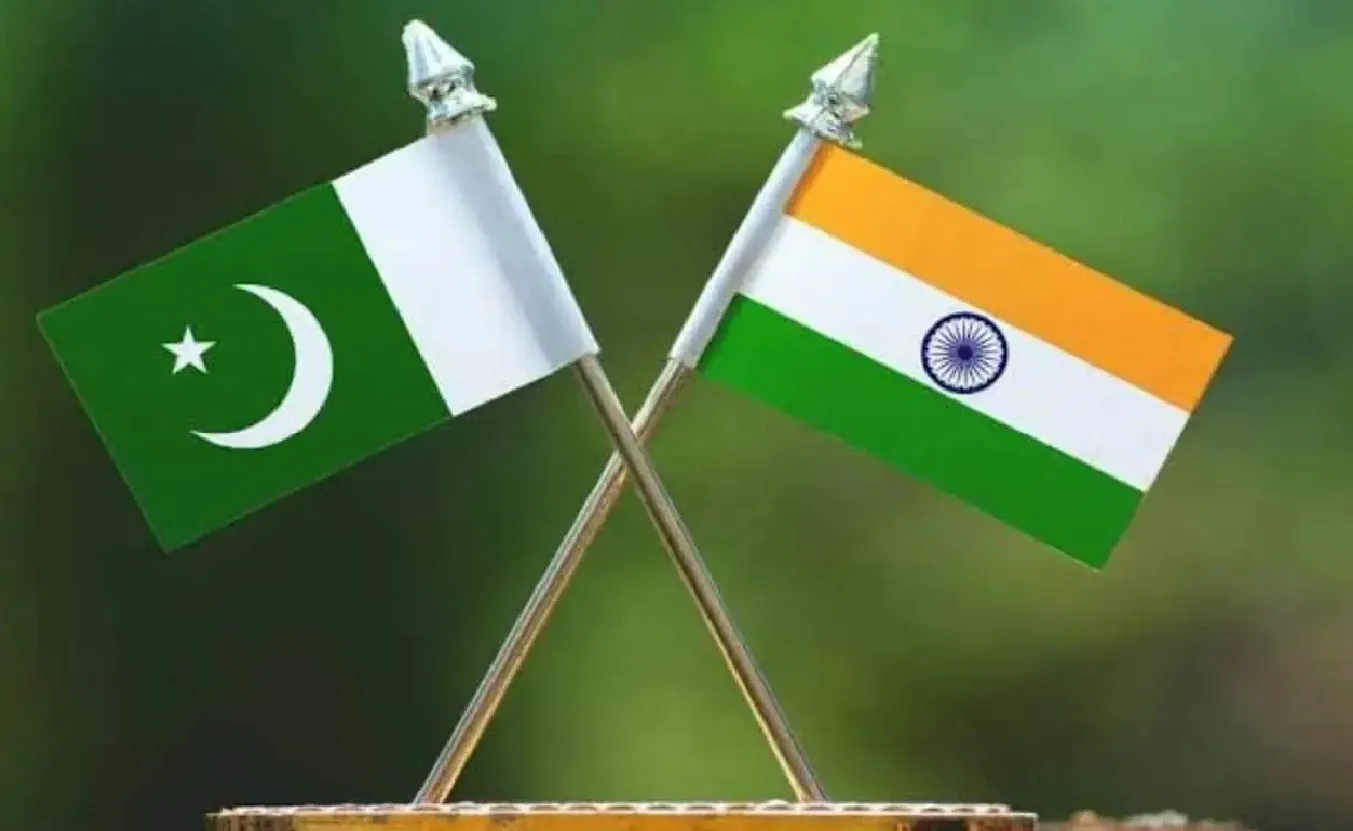

In a development that has further strained the already tense relations between Pakistan and India, Pakistan’s military has accused India of orchestrating a terror plot within its territory. The Inter-Services Public Relations (ISPR) announced the arrest of Abdul Majeed in Jhelum, alleging his involvement in a bombing attempt under the direction of Indian military officers.
“Arrest in Jhelum Sparks Accusations”
Lieutenant General Ahmed Sharif, spokesperson for the Pakistani military, held a press conference detailing the arrest. He claimed that Abdul Majeed was apprehended while attempting to plant explosives at a bus station in Jhelum. According to Sharif, Majeed was acting under the supervision of Indian Army officer Major Sandeep Verma and three junior officers.
“Allegations of State-Sponsored Terrorism”
The Pakistani military has labeled this incident as an example of state-sponsored terrorism by India. Sharif stated, “This is a fragment of a broader strategic plan by India to destabilize Pakistan.” He emphasized that Pakistan’s law enforcement agencies successfully thwarted the alleged plot, preventing potential casualties and chaos.
“Broader Claims of Indian Involvement”
Beyond the Jhelum incident, Sharif asserted that Pakistan has evidence linking India to 71 militants operating near the Afghan border. He suggested that these individuals were trained and supported by Indian intelligence agencies to carry out attacks within Pakistan, aiming to disrupt national security and sow discord.
“India’s Response and International Implications”
As of now, the Indian government has not issued an official response to these allegations. The accusations come at a time when both nations are experiencing heightened tensions, particularly following recent incidents along the Line of Control (LoC). The international community watches closely, concerned about the potential escalation of conflict between the two nuclear-armed neighbors.
“Historical Context and Ongoing Tensions”
India and Pakistan have a long history of conflict, primarily centered around the disputed region of Kashmir. Accusations of cross-border terrorism and espionage have been recurrent themes in their bilateral relations. The recent allegations add another layer of complexity to an already volatile situation, underscoring the need for diplomatic engagement and conflict resolution mechanisms.
“Calls for International Mediation”
In light of these developments, analysts and international observers advocate for third-party mediation to de-escalate tensions. The United Nations and other global entities are urged to facilitate dialogue between the two countries to prevent further deterioration of relations and to promote regional stability.
“ A Critical Juncture in South Asian Relations”
The arrest of Abdul Majeed and the subsequent allegations by Pakistan’s military mark a significant moment in South Asian geopolitics. The situation demands careful navigation to avoid escalation and to foster an environment conducive to peace and cooperation between India and Pakistan.