

2026 Toyota Tacoma: The Last Manual Pickup on the Market
The 2026 Toyota Tacoma becomes the only pickup available in North America that will still offer a version with a manual transmission
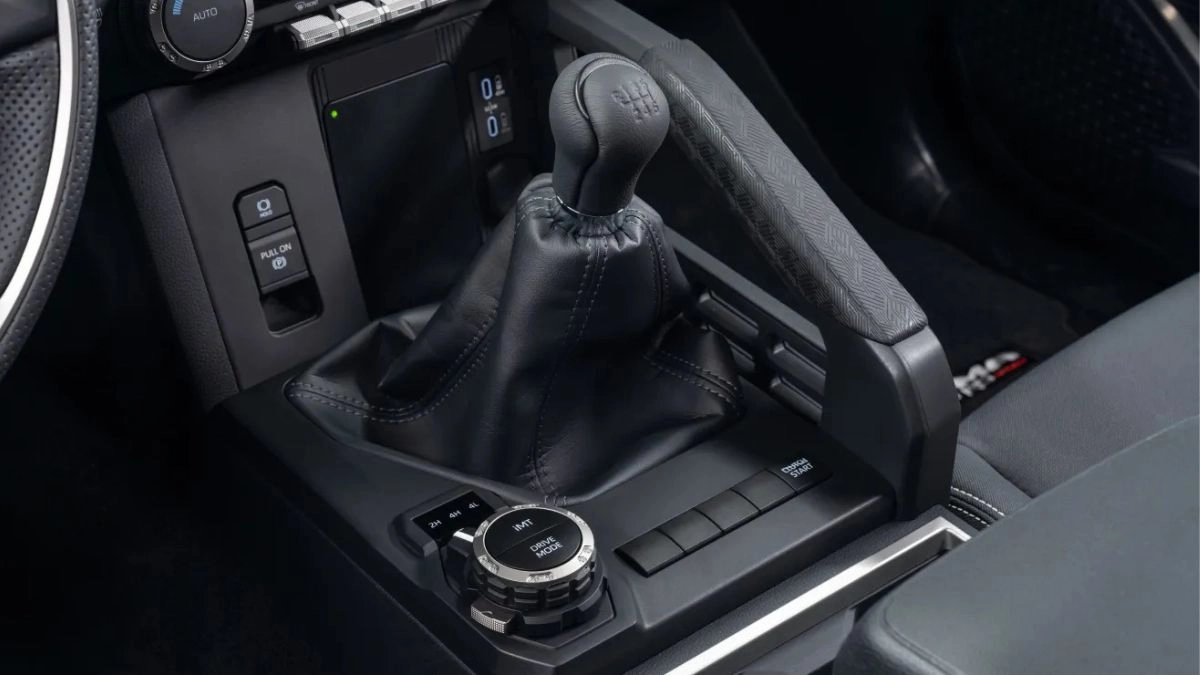

It's no surprise that the North American pickup truck market has undergone a rapid transformation. The pursuit of greater efficiency, comfort, and technology led the industry to gradually replace manual transmissions with much more sophisticated automatic systems.
Amid this wave of change, virtually all brands abandoned the classic gearshift lever… except one. By 2026, only one pickup truck will keep alive the most direct connection between driver and machine: the Toyota Tacoma.
While other manufacturers focus on increasingly automating work and adventure vehicles, Toyota decided to honor a tradition that seemed close to disappearing. Their decision is not only a technical matter, but also an emotional and cultural one, especially in a market where manual transmissions were the standard for midsize trucks for decades.
The last survivor of an almost extinct tradition
Just a generation ago, finding a pickup with a manual transmission was the norm. However, the evolution of automatic transmissions, along with the arrival of CVTs and advanced driver assistance systems, changed public preference. Brands responded, and little by little, the manual offering dwindled until it almost completely disappeared.
The Jeep Gladiator, one of the few that resisted, recently removed its manual version from its lineup. With this move, the responsibility for keeping this type of driving alive fell exclusively to Toyota, which opted to retain the manual option within the 2026 Tacoma lineup. The Japanese brand knows it won't be the best-selling pickup for that reason, but it will be the only one offering an authentic experience for those who enjoy traditional driving. For many enthusiasts, the manual transmission is not just a mechanical element: it's an emotional connection. It represents absolute control,a feeling of total involvement in the driving process and, above all, a driving style that demands attention and skill.
Mechanical adjustments designed to last
The 2026 Toyota Tacoma will continue to be equipped with the 2.4-liter turbocharged i-FORCE engine, a powerplant renowned for its performance and durability. In automatic versions, this engine can deliver up to 465 lb-ft of torque, an outstanding figure in the midsize pickup segment.
However, for the manual transmission version, Toyota decided to implement a different calibration.
The brand slightly reduced the power to avoid excessive stress on the crankshaft, a preventative measure aimed at ensuring the longevity of the mechanical assembly. This adjustment does not affect the essence of the model, as Toyota compensated with a higher final drive ratio, allowing for better use of the available torque.
This type of engineering demonstrates that the manufacturer not only wants to maintain a manual option out of tradition, but to do so with technical responsibility.
Instead of adapting the engine without modifications, they developed a specific configuration that guarantees stable and reliable performance in real-world driving situations.
A pickup with history and a secure place in the market
Since its debut in 1995, the Tacoma has built a solid reputation: tough, reliable, and with an ideal balance between off-road capability and everyday usability. Its numbers back it up: more than 237,000 units sold in 2024, surpassing direct rivals like the Chevrolet Colorado and positioning itself as one of the favorites in the United States.
The public doesn't just buy a Tacoma, they buy its legacy. That's why the decision to maintain a manual transmission version has a symbolic value that transcends the commercial aspect.
It represents the continuation of a driving style that other brands have completely abandoned. Toyota understood that, although the market is moving towards automation and electrification, there is still a group of drivers looking for something different: a truck that feels alive with every gear change, that allows you to feel the engine, and that transforms every journey into an act of pure driving.The brand slightly reduced the power output to avoid excessive stress on the crankshaft, a preventative measure aimed at ensuring the longevity of the mechanical assembly. This adjustment does not affect the essence of the model, as Toyota compensated with a higher final drive ratio, allowing for better use of the available torque. This type of engineering demonstrates that the manufacturer not only wants to maintain a manual option out of tradition, but to do so with technical responsibility. Instead of adapting the engine without modifications, it developed a specific configuration that guarantees stable and reliable performance in real-world driving situations. A pickup with history and a secure place in the market. Since its debut in 1995, the Tacoma has built a solid reputation: tough, reliable, and with an ideal balance between off-road capability and everyday usability. Its numbers back it up: more than 237,000 units sold in 2024, surpassing direct rivals like the Chevrolet Colorado and positioning itself as one of the favorites in the United States. The public doesn't just buy a Tacoma, they buy its legacy. That's why the decision to maintain a manual version has a symbolic value that transcends the commercial. It represents the continuity of a driving style that other brands have completely abandoned. Toyota understood that, although the market is moving towards automation and electrification, there is still a group of drivers looking for something different: a truck that feels alive with every gear change, that allows you to feel the engine, and that transforms every journey into an act of pure driving.The brand slightly reduced the power output to avoid excessive stress on the crankshaft, a preventative measure aimed at ensuring the longevity of the mechanical assembly. This adjustment does not affect the essence of the model, as Toyota compensated with a higher final drive ratio, allowing for better use of the available torque. This type of engineering demonstrates that the manufacturer not only wants to maintain a manual option out of tradition, but to do so with technical responsibility. Instead of adapting the engine without modifications, it developed a specific configuration that guarantees stable and reliable performance in real-world driving situations. A pickup with history and a secure place in the market. Since its debut in 1995, the Tacoma has built a solid reputation: tough, reliable, and with an ideal balance between off-road capability and everyday usability. Its numbers back it up: more than 237,000 units sold in 2024, surpassing direct rivals like the Chevrolet Colorado and positioning itself as one of the favorites in the United States. The public doesn't just buy a Tacoma, they buy its legacy. That's why the decision to maintain a manual version has a symbolic value that transcends the commercial. It represents the continuity of a driving style that other brands have completely abandoned. Toyota understood that, although the market is moving towards automation and electrification, there is still a group of drivers looking for something different: a truck that feels alive with every gear change, that allows you to feel the engine, and that transforms every journey into an act of pure driving.Toyota buys its legacy. That's why the decision to maintain a manual version has a symbolic value that transcends the commercial. It represents the continuity of a driving style that other brands have completely abandoned. Toyota understood that, although the market is moving towards automation and electrification, there is still a group of drivers who are looking for something different: a truck that feels alive with every gear change, that allows you to feel the engine, and that transforms every journey into an act of pure driving.Toyota buys its legacy. That's why the decision to maintain a manual version has a symbolic value that transcends the commercial. It represents the continuity of a driving style that other brands have completely abandoned. Toyota understood that, although the market is moving towards automation and electrification, there is still a group of drivers who are looking for something different: a truck that feels alive with every gear change, that allows you to feel the engine, and that transforms every journey into an act of pure driving.