

Amazon wants to turn its delivery workers into “augmented humans” with smart glasses
With robots, AI and smart glasses called Amelia, Amazon seeks to revolutionize the logistics sector.
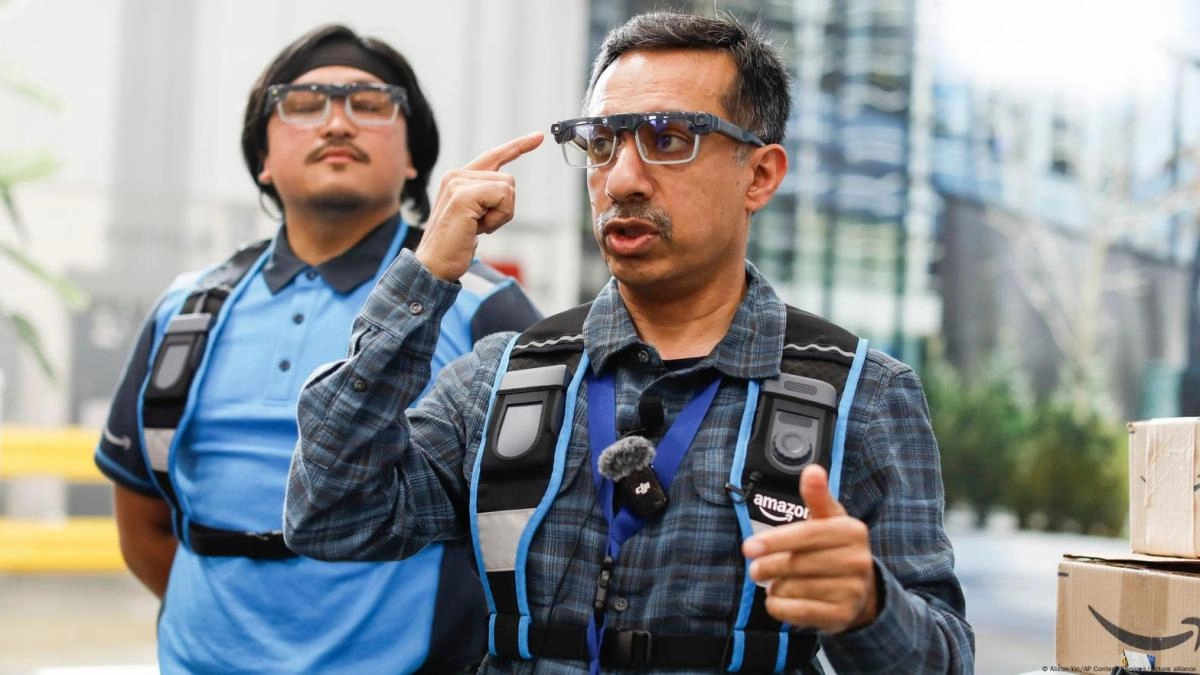

In its eagerness to speed up deliveries, Amazon has gone from two-day shipments to same-day shipments – and even shipments in one hour. Now, with robots, artificial intelligence, and new smart glasses, it's looking to shave seconds off each delivery.
The Seattle-based company first publicly unveiled its advanced glasses for delivery drivers, after their development was revealed last year by Reuters.
Amelia Smart Glasses
Known internally as Amelia, the glasses display step-by-step directions, scan codes, and take photos as proof of delivery. They could replace today's bulky GPS devices and offer helpful navigation tips, such as the best way out of a building or how to avoid a dog at a customer's door.
The glasses connect to a controller on the driver's vest and are powered by swappable batteries—a solution to the range problem, according to Amazon.
The announcements at Amazon's annual "Delivering the Future" logistics event are part of the company's particular focus on the "last 100 yards," which contribute to the costly final steps in a delivery's journey to customers.
Last year, Amazon introduced a scanner for its vans that illuminates the right packages with a green light, reducing label-reading time. In June, it showed off new digital maps with greater detail of neighborhoods, buildings, and obstacles than Google Maps.
Hundreds of drivers have already tried out the smart glasses, according to Beryl Tomay, vice president of transportation. “They reduce the need to manipulate the phone and improve attention and safety,” he said. Some drivers saved up to 30 minutes per shift.
The use of the glasses will be optional and free for delivery drivers and partner companies, although the project is still in the experimental phase, Tomay added.
Robots in warehouses
Last week, Amazon also introduced a robotic arm designed to collaborate with warehouse employees,picking and sorting items to speed up orders.
Called Blue Jay, the robot takes up less space than previous models and, the company says, can reduce workplace injuries. It already operates in a warehouse in South Carolina and will soon expand to more centers, especially those dedicated to deliveries within a few hours.
AI to optimize warehouse operations
Amazon also announced a new artificial intelligence system that will be tested in a Tennessee warehouse to optimize operations and avoid bottlenecks, although it did not detail how it will be applied or who will have access to the software.
"We now have a tool to analyze all the data from the site as it happens," said Tye Brady, Amazon's chief robotics technologist, at Wednesday's event.
"When it's fully implemented, we'll be able to help operators with their daily planning," he added.
Debate over robotization and workers
Brady dismissed concerns that improving warehouses with robotics and AI will mean fewer jobs for humans, saying that Amazon has created more U.S. jobs in the last decade than any other company.
"A “Our frontline employees, here’s my message,” Brady said. “These systems are not experiments. They are real tools built for you to make your jobs safer, smarter, and more rewarding.”
However, The New York Times reported that robotics could allow Amazon to avoid hiring 160,000 workers in just two years even as its online retail business grows.
Automating Amazon’s warehouses could reduce the need to hire, particularly when it comes to temporary workers needed for peak holiday shopping demands.
Amazon, for its part, said it planned to hire 250,000 temporary workers for the holiday season.
Amazon’s shares fell 1.8 percent to $217.95 on Wednesday. It is the only one among the so-called Magnificent Seven tech stocks to post a decline so far this year.