

Bugatti and Rimac are preparing an extreme electric supercar
With solid-state batteries and ultra-compact electric axles, the brands are working on what could become the world's most advanced supercar

The future of supercars is no longer defined solely by cylinders, displacement, or mechanical sound. In the case of Bugatti, that future is being written by Rimac, the Croatian company that has not only established itself as a leader in high-performance electric technology, but is also the majority shareholder of the legendary French brand.
Far from an abrupt transition, the strategy is clear: to keep Bugatti's heritage alive while developing, with time and precision, an electric supercar capable of redefining the segment.
Rimac wants to take Bugatti far beyond what is currently known, betting on technologies that have not yet reached mass production, but which promise a radical leap in performance, efficiency, and exclusivity.
Bugatti maintains its DNA while looking to the future
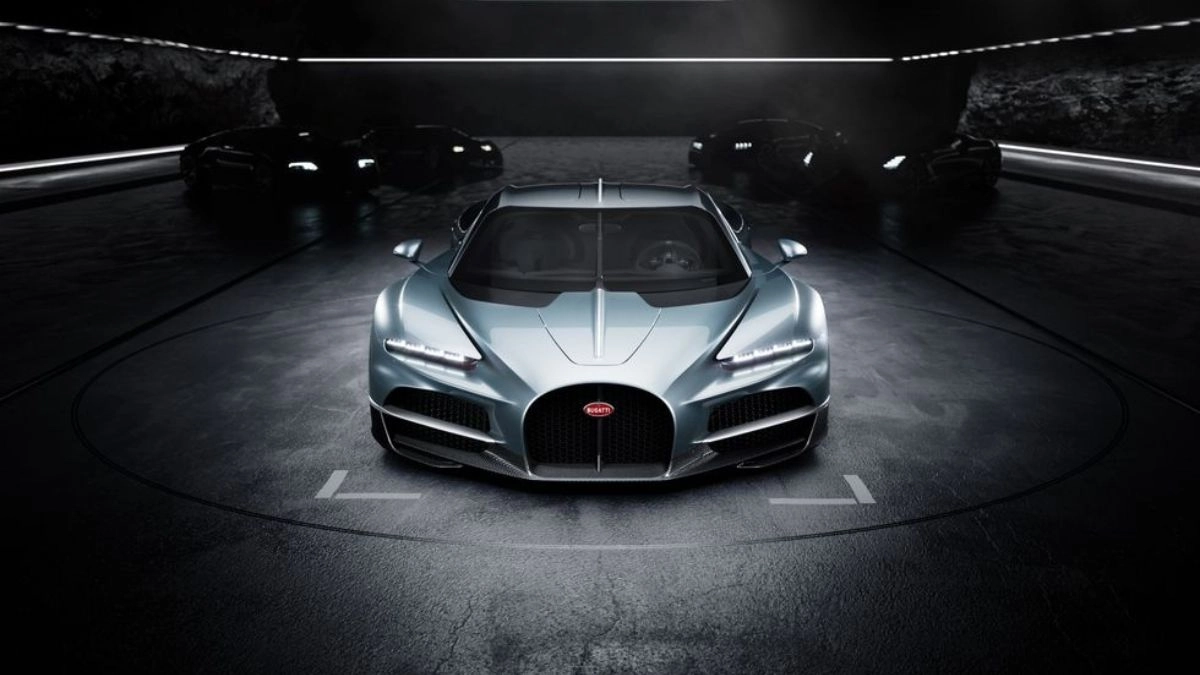
For now, Bugatti continues to offer models with electric powertrains of advanced combustion engines. The recent Tourbillon, with its new V16 engine, marks a new stage after the farewell to the iconic W16, opting for greater efficiency without sacrificing extreme power figures.
This coexistence is not accidental. While the brand continues to celebrate its heritage with models like the Mistral and ultra-exclusive editions developed through special programs, the technical team is working in parallel on what will be the first fully electric Bugatti. A project that doesn't simply seek to match its predecessors, but to surpass them in every possible aspect.
Solid-state batteries: the heart of the project
One of the technological pillars of the future electric Bugatti will be solid-state batteries. Rimac, through its Rimac Technology division, is already actively working on the development of this technology alongside strategic partners such as ProLogium and the composite materials specialists at Mitsubishi.
The person in charge of these operations is Nurdin Pitarevic, director of operations at Rimac Technology,who confirmed that testing of these batteries will begin soon, with an eye toward a launch around 2030.
Solid-state batteries promise key advantages over current lithium-ion batteries: between 20% and 30% more energy density, greater safety, significantly faster charging times, and more stable performance in extreme conditions.
In addition, the use of an ultra-rigid composite casing would allow for a reduction of up to 66 pounds in the total system weight, a crucial factor in a vehicle of this type.
Compact electric axles and immense power
Another major advancement that Rimac plans to incorporate into Bugatti's electric supercar is high-power electric axles.
These systems integrate an electric motor, transmission, and control electronics into a single compact module, optimizing space, weight, and efficiency. These axles can be configured for front-wheel, rear-wheel, or all-wheel drive, and each unit is capable of developing between 200 and nearly 500 horsepower. One of the new-generation axles weighs just 302 pounds and has already undergone advanced testing. According to Rimac, this system has the potential to match the power of one of the rear motors in the Rimac Nevera, which produces 612 horsepower. This is especially relevant considering that the Nevera exceeds 1,000 horsepower combined and has set multiple acceleration and speed records for production electric vehicles. The Nevera Experience as a Technological Foundation: The Rimac Nevera is not just a technological showcase, but a learning platform. The records achieved by this model have allowed the company to perfect thermal management, power distribution, and electronic control systems that will now serve as the basis for future developments. The idea is to transfer that knowledge to Bugatti, but reinterpreted under its own philosophy: extreme luxury, handcrafted design, and obsessive attention to detail. The result will not be an “electric Rimac-style” Bugatti, but an authentic Bugatti powered by the most advanced electric technology of the moment. An alliance with historic potential. The combination of solid-state batteries, ultra-compact electric axles, state-of-the-art composite materials, and Bugatti's century-long heritage could result in one of the most exclusive and competitive supercars ever created. Although we will still have to wait several years to see the first functional prototype, the direction has been set. In the meantime, Rimac continues to market the Nevera and Nevera R, and Bugatti continues to expand its offerings with models like the Tourbillon and extreme customization programs that keep the legend alive.significantly faster charging times, and more stable performance in extreme conditions.
In addition, the use of an ultra-rigid composite casing would allow for a reduction of up to 66 pounds in the total system weight, a crucial factor in a vehicle of this type.
Compact electric axles and immense power
Another major advancement that Rimac plans to incorporate into Bugatti's electric supercar is high-power electric axles.
These systems integrate an electric motor, transmission, and control electronics into a single compact module, optimizing space, weight, and efficiency. These axles can be configured for front-wheel, rear-wheel, or all-wheel drive, and each unit is capable of developing between 200 and nearly 500 horsepower. One of the new-generation axles weighs just 302 pounds and has already undergone advanced testing. According to Rimac, this system has the potential to match the power of one of the rear motors in the Rimac Nevera, which produces 612 horsepower. This is especially relevant considering that the Nevera exceeds 1,000 horsepower combined and has set multiple acceleration and speed records for production electric vehicles. The Nevera Experience as a Technological Foundation: The Rimac Nevera is not just a technological showcase, but a learning platform. The records achieved by this model have allowed the company to perfect thermal management, power distribution, and electronic control systems that will now serve as the basis for future developments. The idea is to transfer that knowledge to Bugatti, but reinterpreted under its own philosophy: extreme luxury, handcrafted design, and obsessive attention to detail. The result will not be an “electric Rimac-style” Bugatti, but an authentic Bugatti powered by the most advanced electric technology of the moment. An alliance with historic potential. The combination of solid-state batteries, ultra-compact electric axles, state-of-the-art composite materials, and Bugatti's century-long heritage could result in one of the most exclusive and competitive supercars ever created. Although we will still have to wait several years to see the first functional prototype, the direction has been set. In the meantime, Rimac continues to market the Nevera and Nevera R, and Bugatti continues to expand its offerings with models like the Tourbillon and extreme customization programs that keep the legend alive.significantly faster charging times, and more stable performance in extreme conditions.
In addition, the use of an ultra-rigid composite casing would allow for a reduction of up to 66 pounds in the total system weight, a crucial factor in a vehicle of this type.
Compact electric axles and immense power
Another major advancement that Rimac plans to incorporate into Bugatti's electric supercar is high-power electric axles.
These systems integrate an electric motor, transmission, and control electronics into a single compact module, optimizing space, weight, and efficiency. These axles can be configured for front-wheel, rear-wheel, or all-wheel drive, and each unit is capable of developing between 200 and nearly 500 horsepower. One of the new-generation axles weighs just 302 pounds and has already undergone advanced testing. According to Rimac, this system has the potential to match the power of one of the rear motors in the Rimac Nevera, which produces 612 horsepower. This is especially relevant considering that the Nevera exceeds 1,000 horsepower combined and has set multiple acceleration and speed records for production electric vehicles. The Nevera Experience as a Technological Foundation: The Rimac Nevera is not just a technological showcase, but a learning platform. The records achieved by this model have allowed the company to perfect thermal management, power distribution, and electronic control systems that will now serve as the basis for future developments. The idea is to transfer that knowledge to Bugatti, but reinterpreted under its own philosophy: extreme luxury, handcrafted design, and obsessive attention to detail. The result will not be an “electric Rimac-style” Bugatti, but an authentic Bugatti powered by the most advanced electric technology of the moment. An alliance with historic potential. The combination of solid-state batteries, ultra-compact electric axles, state-of-the-art composite materials, and Bugatti's century-long heritage could result in one of the most exclusive and competitive supercars ever created. Although we will still have to wait several years to see the first functional prototype, the direction has been set. In the meantime, Rimac continues to market the Nevera and Nevera R, and Bugatti continues to expand its offerings with models like the Tourbillon and extreme customization programs that keep the legend alive.
These systems integrate an electric motor, transmission, and control electronics into a single compact module, optimizing space, weight, and efficiency. These axles can be configured for front-wheel, rear-wheel, or all-wheel drive, and each unit is capable of developing between 200 and nearly 500 horsepower. One of the new-generation axles weighs just 302 pounds and has already undergone advanced testing. According to Rimac, this system has the potential to match the power of one of the rear motors in the Rimac Nevera, which produces 612 horsepower. This is especially relevant considering that the Nevera exceeds 1,000 horsepower combined and has set multiple acceleration and speed records for production electric vehicles. The Nevera Experience as a Technological Foundation: The Rimac Nevera is not just a technological showcase, but a learning platform. The records achieved by this model have allowed the company to perfect thermal management, power distribution, and electronic control systems that will now serve as the basis for future developments. The idea is to transfer that knowledge to Bugatti, but reinterpreted under its own philosophy: extreme luxury, handcrafted design, and obsessive attention to detail. The result will not be an “electric Rimac-style” Bugatti, but an authentic Bugatti powered by the most advanced electric technology of the moment. An alliance with historic potential. The combination of solid-state batteries, ultra-compact electric axles, state-of-the-art composite materials, and Bugatti's century-long heritage could result in one of the most exclusive and competitive supercars ever created. Although we will still have to wait several years to see the first functional prototype, the direction has been set. In the meantime, Rimac continues to market the Nevera and Nevera R, and Bugatti continues to expand its offerings with models like the Tourbillon and extreme customization programs that keep the legend alive.
These systems integrate an electric motor, transmission, and control electronics into a single compact module, optimizing space, weight, and efficiency. These axles can be configured for front-wheel, rear-wheel, or all-wheel drive, and each unit is capable of developing between 200 and nearly 500 horsepower. One of the new-generation axles weighs just 302 pounds and has already undergone advanced testing. According to Rimac, this system has the potential to match the power of one of the rear motors in the Rimac Nevera, which produces 612 horsepower. This is especially relevant considering that the Nevera exceeds 1,000 horsepower combined and has set multiple acceleration and speed records for production electric vehicles. The Nevera Experience as a Technological Foundation: The Rimac Nevera is not just a technological showcase, but a learning platform. The records achieved by this model have allowed the company to perfect thermal management, power distribution, and electronic control systems that will now serve as the basis for future developments. The idea is to transfer that knowledge to Bugatti, but reinterpreted under its own philosophy: extreme luxury, handcrafted design, and obsessive attention to detail. The result will not be an “electric Rimac-style” Bugatti, but an authentic Bugatti powered by the most advanced electric technology of the moment. An alliance with historic potential. The combination of solid-state batteries, ultra-compact electric axles, state-of-the-art composite materials, and Bugatti's century-long heritage could result in one of the most exclusive and competitive supercars ever created. Although we will still have to wait several years to see the first functional prototype, the direction has been set. In the meantime, Rimac continues to market the Nevera and Nevera R, and Bugatti continues to expand its offerings with models like the Tourbillon and extreme customization programs that keep the legend alive.and electronic control systems that will now serve as the basis for future developments. The idea is to transfer that knowledge to Bugatti, but reinterpreted under its own philosophy: extreme luxury, handcrafted design, and obsessive attention to detail. The result will not be an “electric Rimac-style” Bugatti, but an authentic Bugatti powered by the most advanced electric technology of the moment. An alliance with historic potential. The combination of solid-state batteries, ultra-compact electric axles, state-of-the-art composite materials, and Bugatti's century-long heritage could result in one of the most exclusive and competitive supercars ever created. Although we will still have to wait several years to see the first functional prototype, the direction has been set. In the meantime, Rimac continues to market the Nevera and Nevera R, and Bugatti continues to expand its offerings with models like the Tourbillon and extreme customization programs that keep the legend alive.and electronic control systems that will now serve as the basis for future developments. The idea is to transfer that knowledge to Bugatti, but reinterpreted under its own philosophy: extreme luxury, handcrafted design, and obsessive attention to detail. The result will not be an “electric Rimac-style” Bugatti, but an authentic Bugatti powered by the most advanced electric technology of the moment. An alliance with historic potential. The combination of solid-state batteries, ultra-compact electric axles, state-of-the-art composite materials, and Bugatti's century-long heritage could result in one of the most exclusive and competitive supercars ever created. Although we will still have to wait several years to see the first functional prototype, the direction has been set. In the meantime, Rimac continues to market the Nevera and Nevera R, and Bugatti continues to expand its offerings with models like the Tourbillon and extreme customization programs that keep the legend alive.