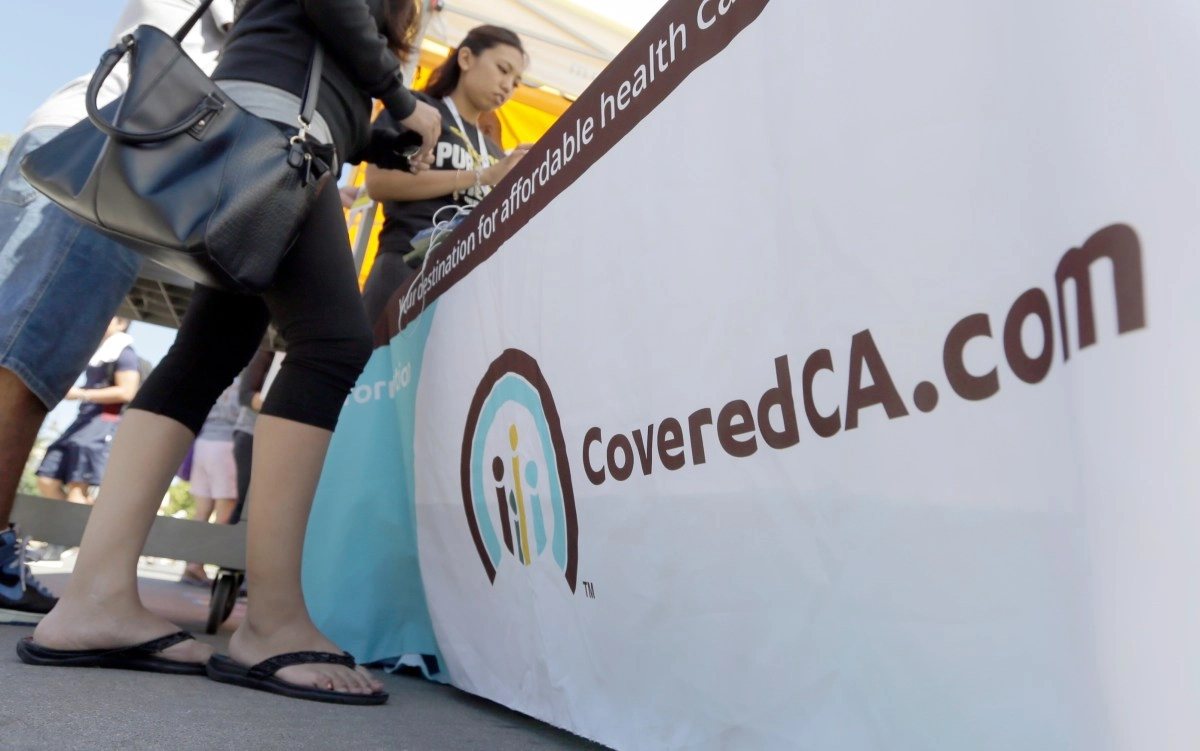

The impact of rising premiums is affecting individuals who purchase health insurance individually, especially older people, those living in high-cost-of-living areas, and those with lower incomes who are more likely to cancel their coverage.
“Millions more people without insurance or with insufficient coverage means less access to health care, worse health, dying at a younger age, and living one step away from death “Financial ruin,” said Anthony Wright, executive director of Families USA, during the videoconference “How Soaring Costs Are Transforming Access to Health Care,” organized by American Community Media (ACoM). “Individual marketplaces are the ideal place for those who work but don't have health insurance through their employer, and a large percentage of those who use them are small business owners and their employees,” he explained. He said these premium increases represent a burden for them, making it difficult for them to make ends meet, invest in their small businesses, and improve their competitiveness. According to a new study by the nonprofit organization KFF, one in five dollars spent in the United States is related to health care. Health care spending currently represents 18% of US GDP. What's more, costs are expected to continue rising as the expanded health insurance premium tax credits provided by the Affordable Care Act (ACA) expire. With the open enrollment period ending last week in many states, millions of Americans enrolled in ACA plans are facing monthly premiums that have doubled. of hundreds, but rather thousands of dollars. "On average, it's more than double their premiums. And in many cases, "They triple or quadruple for many low-income people who perhaps had coverage for $10 a month, and are now literally paying hundreds of dollars."
In some cases, he said that people with slightly higher incomes or the elderly may experience a smaller percentage increase, but a much larger dollar increase.
“We've seen couples in their 50s and 60s now having to pay more than $10,000 or $15,000 for their coverage this year.That's a huge amount.”
He specified that as a result of the policy that expired at the end of the year, which essentially capped what people had to pay as a percentage of their income at 8% for everyone, initial statistics show that 1.4 million people lost their coverage or simply had it made more limited.
“We believe this is just the beginning and the tip of the iceberg of the impacts, as many more people are going to lose their coverage because they won't be able to. to afford that higher premium in January, February, or March, especially after certain grace periods and other measures take effect. It's important to keep in mind that the basic subsidies of the Affordable Care Act (ACA) are still available, so the enhanced tax credits have expired, but those from the original ACA still exist, providing some protection, especially for people with incomes below 400% of the poverty level.”
He emphasized that help is still available for those earning less than 400% of the poverty level, which is $60,000 for an individual and $125,000 for a family of four.
And third, he said that in some cases, they may have the option to reduce their coverage.
“The premium on the Gold and Silver plans might be too expensive, but at least you can get a lower premium with a Bronze plan.
This means paying more and getting less in terms of a high deductible, but you still have coverage in case something catastrophic happens, which will prevent total bankruptcy.”
He said that in California, even the Bronze plan offers three doctor visits for preventive primary care.
Medical spending doubles
Dr. Neale Mahoney, professor of economics at Stanford University, said that in the last two generations, Healthcare spending in the United States has grown from approximately 8% of our gross domestic product to around 18%—more than doubling.
“This means that the United States allocates a larger proportion of its resources to healthcare than any other country in the world. Why do we spend so much?”
“We pay higher prices than almost any other country in the world. The federal government covers about 50% of our healthcare costs because it is unaffordable for millions of families. But this means it reduces the availability of funds for other types of federal spending.”
Dr. Mahoney pointed out that there is a quick fix to reform our healthcare system, and to make progress,we must first ensure that there are enough healthcare workers, particularly in rural and other underserved communities.
“The second aspect is controlling the costs that families face, and part of that involves reversing some of the damage that has been done, especially this summer with the big budget bill.
“So it's important to reverse those so-called work requirements, which are really just administrative burdens, but we also need to be proactive and take steps to expand coverage.
“One option is to give more access to the lower-cost Medicare program, which encourages competition in the health insurance marketplaces, the Affordable Care Act (ACA) marketplaces, by bringing back the idea of ??a public option. it is crucial to understand that pharmaceutical corporations set prices, control the market through their monopolies, and Congress, until recently, has allowed these practices to continue.
“If there are five or six competitors, you see a price reduction of around 95%. Therefore, many of the pharmaceutical industry's practices are to prevent generic drugs from entering the market or delay their entry, since competition in a free market would reduce prices.”
So he indicated that reform of pharmaceutical benefit management should also be on the agenda if we want to lower prices. prices.
“Recent surveys have shown that 47% of people in this country are worried about not being able to afford healthcare costs by 2026, which is alarming.”