

Pure AI: Nissan prepares a smarter ProPilot for 2028
Nissan's ProPilot system will evolve in two years with artificial intelligence capable of interpreting traffic in a more natural and precise way

Pressing a small blue button on the steering wheel has become, for thousands of Nissan drivers, the gateway to some of the brand's most advanced assistance technologies.
Read also: Ford Bronco Filson, an edition created for those who live adventure without limits
What began as an aid to maintain distance from other vehicles has transformed, over the years, into an increasingly sophisticated platform that is now preparing to take a significant leap.
You can read: The most radical Toyota GRMN Corolla is now ready for action
The Japanese firm confirmed that the next evolution of ProPilot will arrive in March 2028. The big news will be the incorporation of artificial intelligence systems capable of analyzing complex traffic situations and making decisions in a way much more similar to that of an experienced driver.
A path that began 25 years ago
The history of this technology dates back to the late 1990s. In 1999, Nissan introduced an adaptive cruise control system that could automatically adjust speed based on distance from other vehicles.
Years later, new safety-oriented features arrived, including involuntary lane departure alerts and automated driving test programs in different cities around the world.
The accumulated experience allowed the first ProPilot system to debut in 2016, capable of controlling acceleration, braking and lane maintenance on highways.
The evolution continued in 2019 with ProPilot 2.0, a version that significantly expanded its capabilities by allowing more advanced maneuvers and hands-free functions in certain conditions.
Artificial intelligence takes center stage
The next generation will change the way the vehicle interprets what is happening around it. Instead of reacting only to specific objects, the system will be able to understand the general context of traffic and anticipate possible scenarios.
To achieve this, Nissan works together with Wayve, a British company specialized in artificial intelligence applied to mobility.
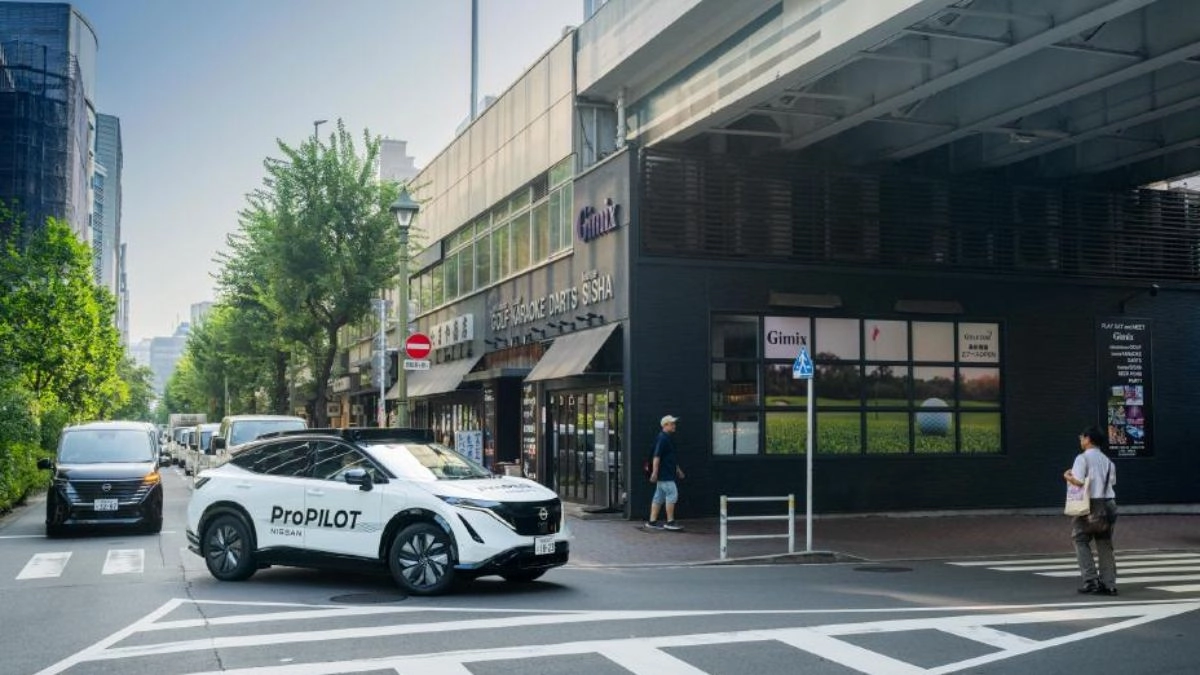
Development vehicles are already driving around Tokyo equipped with a complex network of sensors designed to collect and process information in real time.
Sensors that work as a team
Nissan's strategy relies on a combination of cameras, radars and LiDAR sensors. Each one fulfills a specific function and allows the information obtained by the other systems to be contrasted.
Cameras identify objects and signs, radars calculate speeds and movements, while LiDAR precisely measures shapes and distances. The integration of all these sources seeks to increase security and reduce the possibility of errors in the interpretation of the environment.
Eiichi Akashi, Chief Technology Officer Nissan Motor Co., Ltd., explained: "The current ProPilot 2.0 technology has been well received, but the next generation will provide even more innovative functions and convey the feeling that there is an expert human driver behind the wheel. It will adapt to more complex traffic conditions and offer greater confidence and peace of mind, improving safety not only for the driver, but for all road users."