

The 2026 World Cup and the commercial fight between Adidas and Nike
Adidas and Nike maintain their "war" of brands in the 2026 World Cup. Both represent 77% of the uniforms that the teams will wear in the World Cup
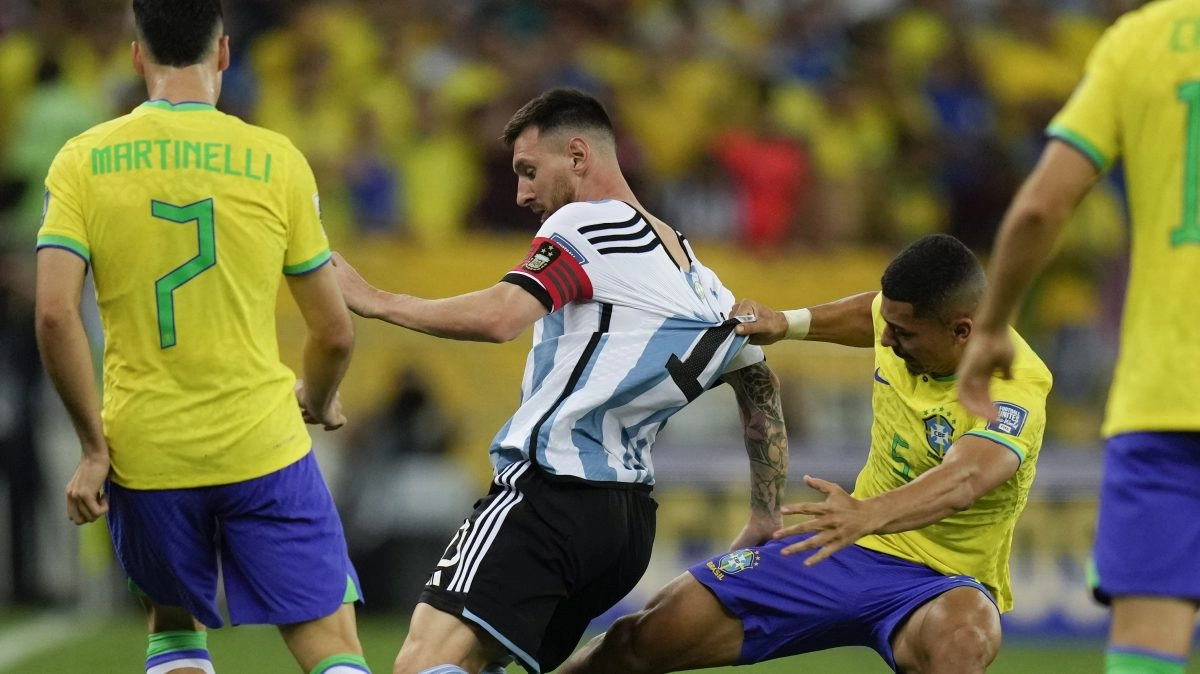

The 2026 World Cup will also be a commercial battle. Adidas will dress 14 teams, Nike 12 and Puma 11. Between the three they concentrate 77% of the participating countries. The event will bring together global and historical assets, such as Lionel Messi and Cristiano Ronaldo, Kylian Mbappé and Erling Haaland and the unstoppable emergence of Lamine Yamal. In addition, the tournament will give visibility to emerging brands thanks to the expansion to 48 teams.
Every four years, the World Cup becomes the largest sporting showcase on the planet. For a month, billions of spectators follow every match, every celebration and every image that comes from the stadiums. And while the teams compete to win the World Cup, another equally intense battle is being fought on and off the field: the trade war between Adidas and Nike, joined by Puma and other emerging brands.
The 2026 edition, with 48 selections for the first time in history, also expands the commercial board. Adidas arrives as the brand with the greatest presence in the tournament, dressing 14 teams, ahead of Nike, with 12, and Puma, with 11. Between the three, they account for 37 of the 48 participating teams, 77% of the World Cup.
However, the expansion of the championship has also allowed alternative manufacturers such as Kelme, Reebok, Kappa, Umbro, Marathon, Jako, Saeta, 7Saber, Majid or Tempo to gain visibility.
Adidas faces the event with a numerical and symbolic advantage. The German company dresses the current world champion, Argentina, and also teams with strong commercial weight such as Spain, Germany, Mexico, Colombia, Belgium or Japan and others such as Saudi Arabia, Qatar, Scotland, Sweden, South Africa, Algeria and Curacao. Italy, one of its historic teams, will not be in the tournament after being left out for the third consecutive time.
The 2026 World Cup will also mark the end of one of the most iconic partnerships in sports history. Germany will play its last major tournament dressed by Adidas before the agreement signed with Nike comes into effect starting in 2027. The German team and the company founded by Adi Dassler have been united for 75 years, a relationship that has accompanied the 'Mannschaft' in the conquest of its four world titles and that has turned its kits into one of the most recognizable symbols of international football. When the Germans say goodbye to the tournament, it will also mark a change in the sports industry.
Added to this team presence is an individual portfolio of enormous impact. Lionel Messi leads the Adidas roster in his sixth World Cup with Argentina, accompanied by other assets of maximum media value such as Lamine Yamal, Pedro González 'Pedri', Jude Bellingham, Jamal Musiala and Florian Wirtz. Not all of them compete with Adidas teams - Bellingham, for example, will play with an England dressed by Nike - but they are part of the German firm's powerful advertising campaigns.
Nike, for its part, has fewer selections, but maintains one of the most powerful sports portfolios in the championship. The American multinational will dress Brazil, France, England, the Netherlands, Uruguay, Norway, the United States, Canada, Croatia, Turkey, Australia and South Korea.
On an individual level, Nike is backed by some of the biggest stars in world football. Cristiano Ronaldo, Kylian Mbappé, Vinicius Junior and Erling Haaland are part of the brand's commercial portfolio. Of course, the company also loses some important assets. Rodrygo will not be able to participate in the tournament due to injury, while Cole Palmer has been left out of the English squad, two absences with sporting and commercial impact.
Puma appears as the big silent winner of the new format. The German company has gone from dressing six teams in Qatar 2022 to eleven in the 2026 World Cup, almost doubling its presence in just one World Cup cycle. Its federations include Portugal, Morocco, Switzerland, Austria, Senegal, Ghana, Ivory Coast, Egypt, Paraguay, New Zealand and the Czech Republic, consolidating a particularly strong growth strategy in Africa, with five teams from the continent.
The 2026 World Cup will also give visibility to alternative manufacturers. Brands such as 7Saber (Uzbekistan), Majid (Iran), Kelme (Jordan), Marathon (Ecuador), Kappa (Tunisia), Tempo (Cape Verde), Reebok (Panama), Saeta (Haiti), Jako (Iraq) and Umbro (Democratic Republic of the Congo) take advantage of the expansion to 48 teams to gain prominence.