
Its designs seek to eliminate the unnecessary and simplify the driving experience. However, not all of Elon Musk's decisions have been well received.
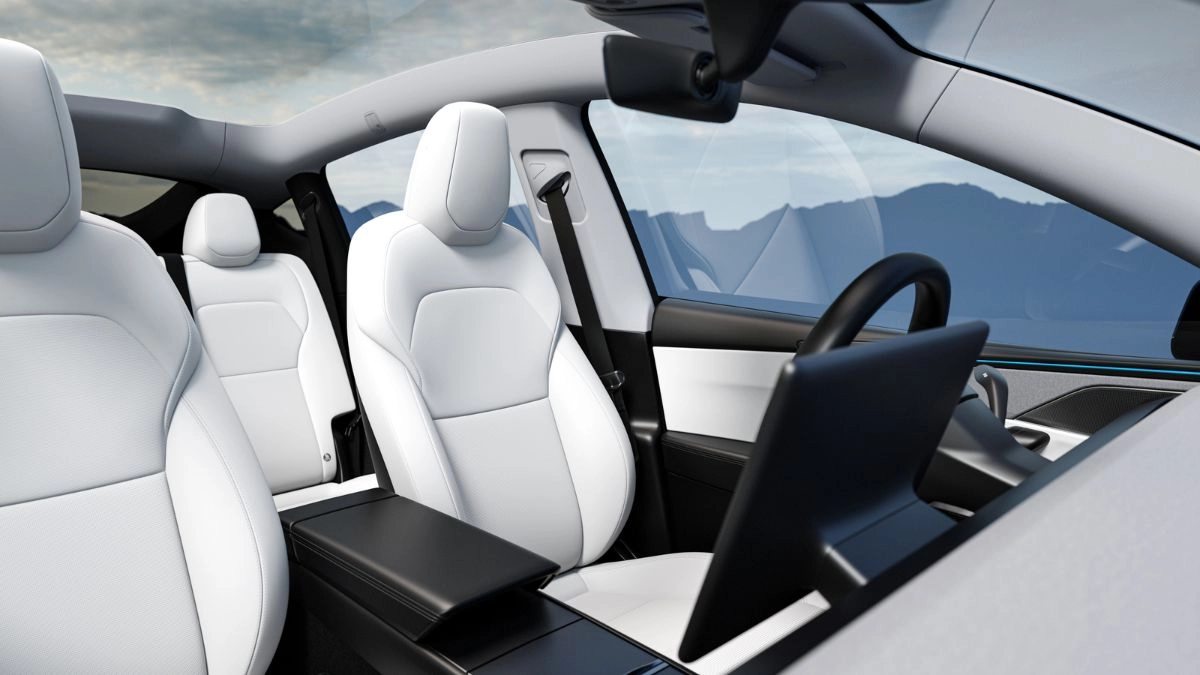
A clear example is the elimination of the physical turn signal levers, a feature that first disappeared in the 2021 Model S and the classic levers, Tesla opted for touch-sensitive buttons on the steering wheel, following its philosophy that "less is more." But this commitment to clean design clashed with practical reality.
Turning on the turn signal, an almost instinctive action for any driver, became more complicated: now you had to look at the steering wheel, find the small button, and hope you didn't make a mistake, which is far from ideal when driving at high speed or during quick maneuvers.
Controversy quickly erupted. Drivers and experts criticized the decision, pointing out that the touch system not only reduced comfort but also safety. Doubts were even raised about whether this arrangement could hinder driving tests in some countries due to the lack of intuitive physical controls.
A Mistake That Became an Opportunity
While Tesla defended its design stance, the market reacted quickly. Small technology companies and specialized workshops saw this inconvenience as an opportunity. Thus, the “S3XY Stalks” aftermarket kits were born, an accessory that allows for the restoration of traditional paddle shifters without invasively modifying the vehicle.
The system is ingenious: the paddles connect wirelessly to a small box called the “Commander,” installed near the windshield. It doesn't require removing the steering wheel or altering the car's internal electronics. In a matter of minutes,The driver can return to using the turn signal in the classic way,with a much more natural tactile response.
In addition, the S3XY Stalks offer more than 200 programmable functions, allowing their behavior to be customized to control other vehicle tasks. They are powered by a battery with a lifespan of approximately one year, a detail that reinforces their practicality.
This accessory, born as an improvised alternative, became an unexpected success among Tesla owners. Thousands of users began sharing their experiences on forums and social networks, highlighting what seemed obvious: that a physical solution remains more convenient and safer than a purely touch-sensitive system.
Tesla's response: a discreet step back
Faced with a wave of criticism, Tesla finally took a step that many interpreted as a partial retraction. In some Asian markets, the brand began offering an official kit to reinstall the turn signal lever on certain Model 3s manufactured after specific dates. Although the company did not present it as an admission of error, the measure reflects the real impact of design decisions on customer satisfaction. The cost of the accessory and its installation can vary, but in many cases exceeds $500, an additional expense that many users consider unnecessary. Even so, Tesla maintains its minimalist and digital design vision. Musk has reiterated on several occasions that the future of driving points toward total automation, where physical controls will no longer be necessary. However, the facts show that drivers are not ready to completely abandon traditional controls. Ergonomics, safety, and regulations: the real debate. The case of the Tesla turn signal is not just a matter of taste. Behind it lies a technical and regulatory debate that affects the entire automotive industry. European bodies and safety agencies have warned that excessive reliance on touchscreens can compromise safety by forcing drivers to take their eyes off the road to perform basic actions.
From 2026, new regulations will come into force in Europe requiring accessible physical controls for critical vehicle functions, such as lights, windshield wipers, and signaling. These rules aim to ensure safety and ergonomics, precisely the points Tesla sacrificed in favor of design.
This measure reinforces the argument of those who maintain that a balance between the digital and the physical is essential. The touch interface can bring elegance and modernity, but it should not replace essential elements for driving.