

Xiaomi expands its strategy and enters the hybrid segment
After succeeding with its electric vehicles, Xiaomi is preparing a new family of plug-in hybrid SUVs to strengthen its presence in the market

Xiaomi's growth in the automotive industry does not seem to have a brake. After bursting into the electric vehicle market and achieving sales figures that surprised the sector, the Chinese company already has its next move ready. This time it targets plug-in hybrids with a new range of SUVs developed to compete in one of the most disputed segments.
Read also: Mazda confirms its first full hybrid for the new CX-5
The brand, which just a few years ago was known almost exclusively for its smartphones and electronic devices, is now looking to expand its catalog with extended-range vehicles. The objective is to attract those who want to move in electric mode without depending completely on the charging infrastructure.
You can read: Land Rover updates the Defender with more customization and luxury
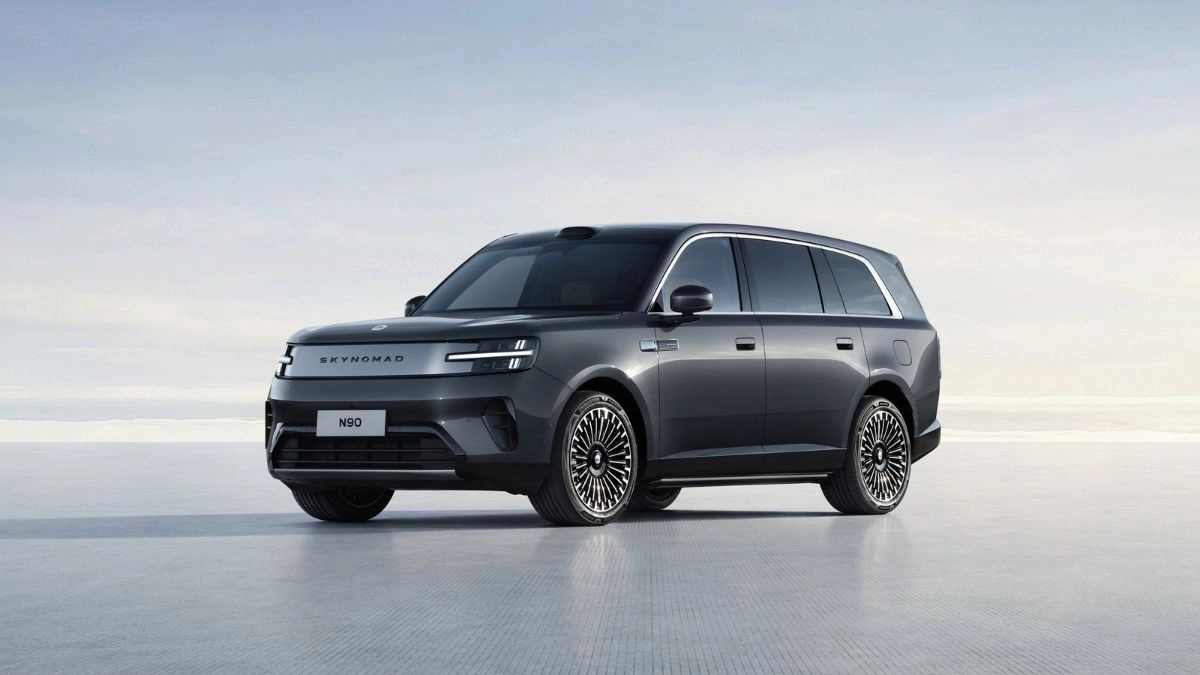
The new family will carry the name Skynomad and will initially be made up of the N70 and N90 models, two large SUVs that have already begun the commercial homologation process in China.
Two SUVs to compete with premium brands
The Xiaomi Skynomad N70 will be the entry point to this new line. It is a five-seat SUV almost five meters long, dimensions that place it in front of benchmarks such as the Volvo XC90, the BMW X5 and the Mercedes-Benz GLE.
Above will be the Skynomad N90, an even larger model that exceeds 5.2 meters in length and can be configured with five or seven seats. Its size places it in the same territory as vehicles such as the Mercedes-Benz GLS or the BMW X7, becoming the brand's new flagship.
With this strategy, Xiaomi seeks to gain prominence in the large-format family SUV segment, a category where comfort and space are decisive factors for many buyers.
EREV technology as the protagonist
Both models will use an extended range system, known as EREV. In this configuration, the wheels are driven by electric motors, while a 1.5-liter gasoline engine functions solely as a generator to recharge the battery when necessary.
The rear-wheel drive N70 will offer a 285 horsepower electric motor. The N70 Max version will add a second engine to reach a combined power of 421 horsepower and a maximum speed of 190 km/h.
The Skynomad N90 Max will use the same dual electric motor mechanical scheme and will also develop 421 horsepower, maintaining the maximum speed at 190 km/h.
Different batteries and great autonomy
Xiaomi will offer various battery configurations depending on the version chosen. The standard N70 will incorporate a 52 kWh LFP package with an electric range of up to 270 kilometers under the Chinese CLTC cycle.
The N70 Max and N90 Max variants will use a 76 kWh NMC battery. In the first case, it will allow up to 380 kilometers to be traveled in electric mode, while the N90 will reach a range of 370 kilometers before the gasoline generator comes into operation.
The new range will also include elements such as LiDAR sensors, semi-hidden handles, electric running boards and, in the case of the N90, front seats capable of rotating 180 degrees to offer a more versatile interior.
For now, Xiaomi has not revealed the prices or the exact launch date of the Skynomad. The company maintains its plans to begin operations in Europe at the beginning of 2027, although these plug-in hybrid SUVs would not arrive on the continent before 2028. With this new offensive, the brand makes it clear that it does not want to limit itself to the electric market and aspires to become one of the major players in the global automotive industry.