

“A cemetery of living people”: report accuses serious abuses in an immigrant center
HRW and ACLU report documents alleged assaults, lack of medical care and degrading conditions in Texas
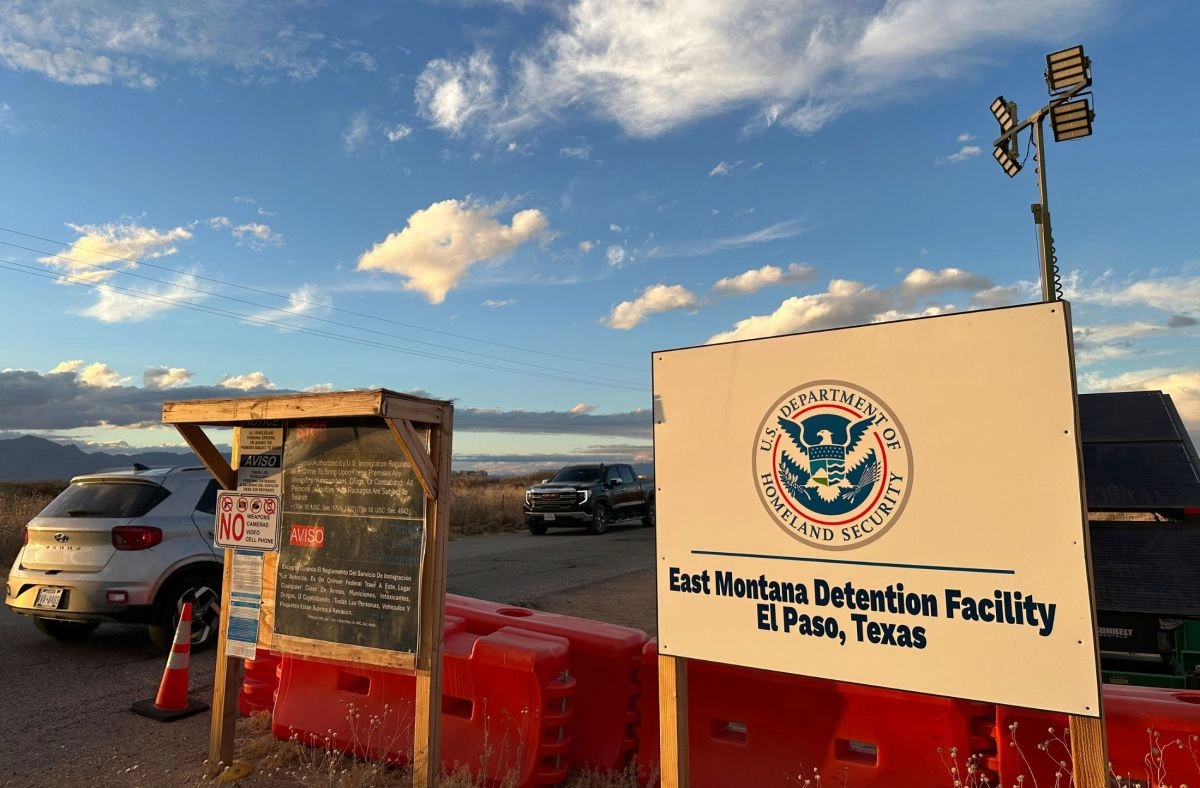

The death of Lunas Campos is one of the cases included in a report published this Wednesday by Human Rights Watch (HRW) and the American Civil Liberties Union (ACLU), which denounces beatings, medical negligence, prolonged isolation and unsanitary conditions at the center, located in El Paso.
Camp East Montana, made up of five tent-like structures, has the capacity to house up to 5,000 people.
HRW maintains that the documented abuses constitute cruel, inhuman or degrading treatment and characterizes Luna Campos' death as an “extrajudicial execution” under international law.
The organization interviewed 71 people who were detained at the center, all from twelve countries in Latin America and the Caribbean. The majority of them (64) reported having been beaten or having witnessed beatings of other detainees by the center's guards.
“When a person complains, they take it out on all of us,” said a Honduran identified by the pseudonym Germán L., who had been detained for a month when he was interviewed by HRW.
According to their testimony, the guards attack those who ask for food, medicine or demand their rights. “They dress in black, they wear masks that cover almost their entire face and they do not wear name tags,” he said. “They want to show that they are in control and that they can do whatever they want with us.”
Another of those interviewed, a 32-year-old Venezuelan identified as Armando G., said that seven guards threw him to the ground during a hunger strike, while one suffocated him and another pulled his hair and slammed his head against the ground. He said he suffered bruises and severe abdominal pain, but did not receive medical attention.
“I know what death sounds like.”
Lunas Campos, father of four children, was one of the three immigrants killed at Camp East Montana in the last six months and one of the 50 who have died in ICE custody since Donald Trump's return to the White House: 31 in 2025 and another 19 so far in 2026, according to data from the organization Detention Watch Network.
The Cuban died on the night of January 3 in an isolation unit, after asking for his medications to be given to him.
Three detainees told HRW they saw or heard part of the altercation. One reported that he heard blows and the immigrant repeatedly shouting that he was being suffocated.
ICE then reported that staff found the detainee “in difficulty” and that medical services tried to revive him.
The autopsy, however, found abrasions on the chest and knees and hemorrhages on the neck. The medical examiner determined that he died of asphyxiation caused by compression of the neck and torso, and classified the death as a homicide.
“I know what death sounds like,” said Ismael M., a Honduran who heard what happened from another cell, according to the report. “What happened to Geraldo could have happened to me or any of us,” he added.
“Dirt, hunger and lack of medical care”
The report describes overcrowded units, bathrooms covered in feces and urine, clogged showers and floors flooded with dirty water. Up to 72 people share six toilets and six showers in each unit.
Detainees reported that they went days or weeks without soap, disinfectant or toothbrushes, and that some developed skin, respiratory and dental infections.
They also claimed that their requests for medical care went unanswered for weeks or months and that, in some cases, care only arrived after they fainted or had a serious emergency.
Immigrants also described insufficient, frozen or spoiled portions of food. Some said they had lost up to 13 kilos during their detention.
"This place is a cemetery of living people. Anything can happen to you here," said an Ecuadorian identified as Lorenzo P. in a testimony collected by HRW.