

Video attributed to the CJNG declares war on two rival gangs in Mexico City
So far, federal and Mexico City authorities have not issued an official statement on the authenticity of the visual material.
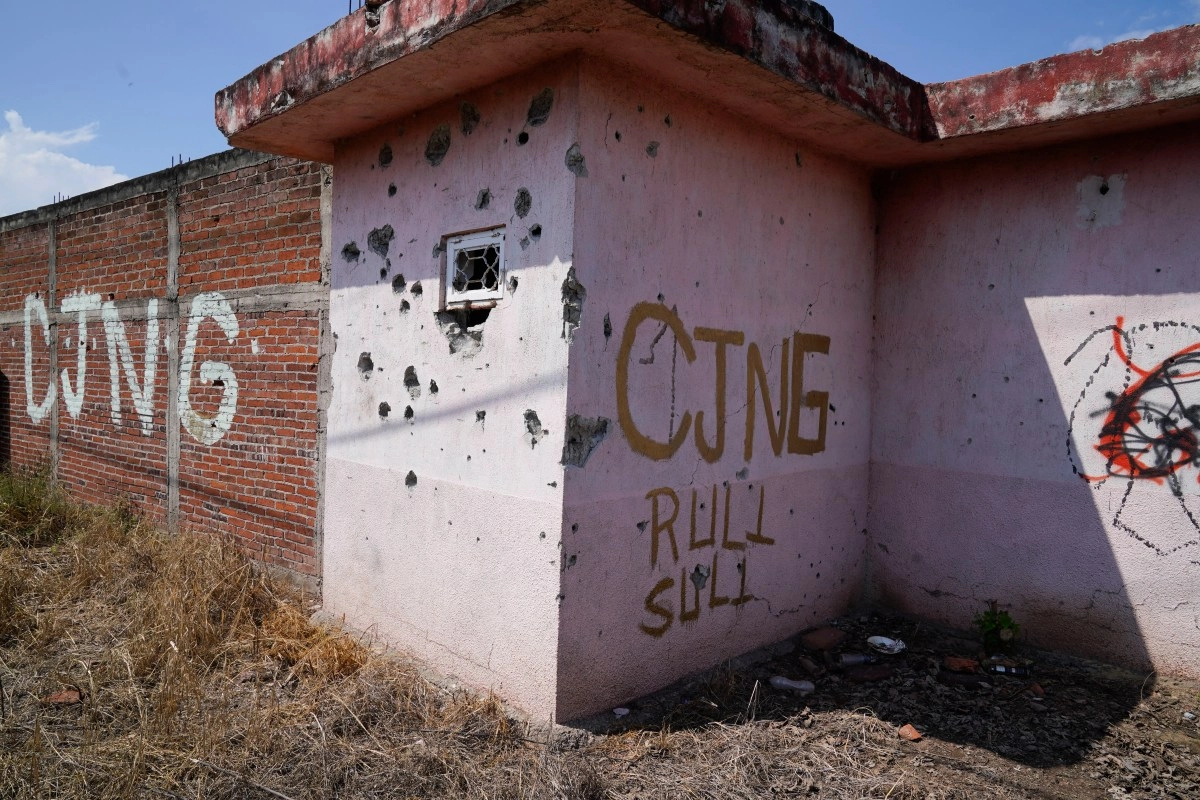

A video broadcast this Tuesday on social networks and attributed to alleged members of the Jalisco New Generation Cartel (CJNG) raised the alerts of the authorities after containing direct threats against two of the main criminal organizations that operate in the Mexican capital: Unión Tepito and the Tláhuac Cartel. So far, federal and local authorities have not confirmed the authenticity of the material nor have they officially commented on its content.
In the recording, several men appear with their faces covered, armed and wearing vests with the CJNG initials. One of them reads a message in which he assures that the group will begin an offensive against those who allegedly extort and collect housing rights using the name of the criminal organization.
The spokesperson affirms that the actions will be directed against members of Unión Tepito and the Tláhuac Cartel, whom he accuses of posing as members of the CJNG to commit crimes in Mexico City and the State of Mexico. During the message he also maintains that the goal is to “bring order,” a narrative that the group has previously used to justify acts of violence and territorial disputes.
Authorities remain silent as concern grows
The dissemination of the video occurs in a context of constant disputes between organized crime organizations for the control of illicit activities such as drug dealing, extortion and floor collection in different areas of the Mexican capital and suburban municipalities of the State of Mexico.
Security specialists identify Unión Tepito as one of the main criminal structures with a presence in Mexico City, where activities related to the sale of drugs, extortion and other crimes are attributed to it. For its part, the Tláhuac Cartel maintains influence mainly in the eastern area of the capital and in neighboring municipalities of the State of Mexico.
The CJNG has resorted on several occasions to videos broadcast on social networks to send threats to rival groups, authorities or public figures, a criminal propaganda strategy used to project power and intimidate its adversaries. Although the content of the message has generated concern about a possible escalation of violence in the region, until now there is no official information that confirms that the threats have translated into confrontations related to this statement.
The Mexican authorities maintain various investigations open into the operations of these criminal groups and the origin of the video. Meanwhile, experts warn that this type of messages is usually part of disputes between criminal organizations over territorial control and illicit activities, which is why they insist on the importance of waiting for the information that the investigations provide before confirming any change in the security dynamics in Mexico City and its metropolitan area.