

The complex legal process that the family of Lorenzo Salgado Araujo must face after his death at the hands of ICE
Before filing a lawsuit in federal court, Lorenzo Salgado Araujo's family must file a claim with DHS
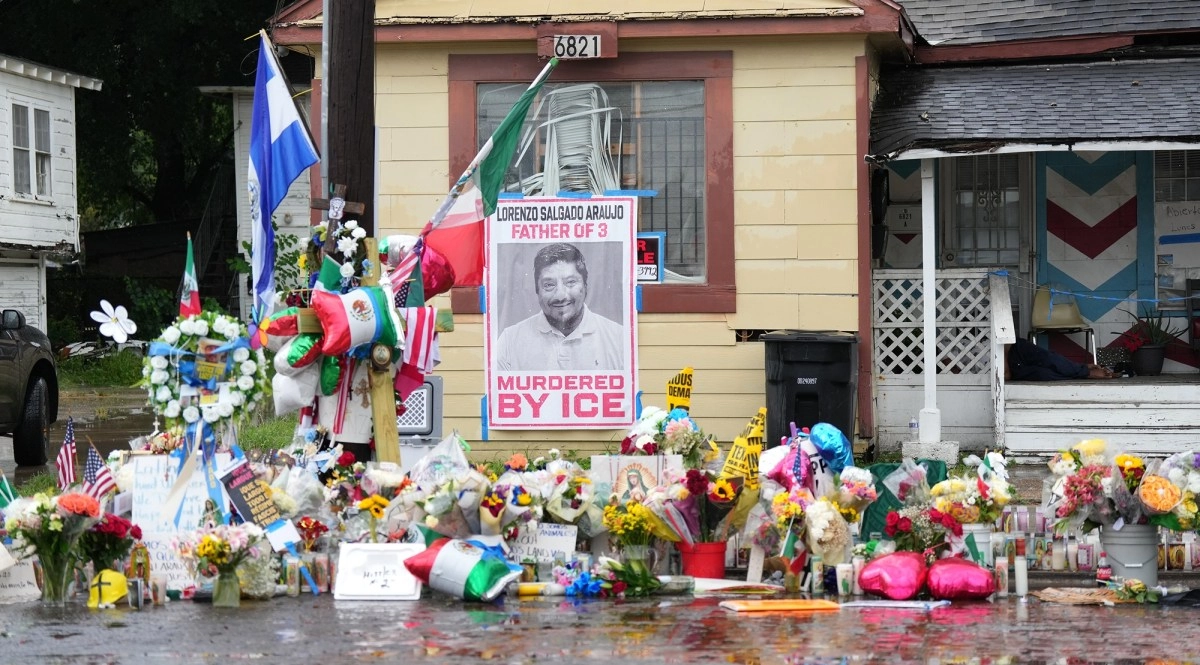

WASHINGTON.- As investigations into the death of Lorenzo Salgado Araujo at the hands of Immigration and Customs Enforcement (ICE) agents continue, the family is evaluating its legal options, which include a formal claim with the Department of Homeland Security (DHS), although it is a complex process.
“Typically when ICE carries out something like this, an evil like what we have seen, a person is injured, for example, or in a case like this, where a person dies, it is not so easy,” acknowledged Juan Proaño, executive director of the League of United Latin American Citizens (LULAC).
That organization has from the beginning supported the family of Salgado Araujo, murdered in Houston, Texas, during a vehicle stop by immigration agents.
“One cannot go directly to court and file a lawsuit, for example,” Proaño laments. “What they have to do is, it was called an FTCA claim,” he indicated.
That process is underpinned by the Federal Tort Claims Act (FTCA), which allows individuals to sue the United States government for injuries, property damage, or death caused by the negligence of federal employees. The process must begin administratively, in this case with the Department of Homeland Security (DHS).
“It is a claim by DHS, which is a form, a form that one has to fill out exactly what happened, with all the information and also [include what should be] the compensation for that evil,” Proaño added. “And the DHS, then they have six months to receive, verify, investigate the information they receive.”
Proaño added that this process is slow and the desired response is not always obtained; even the responsible agency does not always respond within six months, although there may be pressure to do so. If the response is not favorable, in this case for Salgado Araujo's family, then you can file a lawsuit in court.
“After those six months, if you receive a response and you do not agree with what the government says, then you can go to court, file a lawsuit,” he said. "They [Salgado Araujo's relatives] will have the opportunity to file a lawsuit in court, in front of juries. But it will take a long, long time and they are starting that process now."
And where are the responsible agents?
Proaño compared the case of Salgado Araujo with that of Johan Sebastián Durán Guerrero, in Maine, who was murdered by a fully identified ICE agent. In the case of those allegedly responsible for the death of Salgado Araujo, it is unknown who they are, which could complicate the claim to point to someone in particular.
"Immediately after this happened with Lorenzo, some things happened. Number one, the agents who were there and who shot Lorenzo disappeared, period. Nobody knows who they are, the agency has not shared that information either, that is very important," Proaño explained in the podcast 'El Diario Sin Límites'.
He said that the immigration agents in the photos next to Salgado Araujo's truck – from where three other people were detained – are officers who arrived later.
“We have said it from the beginning, we do not trust ICE, we do not trust DHS,” lamented Proaño, who acknowledges that neither does the federal investigation being carried out on the case.
Salgado Araujo is survived by his wife and three adult children, who are fighting to find those responsible for the death of their father, a 52-year-old immigrant who was in the process of obtaining a Legal Permanent Residence or Green Card, had a construction business and had no criminal record.