

High Times Reborn: Josh Kesselman and his team promise to restore the soul of the cannabis counterculture
Josh Kesselman revives High Times to return its rebellious spirit and its central role in the fight for cannabis culture and legalization
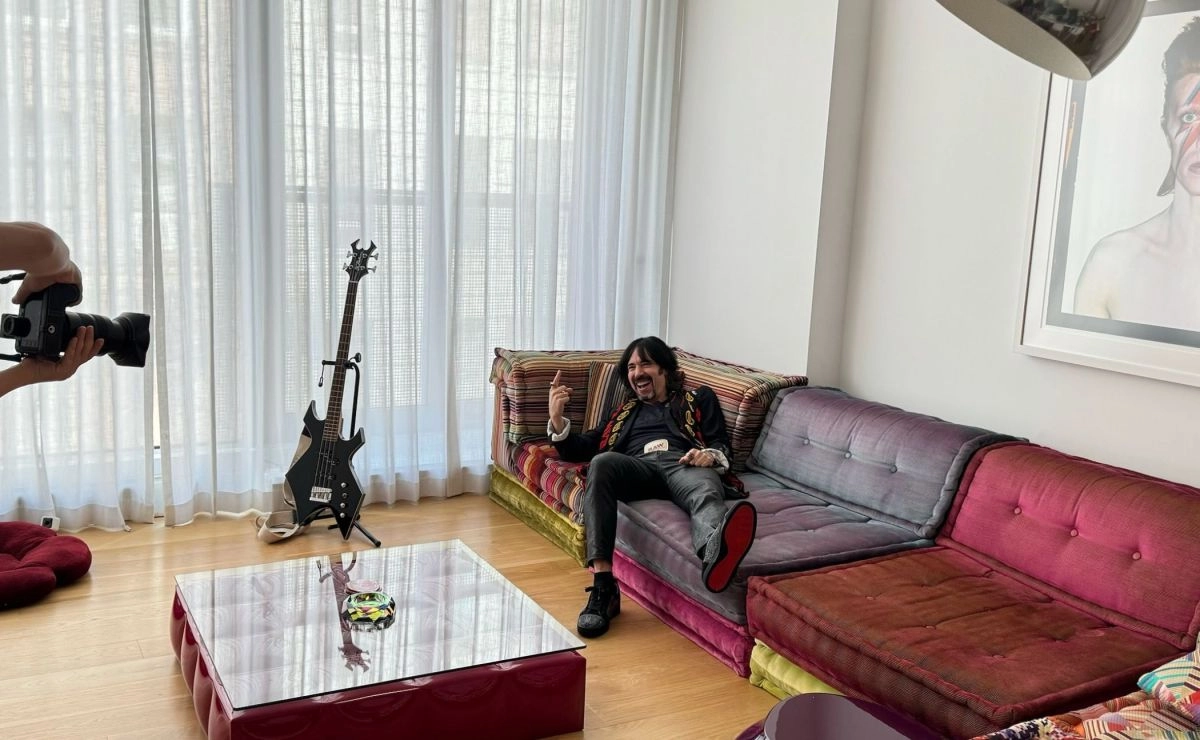

The iconic counterculture magazine, High Times, is back. The publication that for decades was the cannabis bible and a beacon of dissent has been acquired by Josh Kesselman, founder of RAW Rolling Papers, marking the beginning of a new era.
In 1974, Tom Forcade founded High Times as a satire of Playboy, and it quickly became the intellectual epicenter of the American counterculture. For five decades, the magazine was the sanctuary where legendary figures such as Hunter S. Thompson, William Burroughs, Truman Capote, and Allen Ginsberg articulated the resistance to prohibition with unmatched eloquence.
In addition to these great writers, High Times also provided a showcase for the voices of the counterculture at large, featuring icons such as Charles Bukowski, Willie Nelson, Debbie Harry, Bob Marley, and Andy Warhol. Its influence resonated from Greenwich Village to Amsterdam, defining the codes of an entire generation.
The Historical Context: Journalism as an Act of Resistance
High Times' impact must be understood in the context of its time. In the 1970s and 1980s, at the height of the "War on Drugs," officially declared by Nixon in 1971, publishing a magazine that promoted cannabis was not just an editorial act, but a declaration of principles and a direct challenge to power structures.
The magazine became a vital source of information for a persecuted community, offering everything from advice on self-cultivation—then considered both a form of resistance and economic self-sufficiency—to specialized legal advice for consumers facing the judicial system. High Times functioned as a survival manual for navigating the underground, with sections dedicated to indoor growing techniques, strain analysis, and strategies for avoiding police detection.
In this context, the magazine was not just for stoners, but for anyone who identified with the counterculture.It was a symbol of the fight for civil liberties and freedom of expression. The DEA even investigated both the magazine and the stores that advertised in it, demonstrating the real risk faced by publishers, advertisers, and readers alike.
In contrast, the current landscape of semi-legalization in places like California presents a completely different scenario. With the legalization of medical and recreational cannabis in more than 20 states, High Times' role has had to adapt drastically. From being an underground, niche publication, it went on to compete in a market saturated with digital cannabis information, specialized podcasts, and corporate media. However, its historical legacy gives it a unique authority. While new publications focus on the cannabis business and lifestyle from a more mainstream perspective, High Times maintains its connection to the culture's underground roots, the fight for full legalization, and consumer rights.
The Fall and the Rescue
By 2024, the legendary publication had been reduced to a website that was no longer updated and abandoned social media accounts. The transformation from intellectual sanctuary to digital ruin seemed like the perfect epitaph for an era where even rebellion seemed to come in packages. But in June 2025, Joshua Kesselman wrote a different chapter: for $3.5 million a fraction of the $70 million it cost in 2017 he rescued High Times from the ashes. His promise transcends nostalgia: to restore not only the magazine, but the community it managed to create over all these decades.
The Lost Temple of the Counterculture
To understand the magnitude of what Kesselman has undertaken, it is necessary to understand what High Times was in its glory days. Forcade, who financed the publication with profits from illegal trafficking, did not simply create a magazine; he forged the intellectual epicenter of the global cannabis counterculture. At its peak, High Times reached 500,000 monthly subscriptions and rivaled publications such as Rolling Stone and National Lampoon.
Its pages were a sanctuary for legendary writers, but also for a diversity of voices that transcended the traditional boundaries of journalism. In addition to exponents of gonzo journalism, the magazine published such important texts as Timothy Leary's space travel manifesto, "Terra II," in its first issue. It also featured columns by countercultural satirist Paul Krassner, founder of the influential The Realist, to name a couple.
The magazine functioned as a cultural meeting place where multiple audiences would converge. On one side were growers and consumers interested in botanical varieties, hydroponic growing techniques,and the latest innovations in paraphernalia. On the other hand, activists, intellectuals, and artists saw High Times as a publication unafraid to challenge the political and cultural establishment.
Pop culture icons such as Debbie Harry of Blondie, Andy Warhol, Snoop Dogg, and David Bowie appeared in the magazine, whether in extensive interviews or on iconic covers, demonstrating that interest in cannabis and its surrounding culture transcended direct consumers and was at the heart of the era's artistic and musical avant-garde.
This duality of themes and audiences is what made High Times so influential: it managed to simultaneously be a technical publication for growers, an intellectual forum for the counterculture, and a cultural platform for avant-garde artists.
“High Times, for me, was always the most important publication in the industry,” reflects Kesselman from his base of operations in Spain, where he spends part of the year overseeing the RAW factory. “The first one I got came wrapped in brown paper, like something forbidden. Getting it was the greatest thing of all time.”
That magazine, hidden like a clandestine treasure, became an existential revelation for the young Kesselman. “I realized there was this whole big world out there that I didn’t know about before. That I could live free, that there was another way to live besides that of a normal person.” This epiphany would not only shape his personal outlook but become the founding philosophy of RAW Rolling Papers, a brand that today dominates the US market with estimated annual sales of $200 million, according to industry sources.
The Destruction of the Sanctuary
High Times’ decline began in 2017 when Adam Levin and Oreva Capital acquired the magazine for $70 million, kicking off what Kesselman describes as “a masterclass in how to destroy an iconic brand.” Corporate management suspended the print publication in 2020, racking up massive debt, and ending in a securities fraud scandal that led Levin to face federal charges.
“Basically, the big financiers, the private investment bankers… they totally destroyed it,” Kesselman recalls. By 2024, the company had entered receivership and its assets were sold in liquidation. A magazine that was once the beating heart of the counterculture lay in digital ruins.
“I just didn’t want it to go away, both personally and for my community,” he explains. This statement reveals the complexity of what was at stake: not just a brand, but the collective memory of an entire movement.
The Philosophy of Rescue
For Josh, also known for being a charismatic personality on social media,Acquiring High Times doesn't represent a traditional investment but something deeper: a mission of cultural preservation. “I'm fortunate to be, according to Forbes, the number one selling rolling paper brand in America,” he explains. “I'm making more money than I need, more money than I ever thought I would. And that allows me to do crazy things like buy High Times.” He's not alone in this mission. Matt Stang, who was an executive and operator of High Times for 17 years before its sale to private equity, returns as a partner in the brand's revival. Stang, who was involved in the cannabis legalization process in multiple states and launched the Cannabis Cups in America, intimately knows both the magazine's triumphs and tragedies. His experience includes facing federal cannabis charges in 2010 as part of Operation Green Venom, from which he emerged with an even deeper understanding of the forces that have historically constrained cannabis culture. Now CEO of Delic Holdings Corp, a psychedelic wellness company, Stang brings a unique perspective on the evolution of controlled substances and their role in American culture. The business model they're proposing to rescue the magazine breaks with publishing convention: using licensing revenue from marketing and Cannabis Cups to fully fund the operation. We're going to take all the licensing fees we earn, and that's going to be our media budget, Kesselman explains. “We need to at least get back on track so that if something happens to me, the place can continue long after I’m gone.”
This long-term vision reveals a sophisticated understanding of cultural sustainability, something of a rarity in an industry obsessed with quarterly profits.
The Editorial Revolution
The editorial policies of the new High Times, Josh notes, will be uncompromising in their commitment to transparency: “When articles are written, they cannot be paid for or sponsored unless clearly marked. There can be no deception or gimmicks; writers must be genuine consumers who truly understand what they’re writing about.”
Perhaps the most exciting ambition of this plan is to restore High Times’ tradition of publishing world-class writers. "We're interviewing a lot of people to take over the magazine (editorially), and one of the things we're looking for is to dedicate part of the budget to bringing back top-notch writers. We need real, mind-blowing articles, things like what Hunter S. Thompson used to be." Kesselman says he's looking for "authors who write from their soul, sharing an experience of a plant or a journey, so that when you read it you can see the truth in what they write.Those beautiful, long-form articles, almost like mini-novels, that tell you a story and change your life.”
The Multicultural Imperative
For the Latino community in the United States, the rebirth of High Times has particular resonances. In New York, one of only two states that track Latino arrest data separately, Latinos are arrested for cannabis at a rate nearly five times that of whites, according to reports from the American Civil Liberties Union.
A recent study published in the journal Addiction revealed that, for the first time, there are more daily cannabis users in the United States than alcohol users, indicating a cultural shift that cuts across all demographics. Yet, despite legalization, the participation of Latino entrepreneurs in the cannabis industry remains dramatically low. According to the MJBiz Daily Diversity Report, an average of only 5.7 percent of total cannabis licenses nationwide are owned by entrepreneurs. Latinos.
Barriers to entry, such as the high cost of licensing and lack of access to capital often linked to criminal records for cannabis offenses are the main obstacles. So, although the Latino community has suffered disproportionately from the consequences of the “War on Drugs,” its presence in the burgeoning legal cannabis industry remains marginal. This is one of the great challenges of legalization: ensuring that the benefits of this new market reach the same communities that paid the highest price during prohibition.
“I live part of the year here in Spain, so obviously yes” there will be Spanish-language content, confirms Kesselman. “I was recently talking with Javier Hasse (editor of El Planteo, recently appointed editor-in-chief of the magazine) and one of the things we agreed on is the importance of reviving our entire Spanish-language edition.” His vision transcends language barriers: “The great thing about cannabis is that it crosses almost all cultural and language borders. So, High Times needs to do the same."
The Cannabis Cups: A Revolution in Transparency
The return of the Cannabis Cups in 2026 promises to revolutionize the world's most prestigious cannabis competition. Established in 1988 in Amsterdam by High Times itself, the Cups had become the gold standard for cannabis quality, moving millions of dollars in cannabis tourism and branding.
The first Cannabis Cup was organized by High Times' then-publisher, Steven Hager, as a response to the growing sophistication of cannabis cultivation in Amsterdam's famous coffee shops.The idea was to create a “harvest festival” where growers from around the world could compete to determine who had the best marijuana. It was the first event of its kind in history, and it became an annual celebration of excellence in cannabis cultivation.
The original format included categories such as best indica, best sativa, best hashish, and best new product. Judges, initially High Times editors and invited experts, blindly evaluated samples at secret locations throughout Amsterdam. The event culminated in an awards ceremony that became legendary in the global cannabis community.
Winning a Cannabis Cup is the cannabis equivalent of winning an Oscar. A victory can catapult a seed bank or grower to international fame, and the winning genetics become legendary in cannabis culture. Strains like White Widow, Super Silver Haze, and the various Kush strains gained worldwide notoriety thanks to these competitions, establishing genetic dynasties that endure to this day.
With the gradual legalization in the United States, the Cannabis Cup expanded to several cities across the country, from Los Angeles to Denver. However, this expansion also brought controversy over the integrity of the judging process and the influence of commercial interests. Although it has lost some of its original underground mystique, it remains the most recognized cannabis competition event in the world and a crucial meeting point for the industry and consumers.
“When we do a cannabis cup, it will be third-party certified and blind in some way so that whoever wins really wins,” Kesselman explains. “So that when we say this is the best strain in a particular category, it really is.” His vision includes mass public testing that democratizes the process: “We’re probably going to have to do something like a mass public test to make sure, because in the end, it’s the public that counts the most.” This radical transparency stands in contrast to current industry practices, where competitions often reflect advertising capabilities and marketing budgets more than the actual quality of the product. The Lost Community For Kesselman, High Times’s true success will not be measured in circulation numbers or advertising revenue, but in something more ethereal but essential: the rebuilding of the cannabis community. “The biggest judge of success for High Times in five years will be the size and strength of our community,” he reflects. “When I go to a cannabis cup, I want it to be amazing. I want it to be a true celebration, a release of energy that’s like nothing else.”
This vision transcends the commercial to touch on something deeper: the human need for belonging, especially for a subculture that has been criminalized and marginalized for decades.
The custodian, not the conqueror
What makes Kesselman's perspective unique is his understanding that High Times transcends individual ownership. “I see myself as just a caretaker of High Times. I have no intention of taking over High Times. I’m just a caretaker. I’m trying to get it going again and guide it in the right direction.”
This position reflects a deep understanding of the legacy he’s preserving: “I just want to make sure that the legacy of a publication that’s been around for five decades and has been so important to our community isn’t lost.”
As High Times prepares to return to print in 2026, Kesselman plans to make each issue covetable, limiting print runs to ensure the magazines stay on coffee tables. “I want to make sure that when we go back to print, the magazine isn’t just a monthly publication. It needs to be special every time,” he explains. “I was thinking twice a year, my team is also thinking about a vintage issue… we’ll see.”
The Quiet Revolution
For Los Angeles’ Hispanic community where dispensaries are disproportionately concentrated in ethnic minority communities, but corporate ownership remains in the hands of others High Times’s rebirth represents more than the return of a magazine. It’s the restoration of a cultural space that for decades was the intellectual home of the counterculture, a place where marginalized voices found legitimacy.
At a time when the cannabis industry has corporatized almost beyond recognition, and many communities that suffered under prohibition remain excluded from the economic benefits of legalization, Kesselman’s vision offers something increasingly rare: genuine hope.
“All this data, all this information, all of this is going away if we let it,” Kesselman concludes. “If good people don’t stand up and create a platform for us to spread the good word, the truth, then the truth is pushed down by large, multinational corporate interests who care only about making money and nothing else.” At its heart, the story of High Times is the story of every counterculture: born out of necessity, flourishing on authenticity, corrupted by money, dying of greed, and reborn when someone remembers why it mattered in the first place. What Josh Kesselman, Matt Stang, Javier Hasse, and the rest of the team are trying to do isn’t simply revive a magazine, but to show that in a world where everything sells,It is still possible to choose what is priceless.