

Hijab Row: Hijab ban will continue in Karnataka, what Owaisi said on Supreme Court's fractured decision
During the hearing on the hijab ban in the Supreme Court, Justice Sudhanshu Dhulia accepted the hijab and said that it is a matter of choice.

Time to Read 3 Min
The Karnataka hijab issue seems to be getting more complicated. The Supreme Court gave a fractured verdict in this case. The Supreme Court on Thursday heard the petitions challenging the Karnataka High Court's decision refusing to lift the ban on wearing hijab in educational institutions in Karnataka. In which one judge dismissed the petition, while the other quashed the High Court's decision. Now this sensitive matter has been referred to the Chief Justice, so that a larger bench can be constituted.
What did Owaisi say in the Karnataka hijab case?
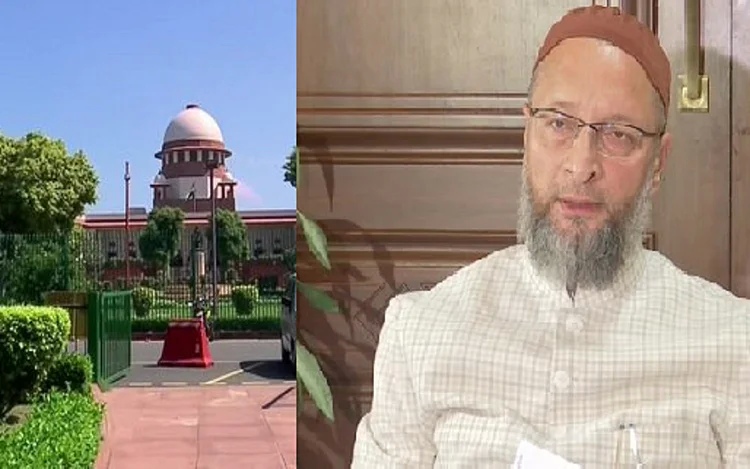
AIMIM chief Asaduddin Owaisi on Supreme Court's fractured verdict in Karnataka hijab ban case: I was expecting a unanimous verdict in favor of girls going to school wearing hijab in Karnataka. He further said, according to me, the decision of the High Court was not correct and the words of the Quran were read incorrectly. The girls of Karnataka are wearing hijab because it is discussed in the Quran. Asaduddin Owaisi said, BJP has unnecessarily made it an issue.
Justice Sudhanshu Dhulia called hijab a matter of choice
During the hearing on the hijab ban in the Supreme Court, Justice Sudhanshu Dhulia accepted the hijab and said that it is a matter of choice. Justice Dhulia, while giving his verdict, said that the Karnataka High Court took the wrong path. "My decision has mainly emphasized that in my opinion this whole concept of compulsory religious practices was not necessary to settle the dispute," he said. The court probably took the wrong path in this context. It was mainly a question of Article 19(1)(a), its implementation and mainly Article 25(1). It is ultimately a matter of choice, nothing more or less. Justice Dhulia said that while deciding the matter, he had in mind the education of girls. He said, it is a known fact that in rural areas and semi-urban areas the girl child already has to face many difficulties.
Justice Hemant Gupta dismissed the petitions filed against the High Court's decision
Justice Hemant Gupta dismissed the petitions filed against the High Court's decision. He asked during the hearing, whether the fundamental right to freedom of expression under Article 19(1)(a) and the right to privacy under Article 21 are mutually exclusive or are they complementary to each other. He said that another question has been raised in his decision whether wearing hijab is considered a compulsory religious practice and whether girl students can demand the right to wear hijab in school. Justice Gupta said, according to me, the answers to all these questions are against the petitioners. I propose to dismiss the petitions.
what is the matter
In fact, the Karnataka High Court has banned the wearing of hijab in educational institutions. Against which a section of Muslim girl students of Government Pre-University Girls College had filed a petition in the High Court requesting permission to wear Hijab inside the classrooms, but the Karnataka High Court rejected the petitions and said that the Hijab Wearing is not a part of the obligatory religious practice in Islam.