

Health experts report that the risk of an Ebola outbreak in the US is very low
'We can be quite calm, but it is still a big local problem,' says Dr. Schaffner
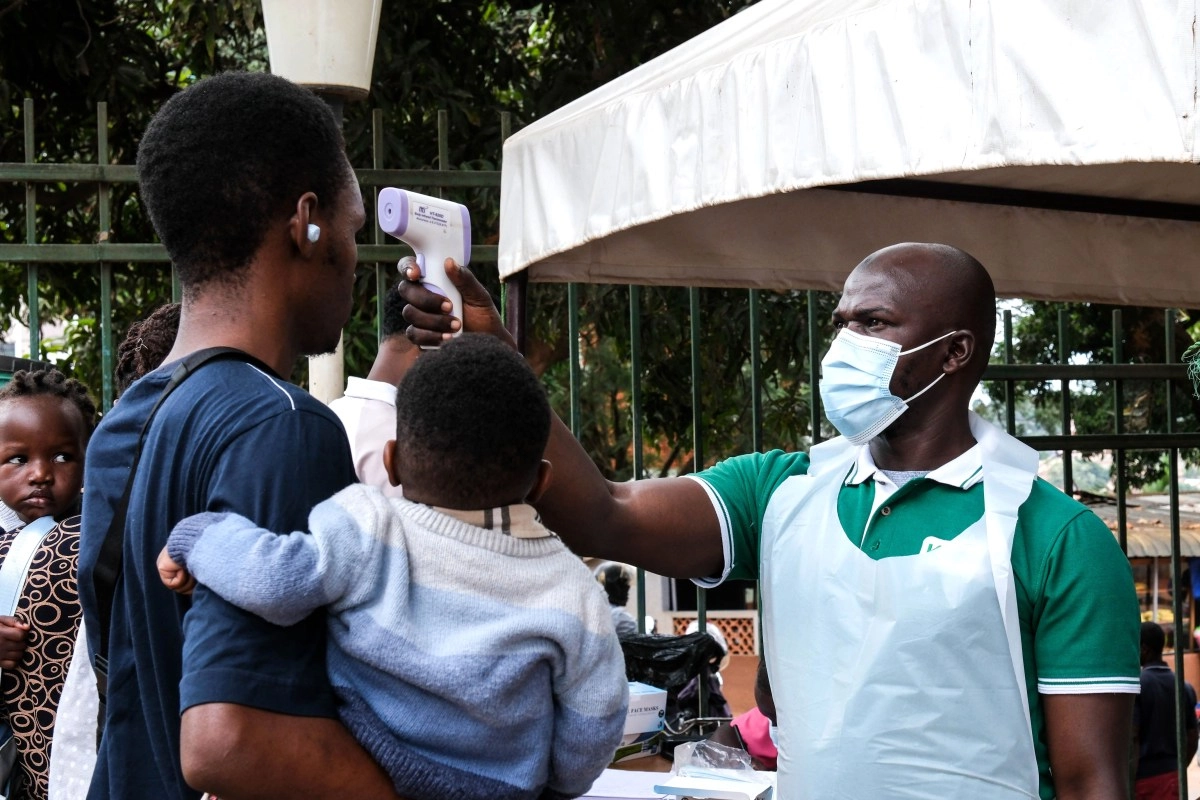

Caused by the rare Bundibugy strain, the 2026 Ebola outbreak in the Democratic Republic of the Congo and neighboring Uganda has quickly become one of the most serious crises ever recorded crossing international borders. "The risk to the American population is very low. This is not a respiratory virus," said Dr. William Schaffner, a professor of preventive medicine and infectious diseases at Vanderbilt University School of Medicine. "It is not transmitted in the same way as influenza or influenza. Covid. So we can feel relieved, although it remains a big local problem.”During the video conference “The Ebola outbreak could be the worst in history”, organized by American Community Media (ACoM), three experts analyzed the Bundibugyo Ebola virus and its rapid spread in a context in which there is no vaccine against the Bundibugyo strain. By mid-June 2026, the World Health Organization had reported nearly 700 confirmed cases and more than 130 deaths, numbers that continue to increase. How does a virus that circulates among fruit bats reach humans? "There are two theories: the first suggests that hunters can capture these bats to consume them as wild game meat; during the process of butchering them, they could cut themselves or allow the animal's blood to come into contact with pre-existing cuts or scratches on their hands, thus introducing the virus into the human body," said Dr. Schaffner.
The other theory about the outbreak in West Africa in 2014 is that a fruit bat ate a fruit, dropped it without finishing it completely, and a small child picked it up and put it in his mouth, exposing himself to the animal's saliva.
In any case, the doctor explained that once the virus enters the body, the incubation phase begins: it begins to slowly multiply inside the body, although the person does not yet show symptoms of illness. "The interval between exposure and the onset of the disease can last days or even weeks, so it can be quite a long period. After this incubation period, the person becomes ill." He pointed out that fever is a very marked characteristic; It can range from mild to very high, and tends to get worse over time. "Added to this is a series of non-specific symptoms, such as pain and general malaise; headache and loss of appetite may also occur in the initial stages." However, the virus continues to multiply in the body, progressively aggravating the individual's health status and causing nausea, vomiting and diarrhea. "Some patients have episodes of bleeding, known as wet illness. These body fluids, vomit, diarrhea and blood are highly infectious as the person becomes progressively ill, loses touch with reality, falls into a coma, their blood pressure drops and multi-organ dysfunction occurs that affects the lungs, liver, kidneys and heart." He said that as the disease progresses and the virus spreads throughout the body, the physical contact that comes with this care from family and friends is extremely dangerous. When the person dies, their body is essentially covered by the Ebola virus even in the skin; Consequently, funeral practices carry a very high risk of transmission, as people want to touch and even kiss the body. "It is precisely in this close contact that the virus is easily transmitted to caregivers and people preparing the body for burial. Therefore, it is crucial to contact local leaders and educate the population about the need to modify these centuries-old traditions of respect for the deceased in order to stop transmission." Regarding the treatment of Ebola, he said that we do not have specific antiviral drugs to treat this infection. However, through highly sophisticated supportive care that addresses multiple organ failure, it is possible to survive, for example, when patients are transferred to the United States. “How can we try to contain this outbreak? Having a vaccine would be a wonderful thing. We have vaccines against some of them, but not against the specific strain that is causing this disease.” He mentioned that the situation has worsened due to the recent reduction of resources by the World Health Organization (WHO) and the government itself, which has delayed diagnoses. However, the WHO and other organizations are coordinating the arrival of personnel, medical equipment, diagnostic materials and other resources from various countries. "Unlike local spread, the risk of transmission to other parts of the world remains very low; if a patient were detected in any other region, it would be possible to isolate and treat them very quickly. thus minimizing or eliminating the risk of contagion.” Dr. Rachel Sweet of Frontline Observatory said that our clichés prevent us from understanding the problem if we imagine that the conflict is primitive, and that the communities living in these environments are traditional, uneducated or inherently hostile. “We have heard that some people are skeptical about Ebola, and in a context where the government does not always provide accurate information, and the former president is under sanctions for helping to organize an armed group currently in the Congo, it makes sense not to simply believe the government.” He said the concern is valid, if international attention focuses solely on Ebola and ignores everything else, people will feel that their main concerns are not important to the international community, and that the only thing that matters is preventing the spread of this disease to the hemisphere. north.
Pamela Asobot Anchum of Immigrant Magazine said that the diaspora has not been aware of the issue or shown concern. "I spoke to the president of the Ugandan community. Uganda is one of the affected regions, although not as much as the Democratic Republic of the Congo. I expected to hear that the diaspora was very involved and scared, but to my surprise, she commented that her community was not worried. She even said to me: 'What?' Ebola?”
She told him that she had just returned from Uganda and that, for her, nothing was happening there. “I asked her about the health checks that were carried out when traveling and returning: 'How were they?' She told me that they were basic, they just took the temperature, regular health checks and nothing that she specifically associated with Ebola.” When he spoke to members of the Cameroonian community, he found that Cameroonians were indeed uneasy and really worried about a possible spread to their country. "The least they could do at that time was send money home. Sanitation is a big problem, lack of clean water is a major concern and of course there is the fear of returning."