

Claudia Sheinbaum rejects NYT report that identifies politicians from her party as alleged US informants.
How can there be a note like this from a newspaper that claims to be one of the best in the world?" Sheinbaum questioned, minimizing the report.
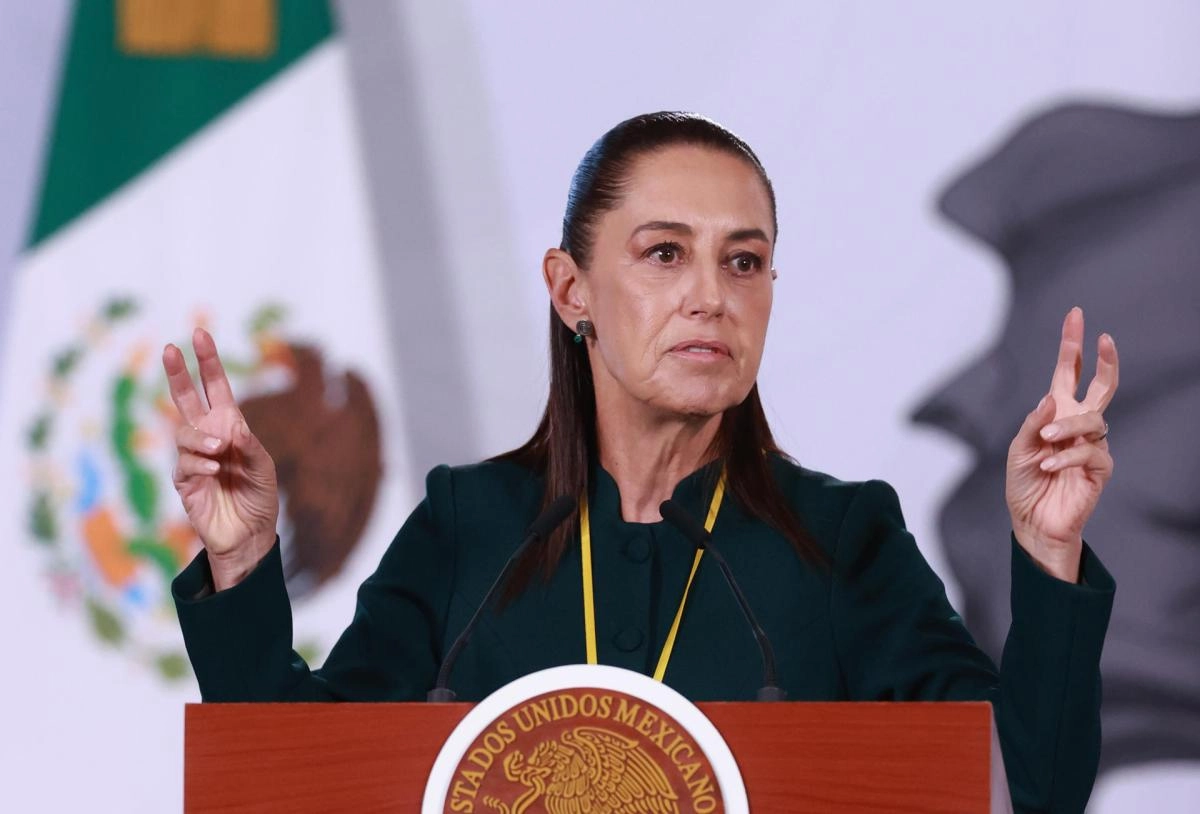

The president of Mexico, Claudia Sheinbaum, rejected this Monday a report published by The New York Times in which it was claimed, based on anonymous sources, that several governors and legislators from the ruling Morena party had offered to collaborate discreetly with US authorities as informants in investigations related to alleged cases of corruption and drug trafficking.
During her morning conference, the president stated that her administration does not have information to support the US newspaper's claims and questioned the solidity of a report supported by unidentified testimonies.
“How can there be a note like this from a newspaper that claims to be one of the best in the world?” said Sheinbaum when referring to the publication, while insisting that the Mexican government is unaware of any alleged exchange of information between Morena officials and United States authorities. The report maintains that an initiative promoted by the Drug Enforcement Administration (DEA) would have sought to establish private contacts with Mexican officials to obtain information about other members of the ruling party.
According to the newspaper, at least a dozen politicians, including governors and congressmen, would have voluntarily approached US authorities with the purpose of collaborating and, presumably, getting ahead of investigations that could involve them. The president considered that the publication lacks sufficient context to support an accusation of that magnitude and reiterated that there is no official information that confirms the allegations.
Sheinbaum asks for more context and questions sources
When asked if the content of the report could cause divisions within Morena, Sheinbaum responded that it is not possible to issue an assessment on facts whose veracity has not been proven. “We don't know if it's true, because we don't have any information that anyone is cooperating with the United States government to provide information,” he said.
The president also recalled that one of the officials mentioned in the publication, the governor of Sonora, Alfonso Durazo, already sent a letter to the newspaper to reject the versions published and request a rectification.
Sheinbaum insisted that the federal government is not aware of any such investigations or collaborations and questioned whether a media outlet would publish information based solely on sources whose identity has not been revealed.
Américo Villarreal rejects investigation and demands that the truth prevail
After the report was disseminated, the governor of Tamaulipas (northeast of Mexico), Américo Villarreal, also denied that he was being investigated by US authorities and assured that he has not received any official notification, neither in Mexico nor in the United States, related to an alleged corruption investigation.
In a letter released by the General Coordination of Social Communication of the Government of Tamaulipas, the president described the published versions as false and maintained that there is no formal accusation, judicial procedure or official communication that supports these statements.
“A version attributed to unnamed sources is not an accredited truth,” said Villarreal, who added that the truth must be based on facts and not on journalistic headlines.
The governor of Sonora also previously rejected the versions of the report in a communication sent to the American newspaper. The publication of The New York Times occurs in a context of growing attention in the United States on alleged links between Mexican officials and criminal organizations.
However, to date, Mexican authorities maintain that they do not have official information that confirms the widespread accusations, while the designated officials continue to publicly reject any investigation or collaboration with US agencies.