
The astronomical events of August in the United States have a key date: Wednesday, August 12, the day of the solar eclipse. However, the month's agenda is loaded for sky watchers.
Before and after the solar eclipse, which can be partially seen in the northern hemisphere, there will also be several phenomena that can be enjoyed from different regions of the country, such as an apparent alignment of six planets, the Perseid meteor shower and a partial lunar eclipse.
Experts recommend looking for places away from light pollution and reviewing the exact location of each phenomenon depending on the city.
Read also: The spectacular image captured by a telescope that shows 60 million stars at the same time in the Milky Way
First astronomical events of August
The activity began on August 2, when Mercury reached its greatest western elongation. This means that the planet was at its greatest apparent separation from the Sun during its morning appearance, making it easy to find shortly before dawn.
This Wednesday, August 5, the last quarter of the Moon will arrive, a phase that will occur at 10:21 pm ET in New York and at 7:21 pm PT on the West Coast.
The alignment of six planets on August 12
One of the most anticipated moments of the month will occur during the early hours of Wednesday, August 12, when Mercury, Jupiter, Uranus, Saturn, Neptune and Mars appear distributed along the ecliptic, the apparent path followed by the Sun, the Moon and the planets in the sky.
This phenomenon is often called a “planetary parade” or planetary alignment, although the planets will not be forming a straight line nor will they be physically grouped in space. The arrangement will be a visual effect observed from Earth.
Mercury, Jupiter, Saturn and Mars can be seen with the naked eye if conditions are favorable. Instead, Uranus and Neptune will need powerful binoculars or a telescope.
To improve the experience, specialists recommend:
Solar eclipse on August 12 and where to see it in the US
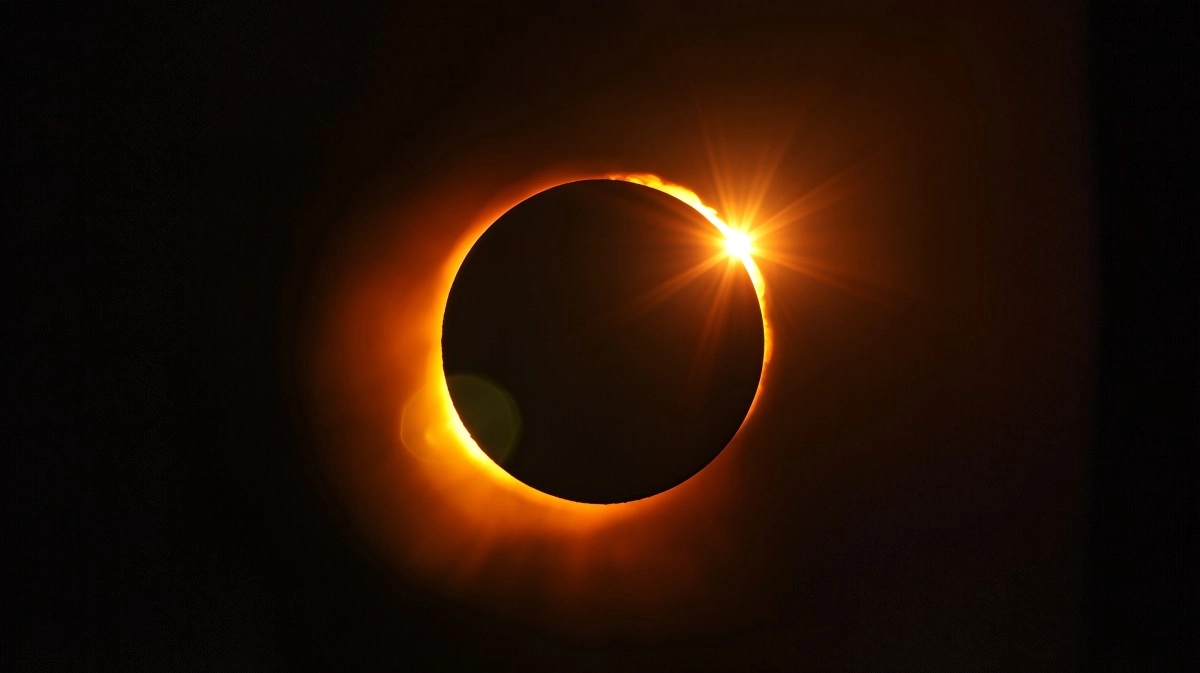
On the same day, the most anticipated astronomical phenomenon will occur: a total solar eclipse, although the totality phase will not be able to be seen from the United States.
According to NASA, the strip where the Moon will completely block the Sun will cross Greenland, Iceland, northern Russia, the Atlantic Ocean, Spain and a small area of ??Portugal.
A partial solar eclipse will be observed in the United States, mainly from northern areas of the country, Alaska and some regions of the continental territory. The amount of Sun that will be covered will depend on the location of the observer.
NASA reminds that looking directly at the Sun during a partial eclipse can cause serious damage to your eyesight. To observe it, it will be necessary to use special eclipse glasses or solar viewers certified with the ISO 12312-2 standard. Conventional sunglasses do not offer sufficient protection.
The Perseids will arrive with an ideal sky
The night of August 12 will also have another spectacle: the Perseid meteor shower will reach its maximum activity during the early hours of August 13.
The coincidence with the new Moon will allow a darker sky, favoring the observation of faint meteors. Under ideal conditions, up to 100 meteors per hour could be seen, although in cities or areas with obstacles the figure will be lower.
To observe them, it is recommended to move away from artificial lights, avoid screens for a few minutes to adapt your eyes to the darkness and look at a wide area of ??the sky, without concentrating solely on the constellation of Perseus.
Partial lunar eclipse to close August
The last major astronomical event of the month will occur between the night of Thursday the 27th and the early morning of Friday, August 28. It will be a deep partial lunar eclipse visible from the United States and other regions of America.
During the peak, a large portion of the Moon will enter Earth's darkest shadow. Although it will not be a total eclipse, the covered area could take on reddish or orange tones due to the way the Earth's atmosphere filters sunlight.