

The African countries that are being pressured by Trump to accept deported Venezuelans
The Trump administration is reportedly seeking agreements with African nations to allow them to receive deportees, according to various sources

Nigeria is one of the first countries in Africa to make it clear that it will not give in to pressure from the US to accept deported Venezuelans or prisoners from other third countries from the United States.
“The United States is exerting considerable pressure on African countries to accept that Venezuelans are being deported from the United States, some directly from prison,” Nigerian Foreign Minister Yusuf Tuggar said from Brazil, where he was attending a BRICS summit.
“It will be difficult for a country like Nigeria to accept Venezuelan prisoners in Nigeria. We already have enough problems,” he said.
“It would be unfair for Nigeria to accept 300 Venezuelan deportees,” the Nigerian minister added.
His comments come after threats from Washington to restrict visas and raise tariffs on countries that do not cooperate with White House policies.
Earlier this week, the U.S. State Department said that, as part of a “global reciprocity reset,” nearly all nonimmigrant, nondiplomatic visas issued to citizens of Nigeria, as well as those of Cameroon and Ethiopia, would now be single-entry and valid for only three months.
On Friday, the US embassy in Abuja, Nigeria’s federal capital, denied that the Trump administration was implementing visa restrictions as punishment for Nigeria’s failure to give in to its demands.
The real reason for the visa restrictions, according to the embassy, were “technical and security criteria” that had to be respected.
“In the words of the famous American rap group Public Enemy… 'Flava Flav has his own problems. I can’t do anything for you,' Tuggar said in an interview with the private Channels TV.
Earlier this month, the US deported eight people to South Sudan after a legal battle that saw them diverted to Djibouti for several weeks.
According to U.S. press reports, at least four other African countries have been approached by the United States about taking in deportees: Benin, Eswatini, Libya, and Rwanda.
Targets in Africa
Tuggar’s comments come after The Wall Street Journal cited internal documents and sources saying the Trump administration was also pressuring leaders in Liberia, Senegal, Mauritania, Gabon, and Guinea-Bissau to accept migrants deported by the United States whose home countries reject them or are slow to accept them.
According to the newspaper, the Trump administration had already sent them requests to accept migrants expelled from the United States ahead of Wednesday’s summit at the White House with the presidents of those countries.
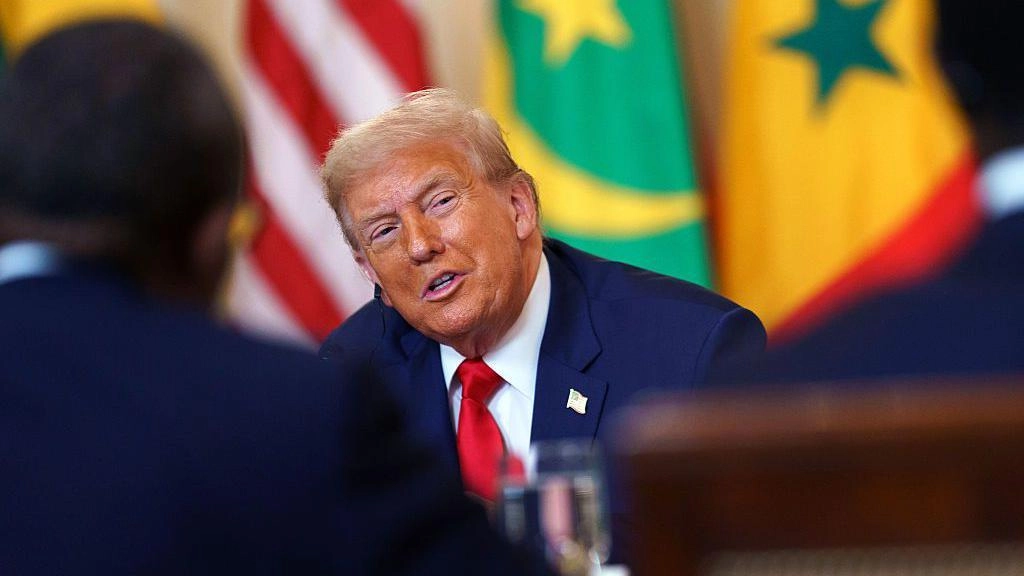
Trump appeared to allude to the proposal during the meeting with the five leaders.
“I hope we can reduce the high rates of visa overstays and also make progress on safe third country agreements,” he said during his opening remarks at the meeting.
It is unclear whether any of the West African countries accepted the requests.
When asked what Nigeria was doing to reach a diplomatic solution, Minister Tuggar said the country was in talks with the United States and resolving differences.
Liberian Foreign Minister Sara Beysolow Nyanti denied any negotiations with Washington, telling BBC’s Newsday on Thursday: “We have not held discussions regarding the arrival of deportees or criminals to Liberia.”
Meanwhile, President Donald Trump has threatened to impose an additional 10 percent tariff on countries that align with BRICS alliance policies that run counter to US interests.
The 11-nation BRICS group has issued a challenge to the Western political and economic power.
Last year, the BRICS membership expanded beyond the original group of Brazil, Russia, India, China, and South Africa to include Egypt, Ethiopia, Indonesia, Iran, Saudi Arabia, and the United Arab Emirates.
Nigeria is not a full member of BRICS but became its ninth partner country in January.
Minister Tuggar said the threat of higher tariffs “has no bearing” on Nigeria’s involvement in BRICS.
He said he was looking to “make deals with the United States” because the country has a wealth of gas, critical minerals, and rare earths that American technology companies need.