

The Supreme Court authorizes Trump to deport immigrants to other countries
With the ruling, the Trump administration can resume deporting immigrants to “third countries,” despite the risk of torture or death
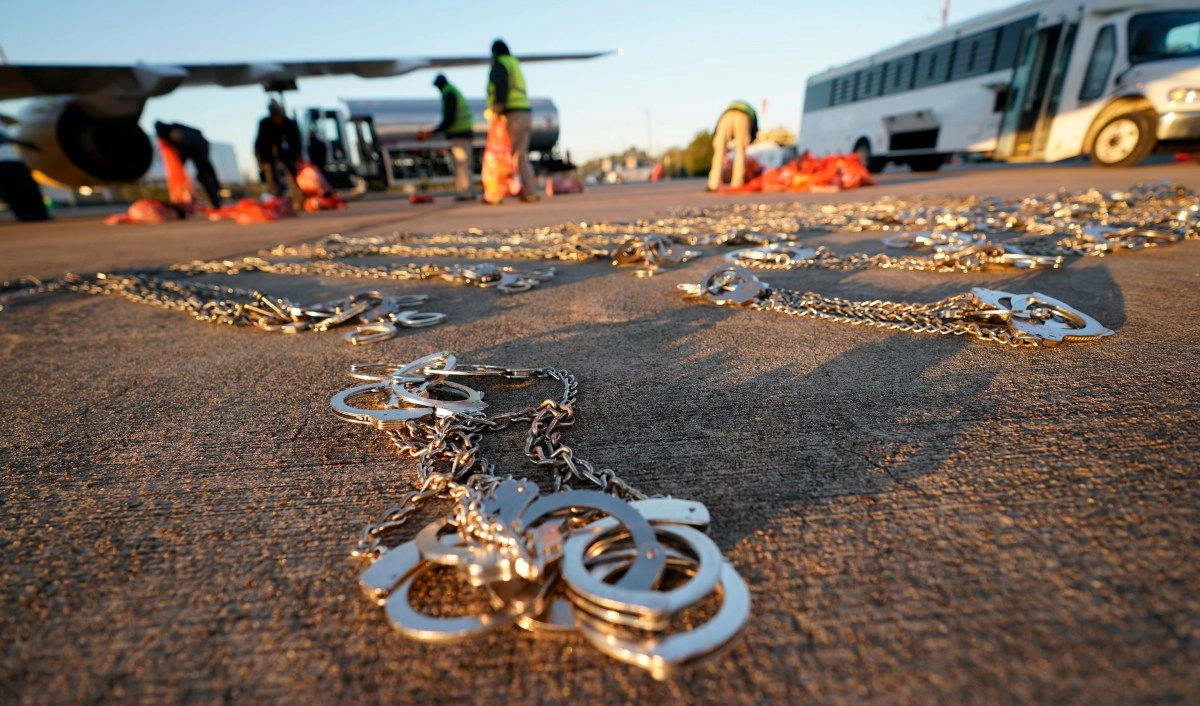

The U.S. Supreme Court cleared the way Monday for the Trump administration to resume deporting migrants to countries other than their own without offering them a chance to demonstrate the harm they could face.
In what is widely seen as a victory, for now, for the Trump administration, the court put a hold on the ruling of a federal judge who said affected migrants across the country should be given a “meaningful opportunity” to raise claims that they would be at risk of torture, persecution, or death if sent to countries with which the administration has made agreements to receive deported immigrants.
The justices lifted an injunction requiring the government to give migrants slated for deportation to so-called “third countries” a “meaningful opportunity” to tell officials they risk torture in their new destination while a legal challenge plays out.
Boston-based U.S. District Judge Brian Murphy issued the order on April 18 after the Department of Homeland Security decided in February to ramp up rapid deportations to third countries, prompting immigrant rights groups to file a class-action lawsuit on behalf of a group of migrants seeking to avoid being deported to such places without notice and without the opportunity to seek damages.
On May 21, Murphy concluded that the administration had violated its order requiring additional procedures by attempting to send a group of migrants to South Sudan, a politically unstable country that the State Department has warned against travel “because of crime, kidnapping, and armed conflict.” The judge’s intervention forced the U.S. government to hold the migrants at a military base in Djibouti, though U.S. officials later said one of the deportees, a man from Myanmar, would be returned to his home country. Of the other passengers on the flight, One is Sudanese, while the others are from Cuba, Mexico, Laos, and Vietnam.
The administration, in its emergency filing with the Supreme Court on May 27, said all of the South Sudan-bound migrants had committed “heinous crimes” in the United States, including murder, arson, and armed robbery.
Now, in the wake of the announcement, Trina Realmuto, executive director of the National Immigration Litigation Alliance, one of the groups that filed the lawsuit, charged that “The consequences of the Supreme Court’s order will be dire; it rolls back crucial due process protections that have protected members of our class from torture and death.”