

Delcy Rodriguez dismisses the general who was in charge of Maduro's security
General Javier Marcano Tabata, commander of Venezuela's presidential honor guard, was dismissed after the capture of Nicolas Maduro
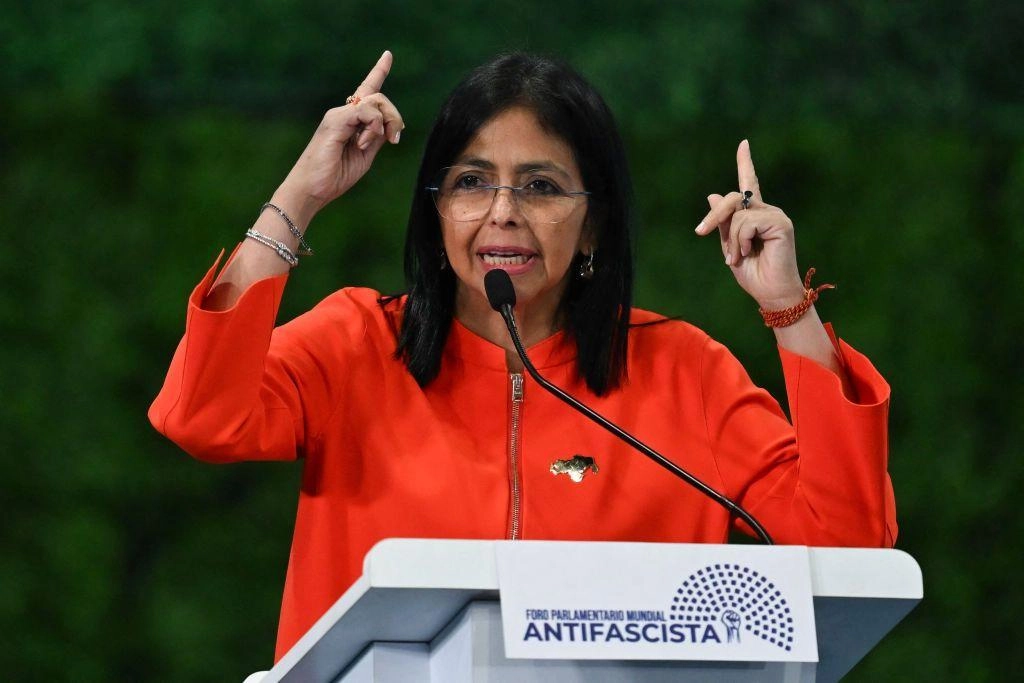

General Javier Marcano Tabata, commander of Venezuela's presidential honor guard, was dismissed days after Venezuelan leader Nicolas Maduro was captured by US forces in a raid in Caracas and taken to New York to be tried on narcoterrorism charges.
The presidential honor guard is the military force responsible for protecting the head of state.
Although the Venezuelan government has not yet provided a detailed casualty count, several members of the guard are believed to be among the dozens of people killed during the U.S. operation to capture Maduro.
The order to replace General Marcano Tabata was issued by the new interim president, Delcy Rodriguez.
Rodriguez was sworn in on Monday before the pro-government National Assembly.
She served as Maduro's vice president and is considered a close ally of the detained leader.
U.S. President Donald Trump declared at the press conference following Maduro's capture that the United States would "take control" of Venezuela and that he was in talks with Rodriguez.
He also said that Rodriguez would face "a fate worse than Maduro's" if she did not comply with U.S. demands, including those related to oil.
Venezuela possesses the world's largest proven oil reserves.
On Tuesday, the US president stated that Venezuela would deliver up to 50 million barrels of oil to the United States, but the Venezuelan interim government has yet to comment.
Rodriguez's tone has fluctuated between defiant and conciliatory since being appointed interim president by Venezuela's Supreme Court.
She denounced Maduro's detention as an "illegal kidnapping," but has also stated that her government had "invited the US government to work together on a cooperation agenda."
His actions are being closely watched both inside and outside Venezuela to assess the course he will take now that he is at the helm of the country and to detect possible divisions within his government.
Repression
The general's dismissal is one of the first changes in the top positions of the interim president's inner circle.
In addition to commanding the presidential guard, Marcano Tabata also headed Venezuela's Directorate General of Military Counterintelligence (DGCIM).
According to the United Nations, the DGCIM has played a key role in the repression of people critical of the Maduro government.
A UN Independent Fact-Finding Mission found that the counterintelligence unit had committed numerous human rights violations since 2013.
It documented dozens of cases in which detainees were subjected to “torture, sexual violence and/or other ill-treatment cruel, inhuman, or degrading treatment” at DGCIM headquarters and in a network of clandestine detention centers throughout the country.
However, his dismissal does not appear to be related to the repression carried out by the DGCIM under his command, as the person appointed to succeed him, General Gustavo Gonzalez Lopez, headed an intelligence service facing similar accusations.
Gonzalez Lopez led Venezuela’s national intelligence service, the SEBIN, for many years.
The SEBIN controls the infamous El Helicoide prison in Caracas, where the UN documented abuses committed against “opposition politicians, journalists, protesters, and human rights defenders.”
“Humiliated”
Venezuelan analysts say that General Marcano Tabata’s dismissal is likely related to the presidential guard’s failure to prevent Maduro’s capture.
Cuba, a close ally of Venezuela that has long provided security and intelligence services to Maduro, reported that 32 of its citizens died in the US raid.
Many of them are believed to have been part of the presidential guard.
The Venezuelan military has reported that 23 of its members, including five generals, died in the US attacks.
Some government supporters expressed feeling “humiliated” by the way US forces overcame Venezuela’s defense systems and Maduro’s personal guard to capture the Venezuelan leader, who was later paraded before cameras in a prison uniform with his hands tied.
The replacement of General Marcano Tabata could be an attempt by the interim president to surround herself with people she trusts at a time when the threat of another US attack looms. Trump declared on Saturday that US forces had prepared a second wave of attacks, but deemed it unnecessary at that time. However, he has repeatedly stated that failure to comply with the demands would mean Rodriguez would “pay a very high price.” She is not the only one in the interim government who could be targeted in a second attack. According to Reuters, citing anonymous sources familiar with the matter, the Trump administration has demanded that Venezuelan Interior Minister Diosdado Cabello comply with its orders. The United States has long accused Cabello of participating in a “narco-conspiracy,” allegedly helping leftist rebels ship cocaine to the United States. United States.
In January, the US State Department increased the reward for information leading to his capture to US$25 million.