

Despite criticism, Nayib Bukele defends indefinite re-election in El Salvador
The president, who is seeking his third term, argues that reelection does not violate the Constitution, because it was reformed by a legislative supermajority
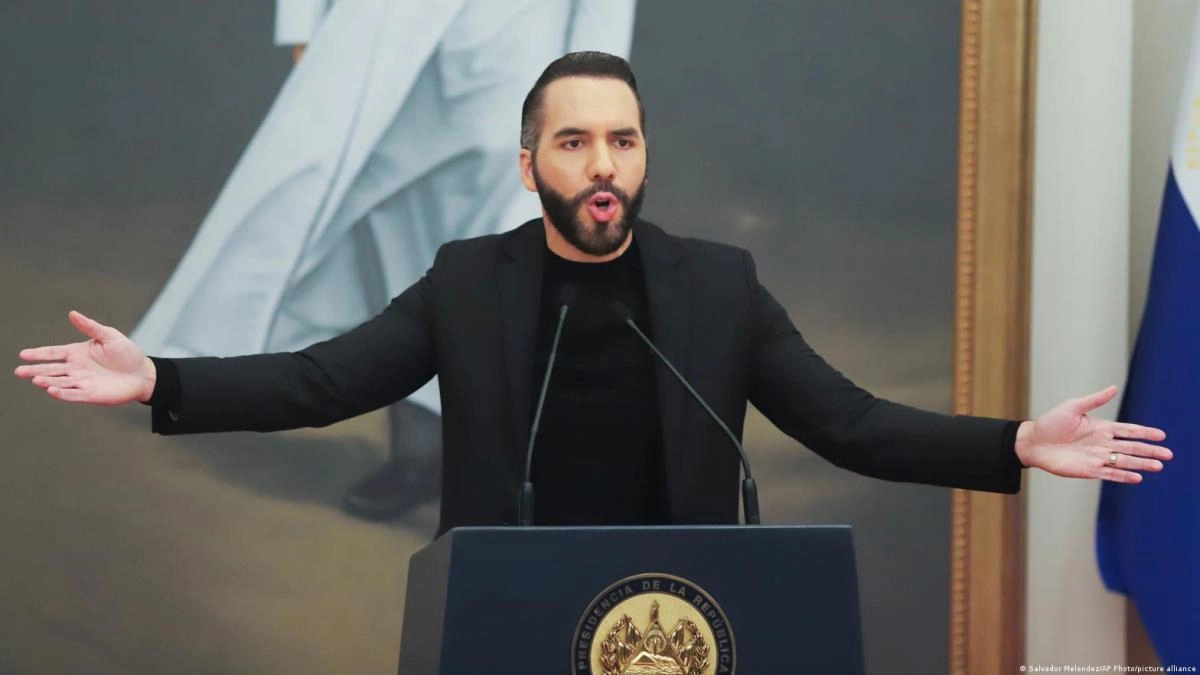

The president of El Salvador, Nayib Bukele, defended this Tuesday the indefinite presidential reelection, enabled in the country since July 2025 in a controversial constitutional reform, when he seeks a third term at the head of the Executive.
Carolina Jiménez Sandoval, president of the organization Washington Office on Latin American Affairs (WOLA), questioned the indefinite reelection in a message on X.
"Countries with indefinite reelection in Latin America: Venezuela, Nicaragua, El Salvador. Let it be very clear which club Nayib Bukele is now entering," Jiménez wrote.
In response, Bukele published that "Canada, the United Kingdom, Germany, Australia, New Zealand, Ireland, Italy, the Netherlands, Belgium, Sweden, Norway, Denmark, Finland, Iceland, Luxembourg, Austria, Switzerland, and Japan, among many other countries, also have it. But the idea is to make it sound bad," along with an emoji of a laughing face.
In another message, Bukele said that "some allege that indefinite reelection violates the Salvadoran Constitution. However, the Constitution was reformed by a legislative supermajority, democratically granted by the Salvadoran people at the polls."
"In addition, our elections have been observed by thousands of international representatives. No multilateral organization, not a single country in the world, neither left nor right, has declared that they were not free, transparent and democratic elections. In the end, each people chooses its own path," the president stressed.
Bukele's administration has high levels of security, but is criticized due to accusations of massive human rights violations and concentration of power, as well as growing economic demands by the population.
He added that "practically all countries have modified their constitutions" and that "in many cases, these changes occurred through wars, coups d'état or violent processes; not through a civic celebration at the polls, as we Salvadorans did."
NI nominates Bukele for the 2027 elections
Bukele's Nuevas Ideas (NI) party reported on Monday that the head of state won the presidential candidacy for the 2027 elections in primaries held on Sunday.
Bukele, 42, has not publicly referred to this internal process, in which he apparently had no opponent.
As the next step for the general elections of February 2027, the Salvadoran president must register his candidacy before the Supreme Electoral Tribunal (TSE) in the period between October 1 and November 19, 2026, in accordance with the electoral calendar of the collegiate entity.
The Legislative Assembly (Parliament), dominated by Bukele's NI party, approved and ratified in a single day on July 31, 2025 without prior analysis or debate, the reform of articles 75, 80, 133, 152 and 154 of the Constitution, giving President Bukele the freedom to opt for a third consecutive term.
This reform includes raising the presidential term from the current five to six years and eliminating the second round of elections.
Bukele assumed his second consecutive term on June 1, 2024, despite the fact that the Constitution prohibited it at that time, and it would have to end in 2029. However, the reform endorsed by Congress advanced the presidential elections to 2027, when voting will also be held for deputies and mayors.