

Honduras declares the conservative Nasry 'Tito' the winner of the elections Asfura after weeks of uncertainty
The electoral authority announced the result Wednesday afternoon, ending a process marked by delays and accusations of fraud
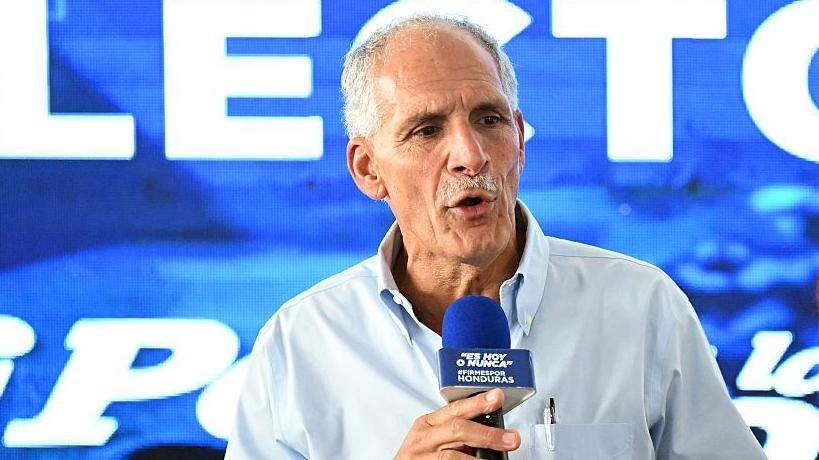

Conservative candidate Nasry “Tito” Asfura, publicly backed by Donald Trump, was declared the winner of the Honduran presidential election on Wednesday after a controversial vote count that lasted more than three weeks.
The National Electoral Council (CNE) announced the result Wednesday afternoon, ending a process marked by technological failures and accusations of fraud since Hondurans went to the polls on November 30.
With 40.27% of the vote, the National Party candidate narrowly defeated Salvador Nasralla of the Liberal Party, who obtained 39.39%, according to the final result, but denounced fraud and rejected the outcome.
After the official results were released, Asfura posted a message on social media in which he said he was ready to govern and promised not to let the people down.
Asfura, former mayor of Tegucigalpa, wins the presidency on his second attempt after a campaign in which he presented himself as a pragmatic manager, backed by several infrastructure projects developed during his municipal administration.
“I recognize the great work done by the councilors (of the CNE) and the entire team that carried out the elections. Honduras: I am prepared to govern. I will not fail you. God Bless Honduras!” the winner posted on social media.
Opposition candidate Salvador Nasralla, for his part, rejected the result and reiterated the fraud allegations he had been making in recent weeks.
“The National Party’s money, violating the will of 8 million Hondurans,” he denounced on social media.
The defeated candidate asserted that there have been irregularities in the counting of “10,000 ballot boxes, which is equivalent to to 2 million votes” and questioned whether the observation missions of the European Union and the Organization of American States (OAS) “did not see this fraud.”
In 2017,Nasralla had also run for president, and similarly to the current process, the count gave him the lead for much of the tally. But in a surprising final turn of events, he lost to then-President Juan Orlando Hernandez. There were accusations of fraud and allegations of irregularities.
Hernandez was later convicted of drug trafficking in the United States, and shortly before last month's election, Trump pardoned him.
U.S. Secretary of State Marco Rubio congratulated Asfura after his victory was proclaimed.
“The Honduran people have spoken: Nasry Asfura is the next president of Honduras. The United States congratulates the president-elect and looks forward to working with his administration to promote prosperity and security in our hemisphere,” Rubio wrote.
President Trump had expressed his support for Asfura days before the election, noting that he was the only Honduran candidate with whom his administration would be willing to work.
His main rivals interpreted this gesture as a form of foreign interference that would have influenced an extremely close process.
Following the endorsement of the United States, Argentina, Bolivia, Costa Rica, Ecuador, Panama, Paraguay, Peru, and the Dominican Republic joined in congratulating Asfura.
“We highlight the civic responsibility shown by the citizens in exercising their right to vote and the patience with which they awaited the final count, demonstrating a commendable commitment to peace and to the rule of law,” these eight countries of the region announced in a joint statement.
In Honduras, tensions were exacerbated by the slowness of the count, which came to a standstill after a special recount of the final tally sheets was called for, keeping the country on edge for weeks and intensifying accusations of manipulation.
Faced with the impasse, the OAS Secretary General made an urgent appeal for the authorities to conclude the process before December 30.
The Honduran election adds to the recent trend of a shift to the right in Latin America, just a week after Chile elected the conservative Jose Antonio Kast.