

Schwarzenegger openly opposes Proposition 50 in California to create new districts
Former governor opposes proposal to redraw districts in California, arguing risks to democratic principles
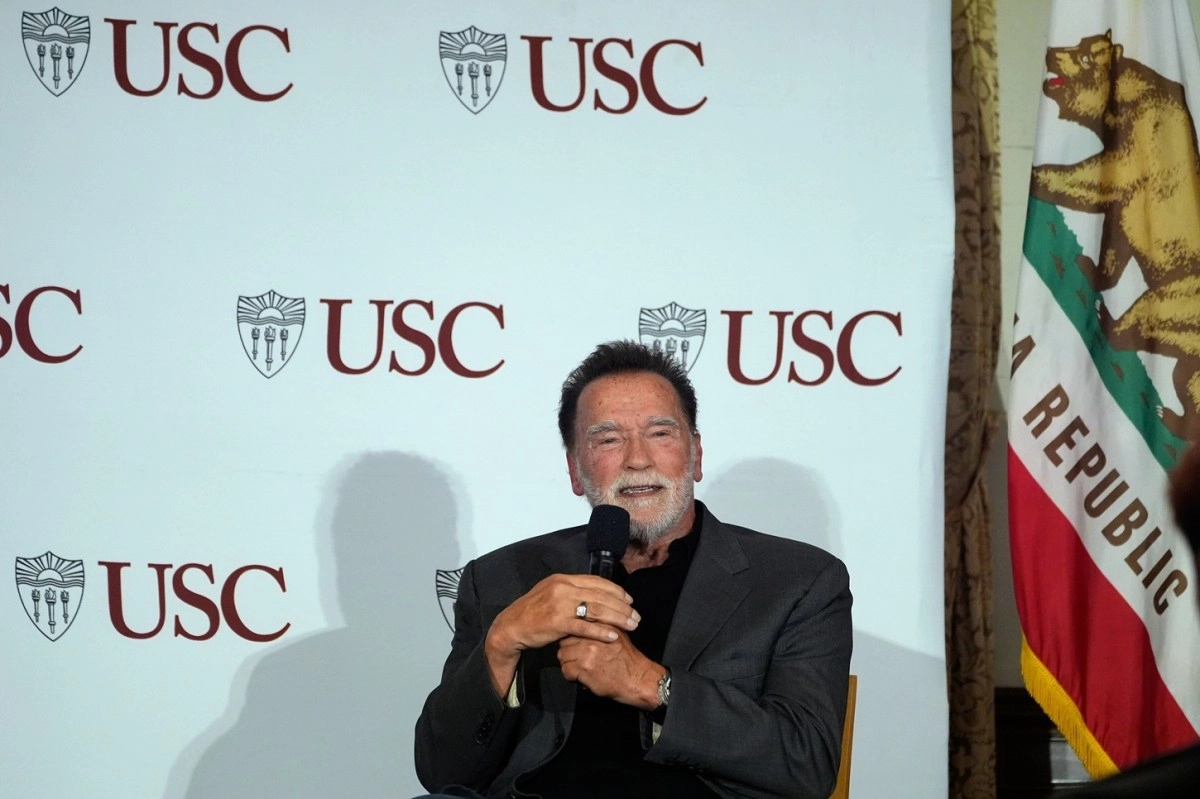

Arnold Schwarzenegger angrily spoke out against the passage of California's Proposition 50, which seeks to redraw the state's districts in favor of Democrats and undermine democratic principles
The actor and former California governor announced his intention to influence the Republican caucus in the U.S. House of Representatives on Monday, urging voters to reject the redistricting ballot measure, which he says would erode democratic principles and allow politicians to “take power away from the people.”
“It’s crazy,” Schwarzenegger said of the Democratic caucus’ proposal, a November ballot initiative seeking to add five Democratic seats to the California House of Representatives. The measure would be a counterweight to President Donald Trump’s effort in Texas to win five Republican districts before the 2026 midterm elections.
“It doesn’t seem logical to me that because we have to fight Trump, we would become Trump,” Schwarzenegger said. “Two wrongs don’t make a right.”
What is California’s Proposition 50?
The proposal pushed by Governor Gavin Newsom would stop using the electoral designs designed by an independent state commission and replace them with redrawn districts, drawn by Democrats, that will clearly benefit the party’s candidates.
If approved, the new political maps could drastically reduce five Republican seats in the House of Representatives and boost Democrats in other key districts in the 2026 midterm elections. If implemented, the number of Democrats in Congress in California would drop from 43 to 48 of the 52 available seats.
Speaking at the University of Southern California, Schwarzenegger reiterated that the proposal would disregard the maps drawn in a public process by an independent commission that he himself promoted as governor,and would replace them with partisan maps, drawn up behind closed doors and approved by “the politicians.”
However, he never directly criticized Newsom or the Democratic majority in the Legislature, which supported the proposal. Though he announced last month that he would actively oppose the ballot measure, posting a photo of himself lifting weights on his X account while wearing a T-shirt printed with the slogan “End Gerrymandering” and a partially hidden obscenity directed at “the politicians.”
“I’m gearing up for battle on gerrymandering,” he wrote.
It’s not yet clear how much he will be involved in the effort, but he could fund advertising and use his global fame to sway voters.
Indeed, the centrist-minded Schwarzenegger has been a longtime critic of Trump, arguing that parties need to move away from extremes to break the gridlock in Washington.
Even so, he remains a formidable political presence 15 years after leaving office: “I don’t think you want to run against Arnold Schwarzenegger,” said Bill Whalen, a fellow at Stanford University’s Hoover Institution.
California and Texas—the nation’s two most populous states—have become the center of a partisan war in the House of Representatives that is spilling into other states and the courts ahead of the start of the 2026 elections.
Newsom has cast this race as a showdown with Trump as Republicans seek to maintain their slim majority in the House.
“We cannot stand idly by and watch this democracy disappear district after district across this country,” Newsom, a presumptive 2028 presidential candidate, declared at a rally in Los Angeles last month. “Donald Trump, you have provoked the bear, and we will fight back.”