

Trump questions the future of the T-MEC for the umpteenth time and assures that the US would be better off without the a
The White House argues its dissatisfaction with the treaty due to the persistent trade deficits that Washington maintains with its two North American neighbors.
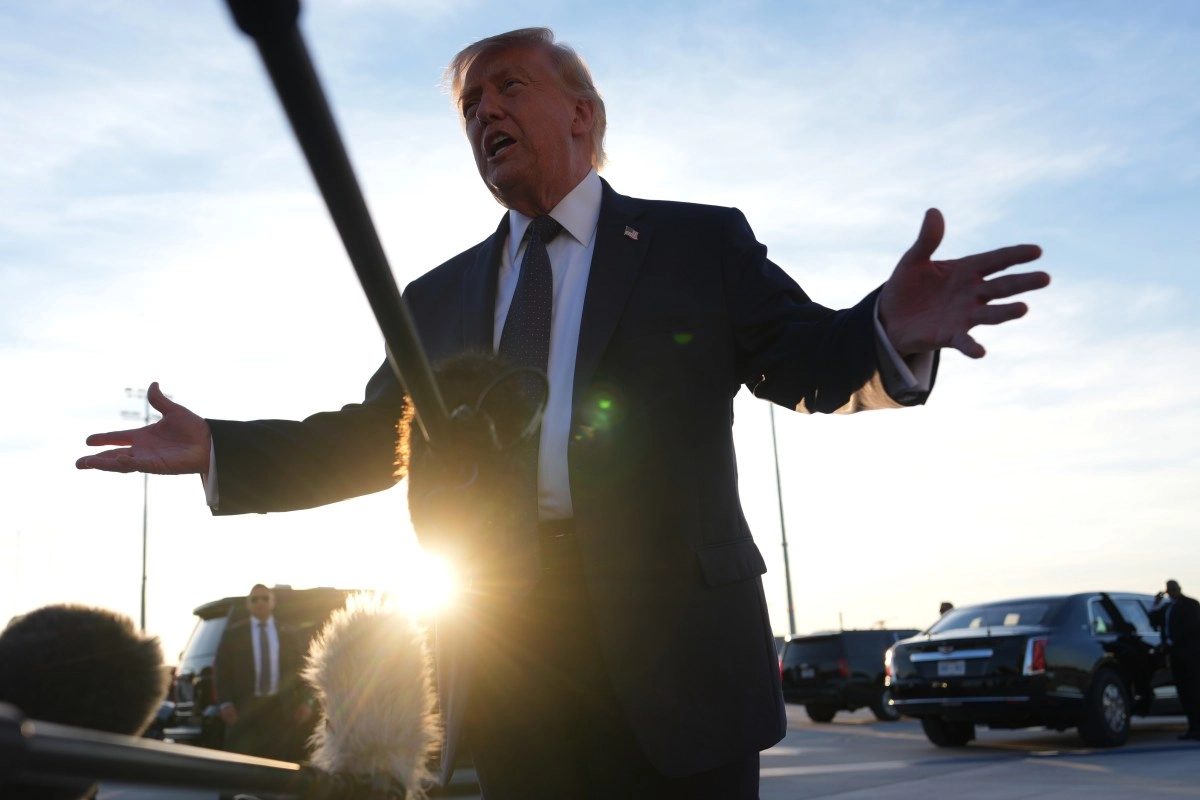

President Donald Trump once again sowed uncertainty about the future of the trade relationship between the United States, Mexico and Canada by stating that he would prefer that the USMCA cease to exist, although he acknowledged that he remains open to negotiating and eventually signing a renewal of the agreement.
The president's statements come at a key moment for the North American economic bloc, just when the treaty review process officially began, which came into force in July 2020 to replace the old North American Free Trade Agreement (NAFTA).
During a conversation with journalists in Paris, where he participated in the G7 summit before returning to the United States, Trump assured that the country would be in a better economic position without the current trade agreement.
"I would prefer not to have the agreement, although it is possible that I sign it. I think that as a country we would be better off if there was no agreement," said the president, who also left open the possibility that the negotiations for its renewal may not come to fruition.
The statements represent a new example of the critical stance that Trump has maintained for years towards multilateral trade agreements, especially those that, according to him, have contributed to increasing the United States' trade deficits with its main economic partners.
The review of the treaty enters a decisive stage
While Trump expressed his doubts about the future of the pact, officials from the United States and Mexico began a new round of negotiations in Washington focused on sensitive issues such as agriculture, energy and automotive manufacturing.
One of Washington's main objectives is to tighten the rules of origin for the automotive industry. The US proposal seeks that at least 50% of the components of vehicles manufactured in North America come specifically from the United States, which would significantly raise the current requirements of the treaty.
Additionally, the Trump administration seeks to expand access for US agricultural products to the Canadian market and strengthen guarantees for exports of genetically modified corn and ethanol to Mexico.
Next July 1 marks a relevant date for the agreement. If the three countries support its continuity, the T-MEC could be automatically extended for another 16 years. However, analysts consider it unlikely that the negotiations will conclude before that date, so the start of a process of periodic reviews is expected that could last for a decade.
Canada and Mexico have publicly reiterated their interest in preserving the treaty, considering it a fundamental element for the competitiveness of the region and for the stability of North American supply chains.
Farmers and businessmen warn of economic risks
Trump's statements have also generated concern among agricultural and business organizations in the United States, which consider the T-MEC an essential tool to maintain access to two of the most important markets for American exports.
Mexico and Canada currently represent the main destinations for agricultural products from the United States. According to figures from the Department of Agriculture, both countries concentrated more than $58.6 billion in US agricultural exports during 2025.
Representatives of the sector have warned that a possible cancellation of the agreement could cause million-dollar losses for farmers, grain producers, ranchers and companies linked to exports. At the same time, disputes related to the Mexican energy sector persist.
American officials and business groups maintain that the policies promoted by the Mexican government have favored the state company Pemex and limited the participation of foreign private investors, an issue that could become one of the most complex points of the renegotiation.
For now, the future of the T-MEC remains open. Although Trump insists that the United States could prosper without the agreement, he also recognizes that renewal remains a possibility, keeping governments, companies and markets attentive to the development of negotiations that could redefine the economic integration of North America.