

Mexico starts the 2026 World Cup on the right foot by beating South Africa
Mexico defeated South Africa 2-0 in the opening match of the 2026 World Cup. The Azteca Stadium witnessed the first Mexican victory in a duel of this nature
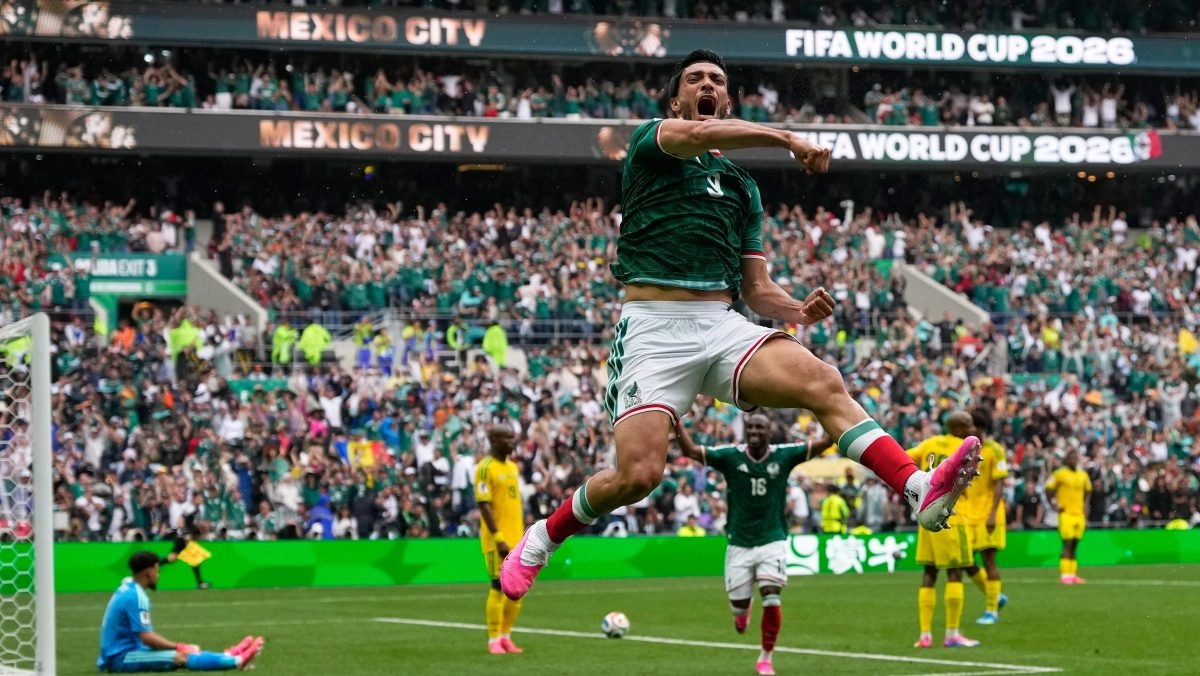

Mexico and South Africa faced each other at the Azteca Stadium (Mexico City Stadium), in the opening duel of the 2026 World Cup. El Tri started Group A on the right foot by beating the African team 2-0 with goals from Julián Quiñones and Raúl Jiménez. This is Mexico's first victory in an inaugural duel.
Mexico starting eleven: Raúl Rangel; Israel Reyes, César Montes, Johan Vásquez, Jesús Gallardo; Érik Lira, Brian Gutiérrez, Álvaro Fidalgo; Roberto Alvarado, Raúl Jiménez and Julián Quiñones.
South African starting eleven: Ronwen Williams; Khuliso Mudau, Nkosinathi Sibisi, Mbekezeli Mbokazi, Ime Okon, Aubrey Modiba; Teboho Mokoena, Jayden Adams, Yaya Sithole; Lyle Foster and Iqram Rayners.
Only four minutes of the first half were enough for Raúl Jiménez to have Mexico's first chance. The former Fulham striker made a great left-footed shot on the edge of the area after a cross from Israel Reyes. But the shot was well saved by Ronwen Williams.
Eight minutes into the match came the first goal of the 2026 World Cup. High pressure from the Mexican team caused Sphephelo Sithole to lose the ball on the edge of the area. This recovery was taken advantage of by Julián Quiñones who, with a great shot from his right foot, scored the 1-0 of the match.
The first yellow card of the World Cup came in the 16th minute. In an exit attempt by Álvaro Fidalgo, Teboho Mokoena was deceived by the El Tri midfielder's cut to the outside. Mokoena earned his first World Cup card.
Julián Quiñones showed a lot of mobility in the first quarter of an hour of the game. The Arab soccer forward exchanged several times with Raúl Jiménez to attack from the inside.
After the first hydration period, Javier Aguirre's team had not allowed any shots on Raúl Rangel's goal. The defensive work of the Aztec team was very serious. In attack, Quiñones was the most incisive.
Despite some isolated headers from South Africa, Mexico generated much more danger from the sides, mainly from Israel Reyes' wing. Two minutes before the end of the first half, Brian Gutiérrez received a cross from the right. As if it were a battering ram, the Chivas footballer pivoted the ball to Julián Quiñones who was facing the play. The Al Qadsiah footballer finished off a ball that crashed into the goalkeeper's left post.
Although the result is short, Mexico completely dominated the first half. Scoring the first goal took pressure off Javier Aguirre's team. Israel Reyes, Brian Gutiérrez, Jesús Gallardo and Julián Quiñones were the players with the highest ratings in the first half.
Second half
As happened in the first half, Mexico started the second half with high pressure. This completely complicated the South African team. In a few seconds of the complement, Mexico was close to making it 2-0 on the scoreboard. Everything seemed to indicate that if El Tri put his mind to it, he would score the goal of tranquility.
Mexico tried other ways to attack the nervous South African defense. In the 50th minute of the game, El Tri looked for long passes behind the center backs. In one of the long deliveries, Brian Gutiérrez went one-on-one with the African goalkeeper. However, in a slightly clumsy finish by Sphephelo Sithole, Gutierrez was brought down and Sithole received a red card.
In 65 minutes, with the result in favor and numerical superiority on the field, Mexico was still not deep in attack. This is why Javier Aguirre decided to move the bench. Luis Chávez and Gilberto Mora entered the game to give him greater offensive projection in the midfield.
It only took a minute and a half for Mexico to score the second goal of the game. A cross from the right by Roberto Alvarado was very well read by Raúl Jiménez. Without opposition, the Mexican headed in and scored the first goal of his career in a World Cup.
Raúl Jiménez took a lot of weight off his shoulders with this goal. Firstly, the Mexican striker scored for the first time in a World Cup; Raúl is one of the forwards who has managed to remain in the orbit of the Aztec team without much noise; goal dedicated to heaven for the recent death of his father.
With a larger lead on the scoreboard, Javier Aguirre began to make several changes with the intention of refreshing the eleven on the field and even so that many players on the bench would take off the pressure of their debut in this World Cup. Edson Álvarez, Alexis Vega and Armando González entered.
At minute 81 of the game, main player Wilton Sampaio went to review an aggressive play. The Brazilian referee determined that Themba Zwane slapped Mexican Roberto Alvarado. South Africa was left with 9 players with 10 minutes remaining.
Although South Africa had only conceded two goals in the opening match, the damage done by the South African team will have consequences throughout the championship. Hugo Broos' team will be without Themba Zwane and Sphephelo Sithole for the remainder of the group stage.
Already in added time, César Montes made a mistake in defense. With the duel already settled and with a not very dangerous attack that leaned on the right side, the Mexican defender crossed Khuliso Mudau with excessive violence. Furthermore, Montes was the last man. Wilton Sampaio showed the “Puppy” the red card.
This expulsion is the big asterisk of the Mexican performance in this first match. Javier Aguirre loses one of his starting center backs for the next games. This is a disconnection that benefits the Aztec team's next rivals.
The Mexican team started the 2026 World Cup on the right foot. These first points from El Tri leave good feelings from a collective point of view. Although the match was distorted by the expulsions, with all the men on the field there was no danger in the South African proposal.
This was a good first thermometer for Javier Aguirre and his team. Starting a World Cup is not easy. El Tri handled the pressure and took a big step to advance from the group stage.