

The ICC seeks a new prosecutor after the dismissal of Karim Khan, promoter of the cases against Putin and Netanyahu
The departure of the chief prosecutor occurs in the middle of a procedure for sexual misconduct and in a context of growing political pressure on the ICC
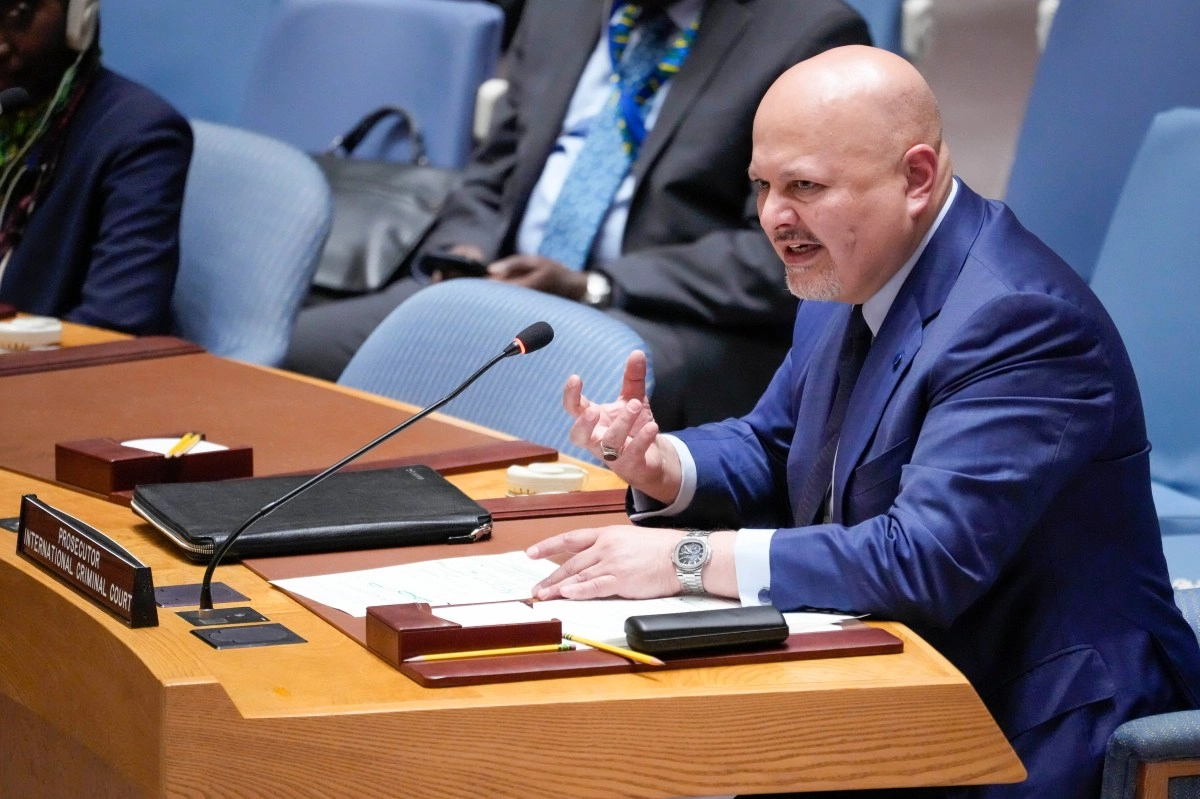

The International Criminal Court (ICC) is going through a new institutional stage after the dismissal of its former chief prosecutor, Karim Khan, whose departure leaves the court in one of the moments of greatest political pressure since its creation. While the Assembly of States Parties prepares the process to designate his successor, the Court seeks to keep open high-profile investigations, including those that led to the arrest warrants against Russian President Vladimir Putin and Israeli Prime Minister Benjamin Netanyahu.
However, Khan's removal followed a disciplinary procedure that concluded he engaged in “serious conduct and breach of duty” over allegations of sexual misconduct.
According to analysts, far from closing the crisis, the departure of the prosecutor raises questions about the direction of the institution in a context of strong diplomatic tensions. During Khan's administration, the Prosecutor's Office placed the ICC at the center of some of the most relevant international conflicts by promoting investigations related to the war in Ukraine and the conflict between Israel and Hamas.
In March 2023, the Court issued an arrest warrant against Vladimir Putin for alleged war crimes related to the deportation and illegal transfer of children from occupied territories of Ukraine. Later, in 2024, the judges authorized the arrest warrants requested by Khan against the Israeli Prime Minister, Benjamin Netanyahu, and the then Minister of Defense, Yoav Gallant, for alleged war crimes and crimes against humanity committed during the military offensive in Gaza.
A court under increasing pressure
Investigations against leaders of Russia and Israel have placed the International Criminal Court in open confrontation with governments that reject its jurisdiction.
The United States and Israel, which are not parties to the Rome Statute, sharply criticized the court's actions following the arrest warrants against Israeli officials. Washington even imposed sanctions against members of the Court, including judges, arguing that the ICC acted outside its jurisdiction by investigating Israeli citizens. For its part, Netanyahu's government called the court's decisions “illegitimate” and refused to recognize its jurisdiction.
Various international human rights organizations, including Human Rights Watch and Amnesty International, defended the independence of the Court and warned that sanctions against its officials represent a risk to the international justice system.
The procedure that ended Khan's management
Although the former prosecutor became one of the most visible figures in international criminal justice, his departure was due to a disciplinary process initiated after complaints of sexual misconduct filed in 2024.
The United Nations Office of Internal Oversight Services (OIOS) conducted an independent investigation, the findings of which were subsequently analyzed by a panel of judicial experts and the Bureau of the Assembly of States Parties.
Based on these reports, the Assembly determined that Khan had engaged in “serious conduct and breach of his duties,” which is why it resolved to terminate his mandate early, originally scheduled until 2030.
The election of the new prosecutor will be decisive
The Assembly of States Parties must soon elect a new chief prosecutor, who will inherit open investigations into Ukraine, Gaza, Sudan, Myanmar, Afghanistan and other conflict scenarios.
The replacement occurs at a particularly complex time for the institution, which also faces questions about its ability to execute the arrest warrants it issues, since it depends completely on the cooperation of the member states.
Currently, the Court has 125 members; However, powers such as the United States, Russia, China and Israel remain outside the Rome Statute, limiting the practical scope of several of its decisions. Since its creation in 2002, the ICC has issued seven final convictions and maintains dozens of investigations and open proceedings for genocide, war crimes, crimes against humanity and the crime of aggression.
As a new element of uncertainty, Khan's departure coincides with Venezuela's announcement to withdraw from the Rome Statute, a decision that adds pressure on an institution that seeks to preserve its credibility and continuity in the midst of one of the most complex political scenarios in its history.