

The future of nuclear weapons testing in the United States
US President Trump has announced the summary of nuclear weapons testing
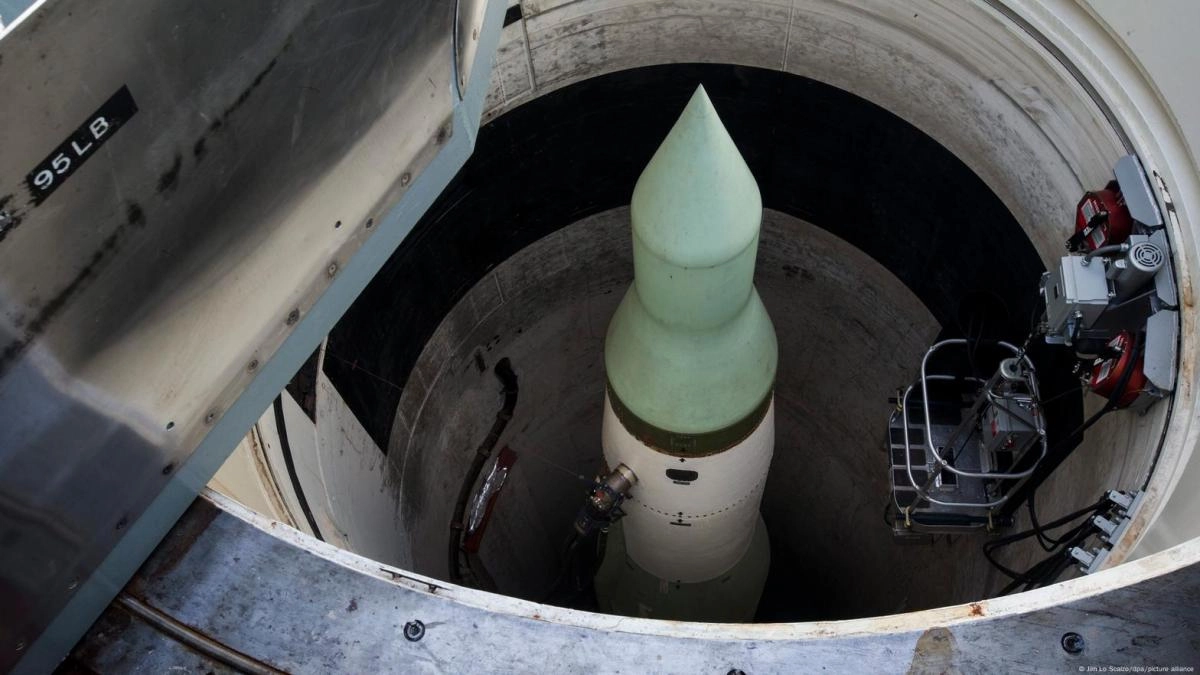

On July 16, 1945, at 5:30 am, a massive explosion rocked the vast New Mexico desert. It was the first nuclear weapons test in history. The United States alone conducted more than 1,000 additional tests in the following decades, initially in the atmosphere and, from the 1960s onward, only underground, until 1992, when the US Congress legally banned all nuclear testing. Four years later, in 1996, the Comprehensive Nuclear-Test-Ban Treaty (CTBT) was drafted. The US, along with other countries, signed the treaty but has not yet ratified it, which is why it has still not entered into force almost 30 years later. However, the world has adhered to this treaty throughout the 21st century. With the exception of North Korea, no other state has detonated an atomic bomb for test purposes since 1998.
Underground nuclear tests, unlikely
Trump's accusation that “other states” maintain “nuclear testing programs” and his announcement to immediately resume such tests “on the same basis” have caused concern worldwide. But his statement contains some inaccuracies: it is not the US, but Russia, that has the largest nuclear arsenal in the world.
In the US, testing and maintenance are not the responsibility of the Pentagon (now the “Department of War”), but of the Department of Energy. Energy Secretary Chris Wright told Fox News: “It's about testing systems, not nuclear explosions.” The focus is on new delivery systems and “all the other parts of a nuclear weapon,” in addition to the nuclear warhead. But is this really what the President of the United States wants?
The Problem of Obsolete Nuclear Weapons
The US has consistently maintained the infrastructure for nuclear weapons testing. In addition to several research laboratories, the Department of Energy continues to operate the Nevada National Security Site (NNSS).
The last nuclear test was 33 years ago. A new nuclear test would not be possible “immediately” or “within a few months,” but at the very least, within three years, according to the Center for Strategic and International Studies (CSIS).
In fact, not only the US,but all nuclear powers face the challenge of modernizing and maintaining their arsenals without conducting nuclear tests.
Russia and the US each possess more than 5,000 nuclear warheads. Many of them have been stored in high-security arsenals for decades. But these weapons also age: fissile materials, such as uranium-235 or plutonium-239, can oxidize or chemically decay, although these processes occur very slowly. Batteries, electronic components, and mechanical parts also wear out and must be maintained and replaced periodically.
On the verge of illegality: “subcritical” tests
“Subcritical” nuclear tests allow these changes to be studied. At great depths, up to half a ton of chemical explosives containing a small amount of weapons-grade plutonium are detonated. These are called “subcritical” because the amount of plutonium does not reach the critical mass needed to initiate a self-sustaining nuclear chain reaction. However, such tests allow researchers to study the behavior of plutonium and use the data to run computer simulations. The treaty prohibiting nuclear testing does not define when a nuclear explosion is considered a “nuclear test.” A “subcritical test” does not involve a measurable release of radiation into the environment and is therefore not explicitly considered “prohibited.” The United States has conducted at least 27 such tests. The last one officially recorded was on December 5, 2012. It is considered certain that China and Russia have also conducted similar tests.
Will there be “supercritical” tests?
It is possible that Trump now intends to conduct future tests with a self-sustaining chain reaction using nuclear-weapon-ready material in a controlled laboratory experiment.
The US State Department released reports in 2020 and 2022 indicating that Moscow and Beijing had already conducted precisely this type of “supercritical” test to gather more information. Trump may have had these reports in mind when he told CBS that Russia and China are “conducting tests deep underground, where people don't know what's going on.”
However, the possibility of conducting such tests without the outside world knowing is a highly controversial topic among experts. The Comprehensive Nuclear-Test-Ban Treaty Organization (CTBTO) has established hundreds of monitoring stations around the world to ensure precisely that this does not happen.
It is possible that Trump is only thinking about testing weaponry and delivery systems that could be equipped with nuclear warheads in the event of a crisis.
China has built more than 300 new silos for intercontinental ballistic missiles in the last five years, and these could reach the United States in the event of war. Russian President Vladimir Putin also ordered tests of delivery systems a few days ago. Now,The Kremlin leader has raised the possibility of resuming nuclear weapons testing. His Defense Minister, Andrei Belousov, stated that, given recent US statements and actions, it is “advisable to prepare immediately for large-scale nuclear testing.”