

The US launches a new “defensive” attack against Iran and raises tension in the Persian Gulf
The Pentagon and Central Command (CENTCOM) justified the series of strategic bombings on the Iranian island of Qeshm as an action of “self-defense”
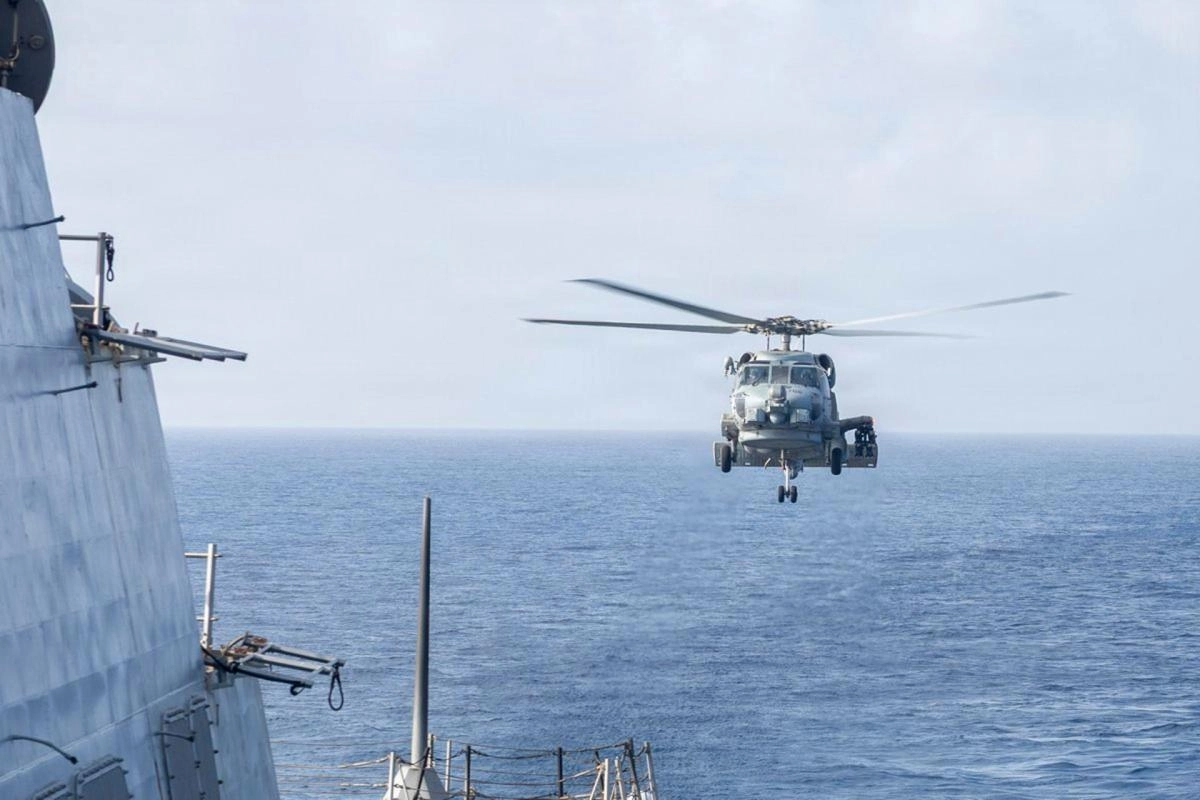

A US military attack against a strategic facility on the Iranian island of Qeshm has once again raised tension between Washington and Tehran, just as both sides were holding talks to extend a temporary truce aimed at reducing the risk of an open confrontation in the Persian Gulf.
The United States Central Command (CENTCOM) reported that the operation was carried out in response to a series of ballistic missile and drone launches attributed to Iran against targets in the region. According to the US version, the projectiles were directed towards Kuwait and Bahrain, although none managed to hit their targets thanks to the defense systems deployed by US and allied forces.
According to the military statement, two missiles launched towards Kuwait disintegrated before reaching Kuwaiti territory, while three others aimed at Bahrain were intercepted by air defense systems. In addition, US forces shot down several drones that were allegedly heading towards civilian vessels sailing through regional waters.
As part of the response, the United States attacked a military ground control station located on the island of Qeshm, an area of great strategic importance located near the Strait of Hormuz, through which a significant part of the world's oil and gas supply transits.
Iran responds with accusations and threats
Iranian authorities offered a different version of events. The Islamic Revolutionary Guard Corps claimed to have carried out missile and drone attacks against US military facilities in the region, including the headquarters of the US Navy's Fifth Fleet in Bahrain and an air base used by US forces.
Tehran said its actions were a response to the bombing of a military communications tower in Qeshm and an earlier alleged attack on an Iranian oil tanker near the Strait of Hormuz.
In a statement released by state media, the Revolutionary Guard described the operation as an “initial response” and maintained that some of its attacks hit military targets, causing fires at facilities linked to the United States. However, Washington has not confirmed damage to its bases nor reported casualties among its military personnel.
The Iranian military organization also warned that any new action that it considers a violation of its sovereignty will receive a “devastating, crushing and decisive” response, raising the tone of the threats in the midst of an increasingly delicate scenario.
Diplomatic negotiations come under pressure
The escalation occurs at a particularly sensitive time for diplomatic efforts between both countries. During recent weeks, US and Iranian representatives had explored the possibility of extending the current truce for 60 days, in addition to discussing mechanisms related to economic sanctions, maritime security and regional stability.
Although neither side has formally announced the end of the temporary agreement, the military exchanges raise uncertainty about the future of the negotiations. Analysts consider that the coming days will be decisive in establishing whether Washington and Tehran manage to contain the crisis through diplomatic channels or if the confrontation evolves into a new phase of instability in one of the most strategic regions for global energy trade.
For now, both the United States and Iran keep their forces on alert as the international community watches with concern a situation that could affect the security of the Strait of Hormuz and global energy markets.