

New transit center in LAX prepares to receive tourists
The city is preparing for the 2028 Olympics, The difficulty is that there is no one to explain things to you in Spanish, said the Mexican.
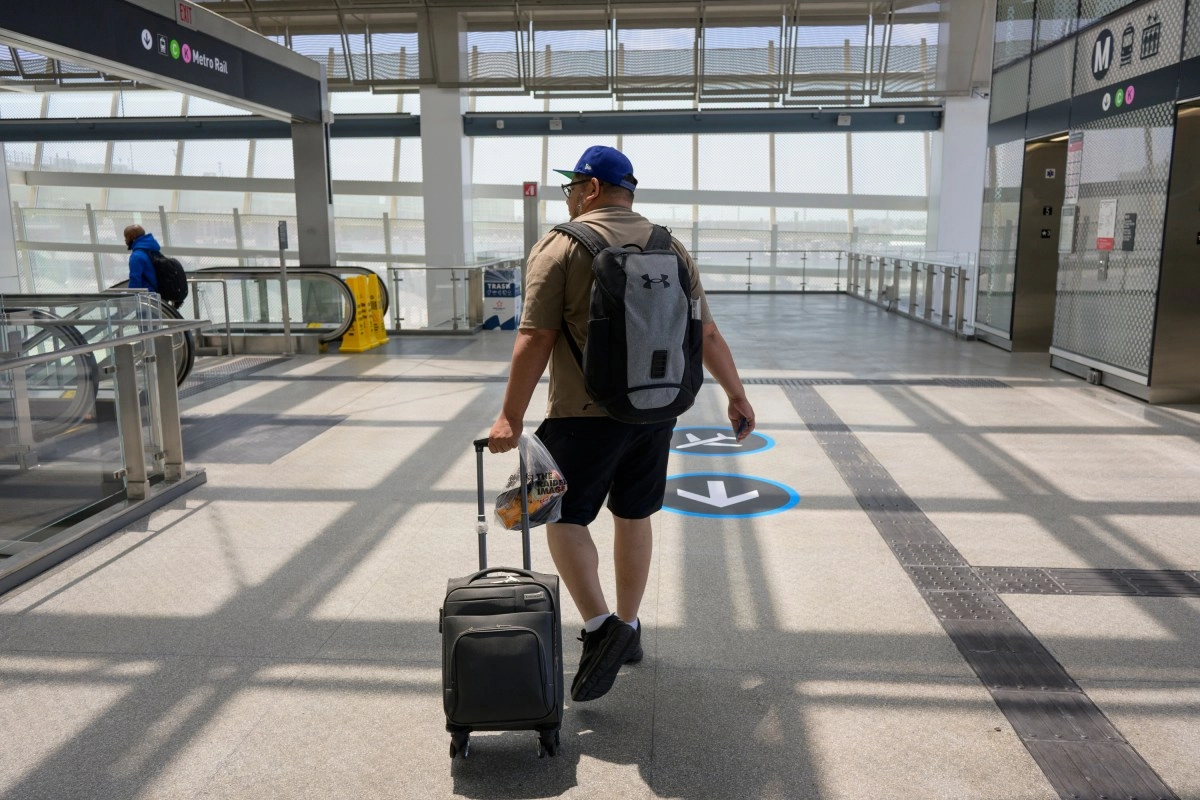

Eliezer Contreras traveled from Monterrey to Los Angeles and upon arriving at the new metro station, named LAX/Metro Transit Center, he noticed an environment that he liked, highlighting the cleanliness and novelty of the construction, although he said that there wasn't much support for Spanish speakers.
“The difficulty is that there is no one to explain things to you in Spanish,” said the Mexican. “And then it takes a while to get through, but it’s not that complicated to get there.”
He added that Spanish-language support is not required, but he’s seen support for travelers in other languages ??at other international airports.
With the opening of the new LAX/Metro Transit Center subway station three weeks ago, residents and travelers have been able to enjoy the new infrastructure while avoiding the traffic that Los Angeles is known for.
Currently, the station, located at Aviation Blvd. and 96th St., connects the C and K train lines, offers service by Metro Micro, six Metro bus lines, and eight municipal bus lines including Beach Cities, Big Blue Bus, Culver City Bus, GTrans, Torrance Transit, and Los Angeles World Airports (LAWA) to and from the terminals.
According to Metro, by creating a direct connection to regional transit, the LAX/Metro Transit Center station expands transportation options for employees in the airport area and travelers to reduce reliance on more expensive options such as taxis, rideshares, or private vehicles.
For $3 a day, residents in southeast Los Angeles County can park at the Norwalk station where the C line begins and can travel directly to the airport without having to change trains.
Gerald Cooper, a Los Angeles resident, shared that he has used the new station twice and said he saw more presence of Metro ambassadors and security.
He added that he would like to see a more streamlined process instead of having to walk up steps, exit the station, and then take the escalator back to the bus station.
According to Metro, when the automated passenger mover (APM) system opens and connects to Metro in 2026,Both Angelenos and visitors will have a more direct and streamlined connection to Metro's public transit system, with a total of six stops: three at the terminal, one at the Metro/LAX Transit Center station, one at the economy lot, and one at the Consolidated Rent-A-Car Facility (ConRAC), located directly across from the transit center. While passengers wait to access the APM, LAWA will offer buses every 10 minutes.
The bus schedule will be based on the operating schedules of the C and K light rail lines and municipal bus routes that serve the new station, ensuring a seamless trip to and from the airport and helping to alleviate traffic congestion in the LAX area.
During the opening conference, Metro Board Chair and Los Angeles County Supervisor Janice Hahn shared that one of the concerns many Angelenos have is when someone they know asks for a ride to LAX, but highlighted that now they can tell them to take Metro.
“The wait is over, Los Angeles. We finally have a train to LAX, and when the automated passenger mover system finally opens, we will have an international airport that connects people from the terminals to the outside world via Metro,” Hahn said.
The grand opening of this station marked the eighth project completed in Metro’s Twenty-Eight by '28 initiative, a comprehensive plan to improve the region’s transportation infrastructure in time for the 2028 Olympic and Paralympic Games.
According to Metro, the state-of-the-art transportation hub incorporates a large-scale, open station concept, with continuous canopies that guide riders’ eyes through wide-open spaces.
The station reinforces intuitive wayfinding and pedestrian access to buses and light rail, as well as the soon-to-open Los Angeles International Airport (LAWA) Automated People Mover (APM) system.
“The opening of the LAX/Metro Transit Center is a major step forward in preparing Los Angeles to welcome the world. This is about much more than transporting people to and from the airport; it’s about building a more connected, reliable, and environmentally friendly city for Angelenos and the millions who will visit in the years to come,” said Los Angeles Mayor Karen Bass, a Metro Board Member. “I want to congratulate LA Metro on this achievement and look forward to their continued partnership.”